
 Call Us or Whatsapp 9779808220612
 Email Us [email protected]
- English [EN]
- Espanol [ESP]
- France [FR]
- Deutsch [DE]
- China [CN]
- Japan [JP]
- Arabic [AR]
- Hindi [HI]
Top 12 Reasons to Choose Manaslu Larke Pass Trekking
Published: September 2026 | Author: Nishan Dahal | Category: Information
If you have researched trekking in Nepal, you have likely heard of the same two routes, Everest Base Camp and the Annapurna Circuit. Undeniably, both are beautiful trails. However, there is a third alternative that is becoming increasingly popular among seasoned trekkers and adventure travelers seeking an alternative: the Manaslu Circuit Trek, which crosses the famous Larke La (Larkya Pass) at an altitude of more than 5,100 m.
The walk is a loop around Mount Manaslu, the eighth-highest peak of the world at 8163m, in the Gorkha district of Nepal just on the west side of the border with Tibet. It’s far, it’s rugged, and, quite honestly, it’s one of the last “off the beaten path” high-altitude hikes in Nepal available with teahouse accommodations.
Here, we will explore the top 12 reasons why so many trekkers, from first-timers with some trekking experience to seasoned mountain lovers, are choosing Manaslu Larke Pass Trekking over the more crowded classics. We will also try to learn about the actual difficulty level, permits, season, and what to expect day-to-day, so that when the time comes you’ll have a realistic and honest idea of whether it is right for you.
1. It’s One of the Least Crowded High-Altitude Treks in Nepal
The less crowded is one ofd the obvious reasons why people are now preferring Manaslu. Everest Base Camp and Annapurna Circuit are awesome treks, but in the busy seasons (Spring and Autumn) the trails can feel more like a line at the bank than a trip into the backcountry. They get packed quickly; the views become crowded at sunrise, and there is a constant flow of both trekkers in and out.
Manaslu is different. The numbers remain low as the area was only opened to foreign trekkers in 1991 and a special restricted area permit and a licensed guide are still required to enter the area. You will be trekking for hours without seeing even a dozen other trekking groups, anywhere in forests or past waterfalls or along the Budhi Gandaki gorge. If you were a bit disappointed with how crowded it was on EBC or Annapurna, then Manaslu is the place to experience solitude and quiet.
2. Close-Up Views of the World’s Eighth-Highest Mountain
Mount Manaslu is not a mountain you glimpse from a distance; this trek takes you right around its base, close enough that its scale becomes almost overwhelming. As you approach villages like Lho and Samagaon, Manaslu fills the skyline directly above you, its glaciers and ridgelines clearly visible without a zoom lens.


View on the Way
Along the way, you will also get views of other major peaks including Himalchuli, Ngadi Chuli, Cheo Himal, and, once you are near the pass, Annapurna II and other giants of the western Himalaya become visible. Few treks in Nepal put you this physically close to an 8,000-meter peak for this many consecutive days.
3. Deep, Authentic Tibetan Culture Along the Way
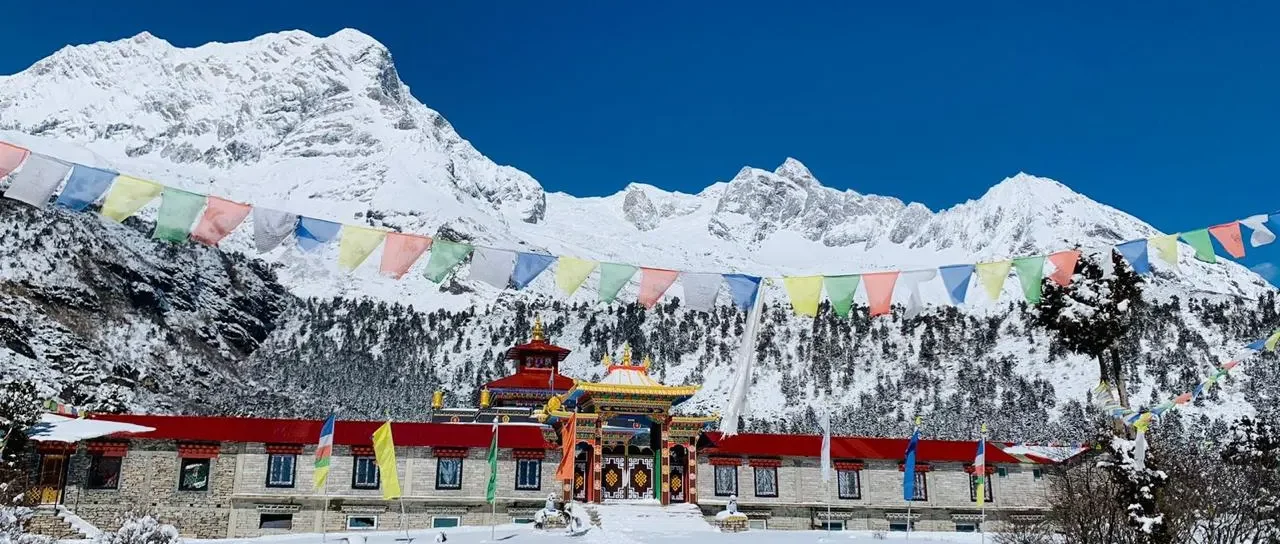
The culture changes as one ascends into the Nubri and Tsum valleys. In villages such as Lho, Samagaon and Samdo, prayer flags fly between the houses, mani walls adorn the path and ancient gompas (monasteries) perch on the hillside.


The ancient culture.
It is not a cultural event organized for visitors to the area. The culture here is one of the Tibetan and Nubri ethnic groups, who have lived here for centuries, practising a type of Buddhism that has influenced the local way of life. Visitors will be passing by the monasteries as they carry on their daily lives, local residents turning prayer wheels as they head out to the fields, and the yaks continue to roll goods along the same routes as traders for centuries. But if culture trumps views of the mountains, Manaslu offers it in a natural rather than curated fashion.
4. Incredible Variety of Landscapes in a Single Trek
One thing that surprises a lot of first-time Manaslu trekkers is just how much the scenery changes over the course of the route. You start low, in warm, subtropical terrain around Soti Khola and Machha Khola, walking past rice paddies, banana trees, and waterfalls tumbling into the Budhi Gandaki River.
The trail progresses through a pine and rhododendron forest, then rises to high alpine areas with bare ridgelines and glacial valleys by Samagaon and Samdo as the days go by. By the time you’re approaching Larke La, you are in a real high-mountain terrain with rock, ice, and snow, with little vegetation remaining. This is a remarkably condensed two-week hike to encompass this range of the environment.
5. The Larke Pass Itself – A True High-Altitude Achievement
The centrepiece of this trek is the Larke Pass (5106- 5167 m), depending on the exact point of measurement, which is the most dramatic point. It is a long, cold, early-morning hike over ice and snow with steep inclines on both sides, but the view of the mountains is one of the most breathtaking in Nepal.
At the top, Himlung Himal, Cheo Himal, Kang Guru and, of course, Manaslu itself loom over the eastern horizon. It is, for many trekkers, the greatest part of the whole journey, a blend of exercise and jaw-dropping scenes; each step up the day leading to it is worth the effort.
6. A Genuinely Wild, Restricted Region
Unlike trails in Annapurna or Langtang, you cannot go on the Manaslu trail on your own; you must have a guide who is licensed by the Nepal government to lead trekking parties. You will need a special permit from the Nepal government to trek Manaslu. This can be a bit of a planning and expense, but it’s also what helps this part of the world remain rather pristine.
Development along the trail is minimal by design. There are no large lodges, no big commercial trekking infrastructure, and very little of the tourist-driven buildup you’ll find elsewhere. What you get instead is a trekking experience that feels closer to how these mountain trails looked a few decades ago: simple teahouses, small villages, and a trail that still feels like a genuine journey rather than a well-worn tourist circuit.
7. Rich Wildlife and Biodiversity in the Manaslu Conservation Area
The trek passes directly through the Manaslu Conservation Area, a protected zone that’s home to an impressive range of Himalayan wildlife. Snow leopards, Himalayan tahr, blue sheep, red pandas, and Himalayan monal pheasants all live within this region, along with dense forests supporting eleven distinct forest types.


The wildlife.
While spotting a snow leopard is rare (as it is anywhere), you will have a genuinely good chance of seeing blue sheep grazing on high slopes, and the lower forested sections are alive with birdlife. If trekking through a landscape that still supports serious biodiversity matters to you, Manaslu’s conservation status is a real point in its favor.
8. It Pairs Beautifully with Tsum Valley or the Annapurna Circuit
Another one of the lesser-known benefits of the Manaslu region is that it links up to other amazing and superb trekking regions. Many trekkers make the trek into the Tsum Valley which is a sacred side valley even more remote than the main valley with ancient monasteries and unspoiled Buddhist culture, making this a 14 day trek plus two of the most special hidden corners of Nepal.
On one side, the Manaslu Trail ends at the Annapurna Circuit at Dharapani so, if you have enough time and energy, you may be able to do both in one complete journey. In Nepal, very few trekking areas provide this natural flexibility to connect with other trekking routes.
9. A Natural Next Step After Everest Base Camp or Annapurna
Everest Base Camp or the Annapurna Circuit is often the first trek that comes to mind, but if you have already been to one of these treks and are wondering what’s next, Manaslu is the answer you are likely to hear often from experienced trekkers. Graded one notch more difficult, as much as the terrain and altitude at the pass – but still within the reach of trekkers who have developed solid multi-day hiking skills and have a reasonable level of fitness.
It also provides a balance of difficulty (enough to make it feel like something interesting, but not so many technical aspects or mountaineering hardware that it is too intimidating). If you are the type of trekker who has done a classic trek, and you want something wild and less commercial, Manaslu tends to be the trek that you get recommended.
10. Comfortable Teahouse Trekking, Even in a Remote Region
Although the Manaslu area seems remote and virgin, no camping out or self-carrying of a tent will be required. There are teahouses at each point on the path, with simple rooms and hearty meals, and a warm dining room to sit and relax in at the end of each day, which is the standard teahouse system of the more popular routes, albeit on a simpler and quieter level.


The teahouses
A typical meal consists of dal bhat, noodles, soup, potatoes and other staple food items served to trekkers, and most teahouses will be able to provide hot drinks and simple snacks. It is a good mix: a bit of wilderness during the day, and a roof over your head with a hot meal waiting at the end of it.
11. A Great Foundation for Future High-Altitude Adventures
The Manaslu Circuit is a great place to train for those who may eventually plan to venture on to higher peaks such as Mera Peak, Island Peak, or even larger goals in the future. With the crossing of Larke Pass at over 5100m, you will have the authentic experience of sustained high-altitude walking, cold weather, and the long and arduous days of a mountaineering trek.
This is not a technical pass, so no ropes or crampons will be required here, but the altitude exposure and physical stress of the pass day are excellent preparation for what is to come.
12. The Unique Experience
The Manaslu region is much less crowded than Everest and Annapurna regions and the trekking facilities are also less complex, which means that many trekkers often receive a lot more for their money here. It’s not a premium price for overcrowded lodges, or over-commercialised trail facilities, either: it’s largely a price for permits, an obligatory guide and a genuine opportunity to be in one of the last unspoiled areas of the Nepal Himalaya.
With all the things the trek has to offer (a close-up look at an 8,000m peak, an immersive cultural experience, dramatic variations in the landscape and a truly testing high pass) it is difficult to see how any other 14-day Himalayan trek can get this much for this price.
Manaslu Circuit Trek: The Practical Details
Now that you know why this trek is worth considering, here’s a quick rundown of what to actually expect.
Duration: Most itineraries run around 14 days from Kathmandu back to Kathmandu, though this can be extended with a Tsum Valley add-on or shortened slightly depending on your fitness and schedule.
Maximum altitude: Larke Pass sits at approximately 5,106–5,167 meters, making it the highest point of the trek by a clear margin.
Difficulty: Generally rated challenging. While there’s no technical climbing involved, the trek includes long consecutive walking days, significant altitude gain, and one genuinely demanding high-pass crossing.
Best seasons: Spring (March to May) and autumn (September to November), when the weather is most stable and visibility is at its best. Winter brings heavy snow and cold that can make the pass dangerous or impassable, while the monsoon season (June–August) brings rain, leeches on the lower trail, and poor mountain visibility.
Permits required: Because the region is restricted, you will need a Manaslu Restricted Area Permit (RAP), a Manaslu Conservation Area Project (MCAP) permit, and an Annapurna Conservation Area Project (ACAP) permit for the section near the end of the trek that joins the Annapurna region. A licensed guide is mandatory for the restricted section; solo, guideless trekking isn’t permitted here.
Accommodation: Teahouses throughout, ranging from simple to basic depending on elevation. Rooms are generally twin-share with shared bathrooms, especially at higher elevations.
What a Typical Day on the Trail Looks Like
Usually the journey begins with a long drive from Kathmandu to the trailhead of Soti Khola or Machha Khola. The days take on a regular pace from this point, walking through villages such as Jagat, Deng, and Namrung, then into Tibetan-influenced villages, such as Lho and Samagaon.
Typically, there will be an acclimatizing day around Samagaon, which is a good opportunity to hike up towards Manaslu Base Camp, or one of the viewpoints, before heading on to Samdo and then the final camp before the pass of Dharamsala (also known as Larke Phedi).


The trail.
The day itself is long and begins before dawn, challenging but an unforgettable push into Larke La followed by a steep descent down to Bimthang. Then the path leads down through the woods to Dharapani, where the trek usually ends and a road trip takes you back towards Kathmandu (usually via Besisahar).
Plan Your Manaslu Trek with Top Trail Nepal
If everything you have read so far has you seriously considering this trek, this is where we can help. We are Top Trail Nepal, a Nepali-owned trekking company based in Kathmandu, and our 14-day Manaslu Circuit Trek package is built specifically around getting the timing, permits, and acclimatization right for a region that doesn’t forgive rushed planning.
Since the Manaslu region legally requires a licensed guide, booking through an experienced local operator is not just convenient; it’s a requirement. Our guides know this trail well, from the lower forested sections to the technical judgment calls needed on pass day when weather and snow conditions can shift quickly. We also handle all the necessary permits (the Restricted Area Permit, MCAP, and ACAP) ahead of time, so you’re not stuck navigating that paperwork yourself.
If you are looking for something a little different from the typical 14-day trek, we can also make changes to your trip, such as extending to include the Tsum Valley for a more cultural experience, adding days onto the Annapurna Circuit, or simply adding a few acclimatization days to your schedule if you want to slow things down before you reach pass day. We can talk to you directly on WhatsApp or via email and tell you the truth about your fitness level and experience, whether it is a good match for this trek or not.