


Island Peak vs. Mera Peak: Which is the Best First Peak for 2026?
Published: February 2026 | Author: Nira Joshi | Category: Information
2026 Peak Choice
For 2026, Mera Peak (6,476m) is the best choice for trekkers seeking high altitude without technical climbing. If you want a thrill involving fixed ropes and crampons, choose Island Peak (6,189m). Both require a licensed climbing guide and a budget of $2,000 to $3,000. Mera offers better panoramas, while Island Peak delivers a true mountaineering challenge.
So, you want to climb your first Himalayan peak in 2026? You are likely stuck between two famous names. Island Peak and Mera Peak dominate the “beginner” climbing scene in Nepal. Both offer incredible views. Both sit above 6,000 meters. However, the experience on each mountain is completely different.
Picking the wrong one can lead to frustration or safety risks. This guide breaks down the technical needs, costs, and physical demands for 2026. Let’s find your perfect summit.
1. Mera Peak: The High-Altitude Walk
Mera Peak stands at 6,476 meters (21,247 feet). It is actually the highest “trekking peak” in Nepal. Do not let the height scare you, though.
The route up Mera is mostly a gradual glacier walk. You will wear crampons and carry an ice axe. However, you rarely need to hang off a rope. Most of the effort is about lung capacity and endurance.
The Remote Hinku Valley
The trek to Mera Peak is special. You leave the busy Everest trails quickly. You head into the Hinku Valley. This area feels wild and untouched. You walk through dense rhododendron forests. You cross high passes like the Zatra La (4,610m).
By 2026, more tea houses have opened in this region. You still get a “wilderness” feel without sleeping in a tent every night. It is perfect for those who love quiet trails.
2. Island Peak: The Technical Challenge
Island Peak, or Imja Tse, is shorter at 6,189 meters (20,305 feet). Do not be fooled by the lower height. This peak is much more technical than Mera.
If you dream of being a “real” mountaineer, this is your peak. You will use a jumar (ascender) to climb a steep ice wall. You will navigate a narrow summit ridge. It is a “punchy” climb that gets your heart racing.
The Everest Connection
The approach to Island Peak follows the famous Everest Base Camp (EBC) trail. You walk through Namche Bazaar and Tengboche. Many climbers combine Island Peak with the EBC trek.
This is great for acclimatization. You spend two weeks hiking before the climb. By the time you reach Chhukung, your body is ready for the thin air.
3. Physical vs. Technical Difficulty
This is where most beginners get confused. One peak tests your legs, while the other tests your skills.
- Mera Peak Difficulty: It is a test of stamina. You will hike for 6 to 10 hours on summit day. The air is very thin. You need strong legs and a healthy heart. It is basically high-altitude trekking on snow.
- Island Peak Difficulty: The trek is easier because the trails are better. However, the summit day is intense. You face a 45-degree to 60-degree ice wall. You must be comfortable with heights and basic rope work.
The 2026 Rule: In 2026, all climbers must practice with their gear at Base Camp. Your guide will teach you how to use a harness and carabiners.
4. Comparing the Views
Both peaks offer “once-in-a-lifetime” scenery. But they focus on different giants.
The Mera Panorama
From the top of Mera, you can see five of the world’s six highest mountains.
- Mount Everest
- Lhotse
- Makalu
- Cho Oyu
- Kanchenjunga (on a clear day)
The 360-degree view is arguably the best in Nepal. It feels like you are standing on the roof of the world.
The Island Peak Perspective
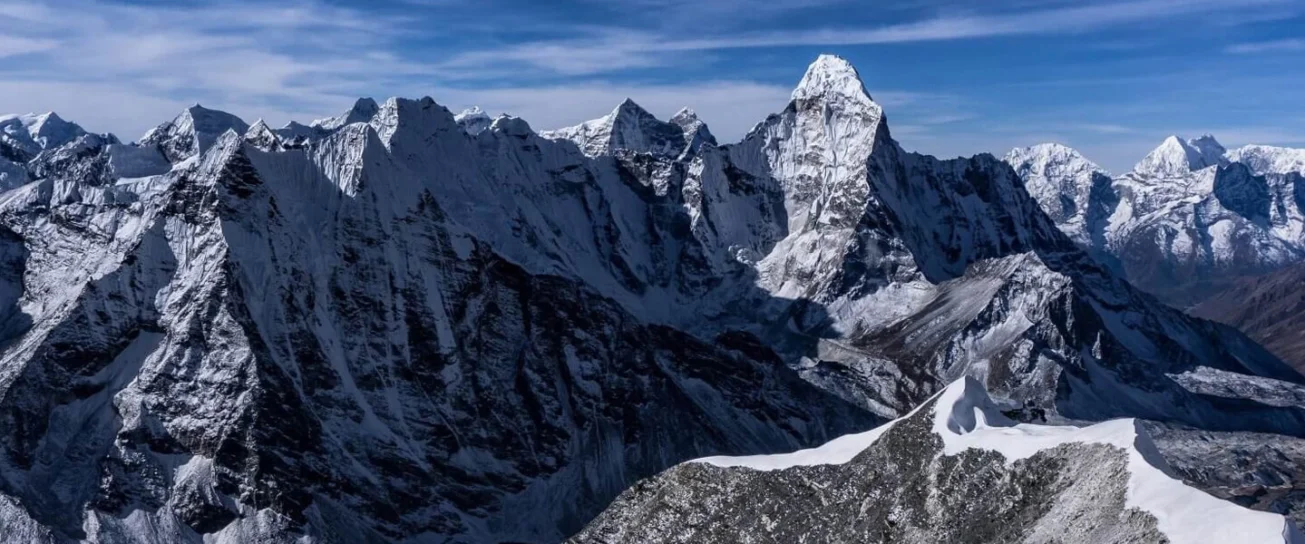
Island Peak sits in the middle of a “sea of ice.” You get a front-row seat to the massive Lhotse South Face. Ama Dablam looks close enough to touch. The view is more intimate and dramatic. You feel surrounded by giant walls of rock and ice.
5. Cost Breakdown for 2026
Climbing in Nepal is getting more expensive. Here is what to budget for a 15-to-20-day trip.
| Expense Item | Mera Peak (Approx.) | Island Peak (Approx.) |
| NMA Climbing Permit | $250 (Spring) | $250 (Spring) |
| National Park Fee | $30 | $30 |
| Climbing Guide | $1,500 – $2,000 | $1,200 – $1,800 |
| Gear Rental | $150 | $200 |
| Food & Lodging | $800 | $700 |
| Total Budget | $2,800 – $3,500 | $2,400 – $3,200 |
Note: Prices vary by agency. Always check if the garbage deposit ($500) is included in your package.
6. Which One is Safer?
Safety depends on your preparation. However, Mera Peak has a slightly higher risk of Acute Mountain Sickness (AMS). This is because it is higher.
Island Peak has more “objective” risks. This means things like falling or rope issues. In 2026, the Nepal Mountaineering Association (NMA) has strict safety rules. Every climber must have a satellite phone or radio. Guides must have advanced first-aid training.
7. What Gear Do You Need?
You do not need to buy everything. Most people rent the heavy stuff in Khare (for Mera) or Chhukung (for Island).
- Boots: You need double-layered mountaineering boots. Normal hiking boots will not work on the glacier.
- Crampons: These metal spikes attach to your boots. They keep you from sliding on the ice.
- Harness: Essential for Island Peak. It keeps you attached to the safety ropes.
- Clothing: Think layers. A heavy down jacket is mandatory for the summit push. It can reach -20°C at night.
8. Final Verdict: Which Should You Pick?
Choose Mera Peak if:
- You want the highest possible altitude.
- You prefer a quiet, remote trek.
- You are a strong hiker but hate technical climbing.
- You want the best 360-degree mountain views.
Choose Island Peak if:
- You want to learn how to use ropes and ice tools.
- You are already doing the Everest Base Camp trek.
- You love a steep, heart-pounding challenge.
- You have limited time (it is usually 3-4 days shorter).
FAQ: Island Peak vs Mera Peak
Q1. Can I climb solo in 2026?
A1. No. Nepal now requires a licensed climbing guide for all 6,000m peaks. This is a law to ensure safety and provide local jobs.
Q2. Do I need previous climbing experience?
A2. For Mera Peak, no. You just need to be very fit. For Island Peak, it helps to have practiced with crampons. However, many beginners succeed with a good guide.
Q3. How do I train for these peaks?
A3. Focus on “Zone 2” cardio. This means long, slow hikes with a weighted backpack. Stair-climbing machines are also excellent. Do this for at least 3 months before your trip.
Q4. What is the best month to go?
A4. April and May (Spring) or October and November (Autumn). Spring has more snow but warmer air. Autumn has crisp, clear skies and colder nights.
Q5. Is there Wi-Fi at Base Camp?
A5. On Island Peak, yes. You can use “Everest Link.” On Mera Peak, it is much harder to find. You might get a signal at Khare, but do not count on it.
Ready to Climb?
Both peaks offer an incredible entry into the world of mountaineering. Whether you choose the altitude of Mera or the technical fun of Island Peak, you will come home a different person.