
 Call Us or Whatsapp 9779808220612
 Email Us [email protected]
- English [EN]
- Espanol [ESP]
- France [FR]
- Deutsch [DE]
- China [CN]
- Japan [JP]
- Arabic [AR]
- Hindi [HI]

Mera Peak Climbing
 Duration: 17 Days
 Difficulty: Strenuous
 Accomodation: Hotel/Teahouse/Camping
 Meal: B-L-D
 Max. Altitude: 6,470
 Best Seasons: Spring (March-April-May) & Autumn (Sep-Oct-Nov)
Mera Peak Climbing
Mera Peak Climbing is a rewarding high-altitude adventure that combines remote Himalayan trekking with the experience of climbing a 6,470 m peak in Nepal. The journey begins with a mountain flight to Lukla before leaving the busier Everest trekking corridor and following a quieter southern approach through Paiya, Pangom, Nagindingma and Khola Kharka toward the remote Hinku Valley.
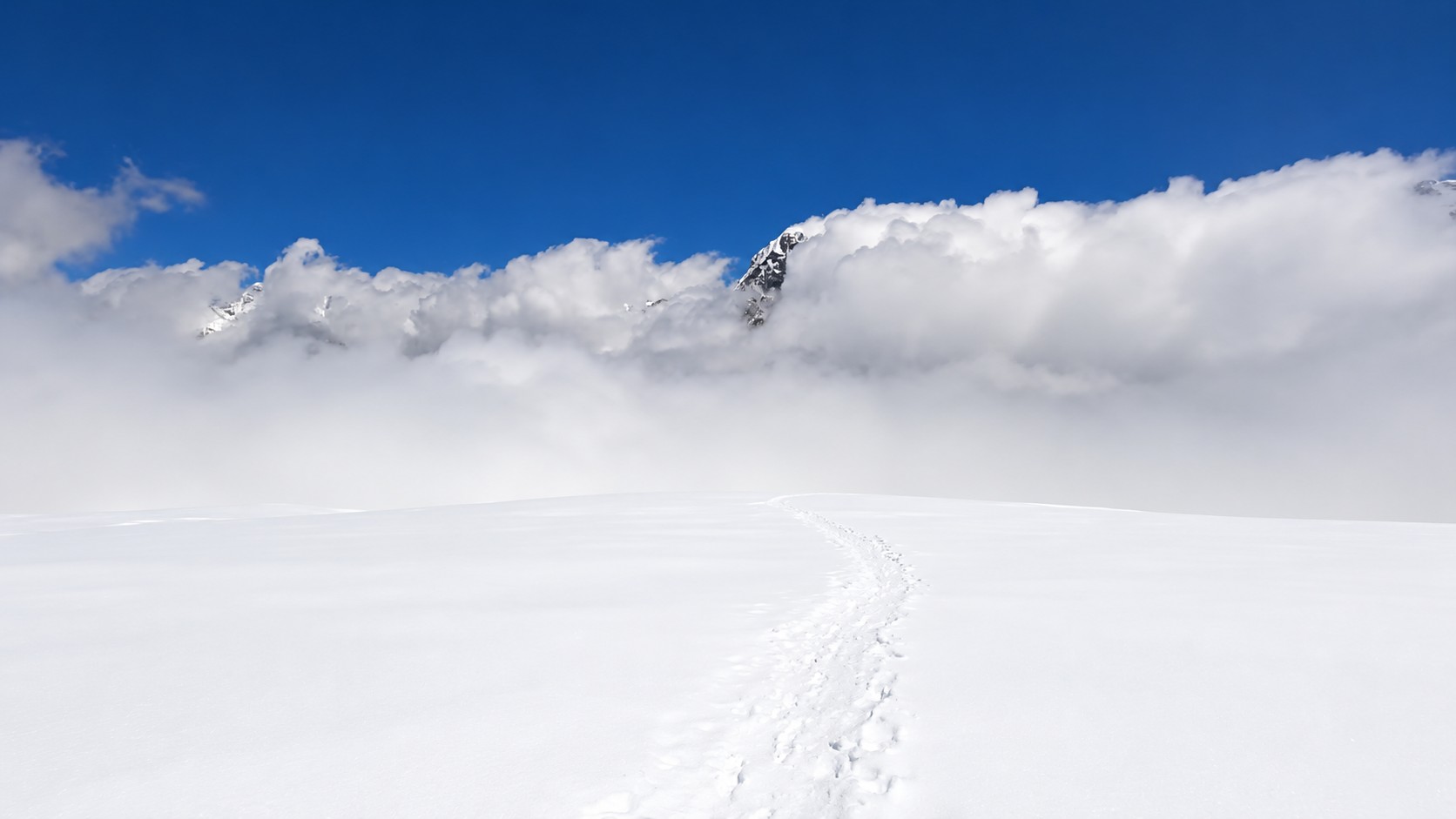
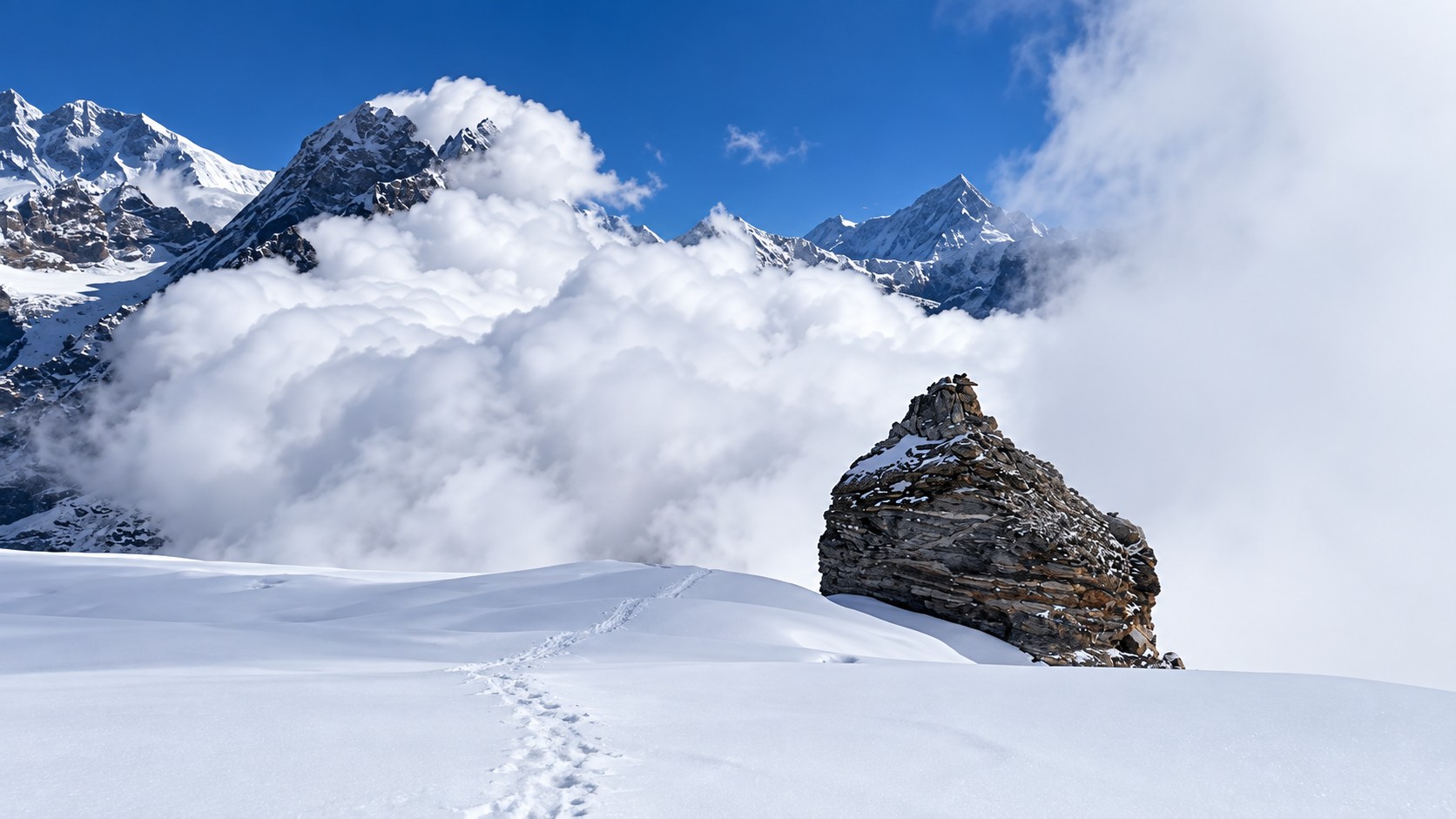
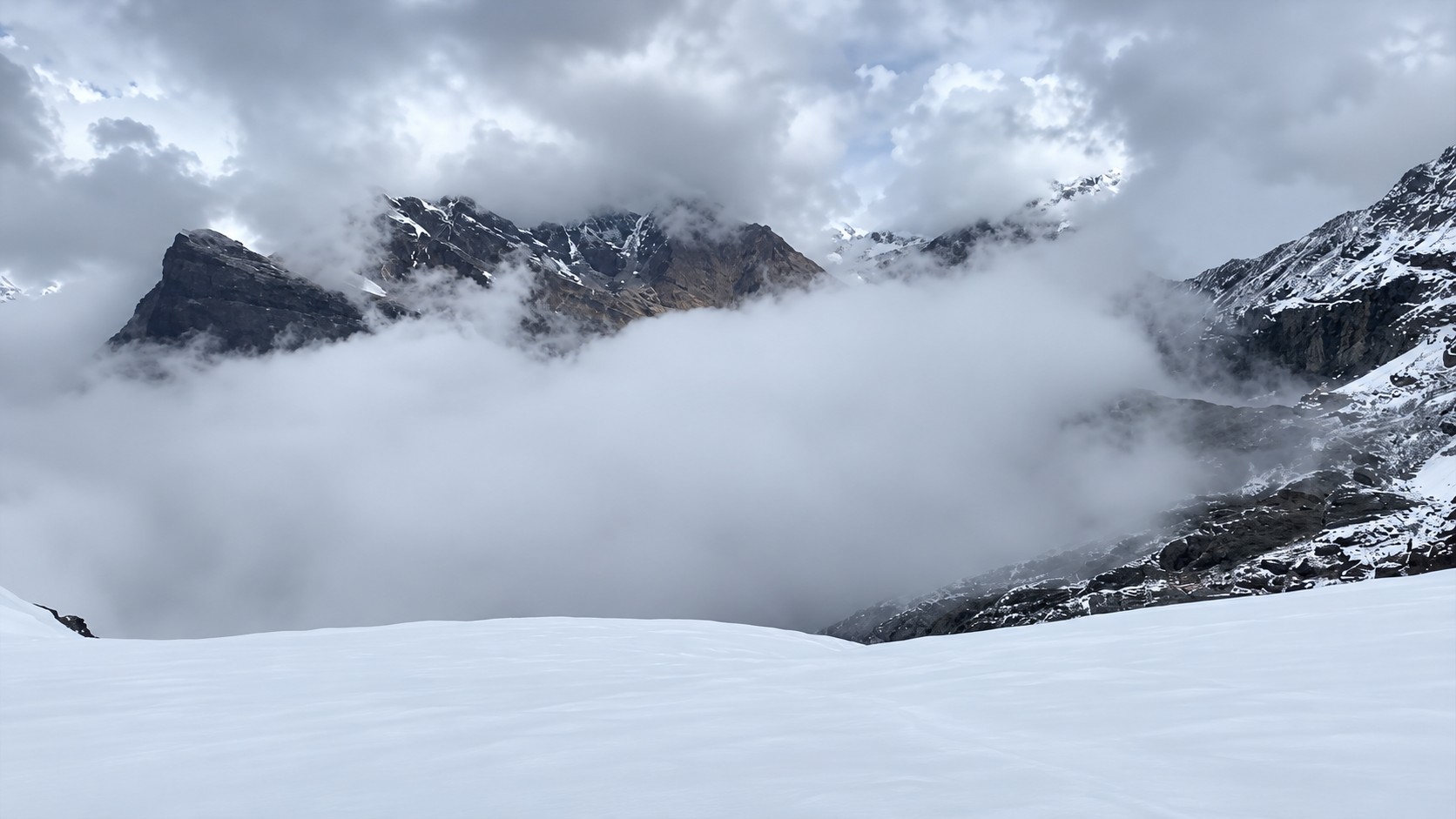
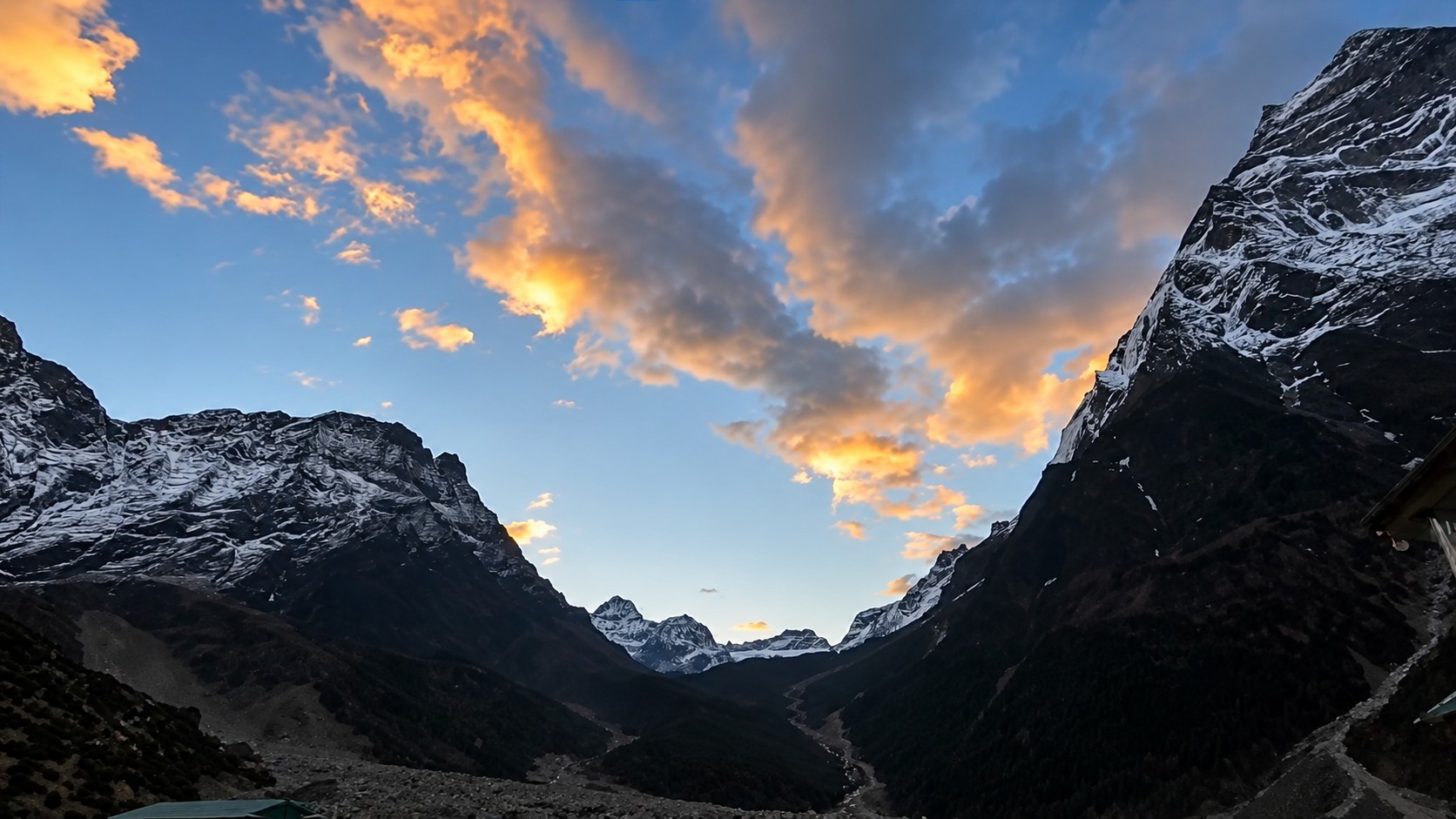
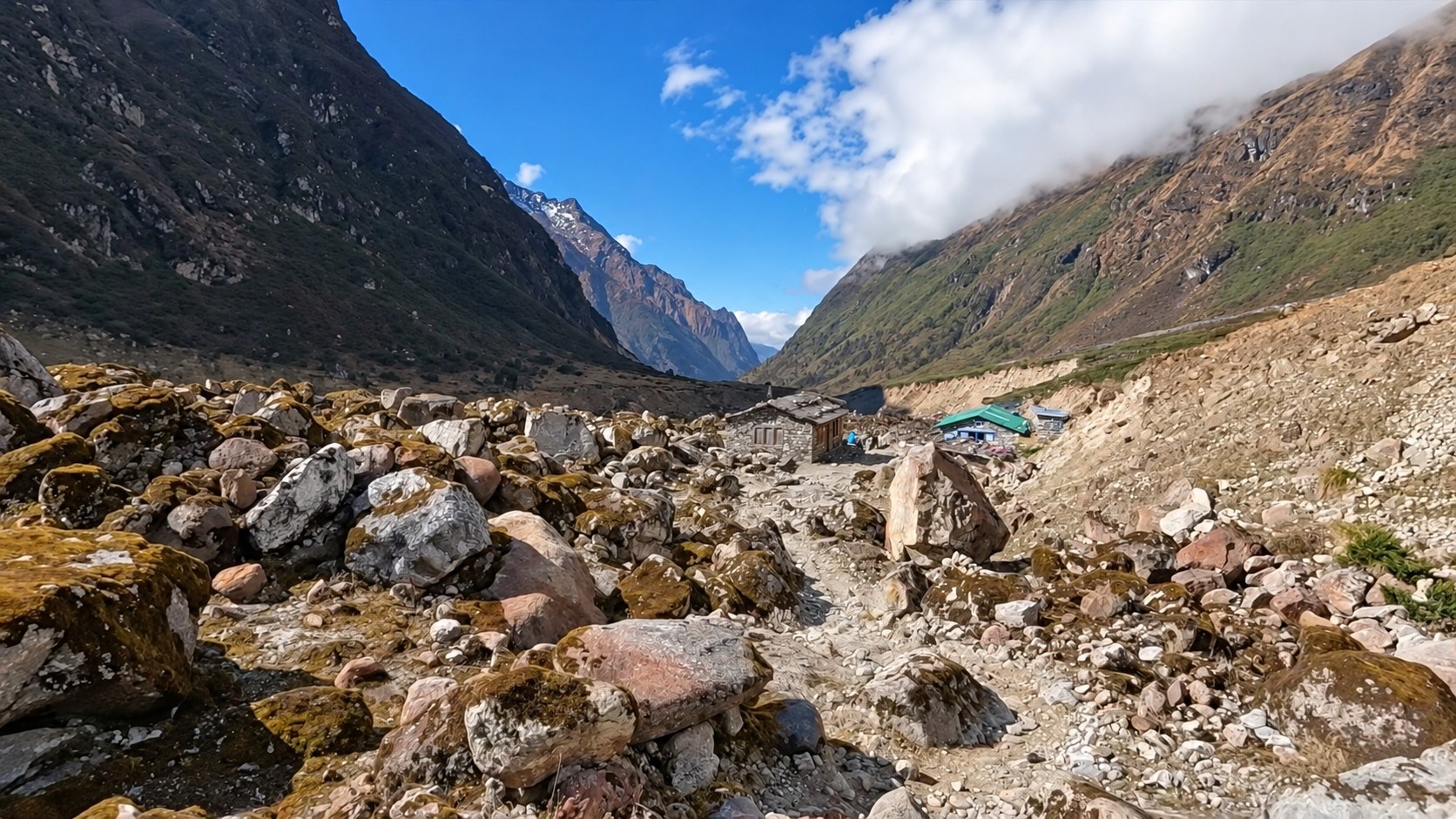
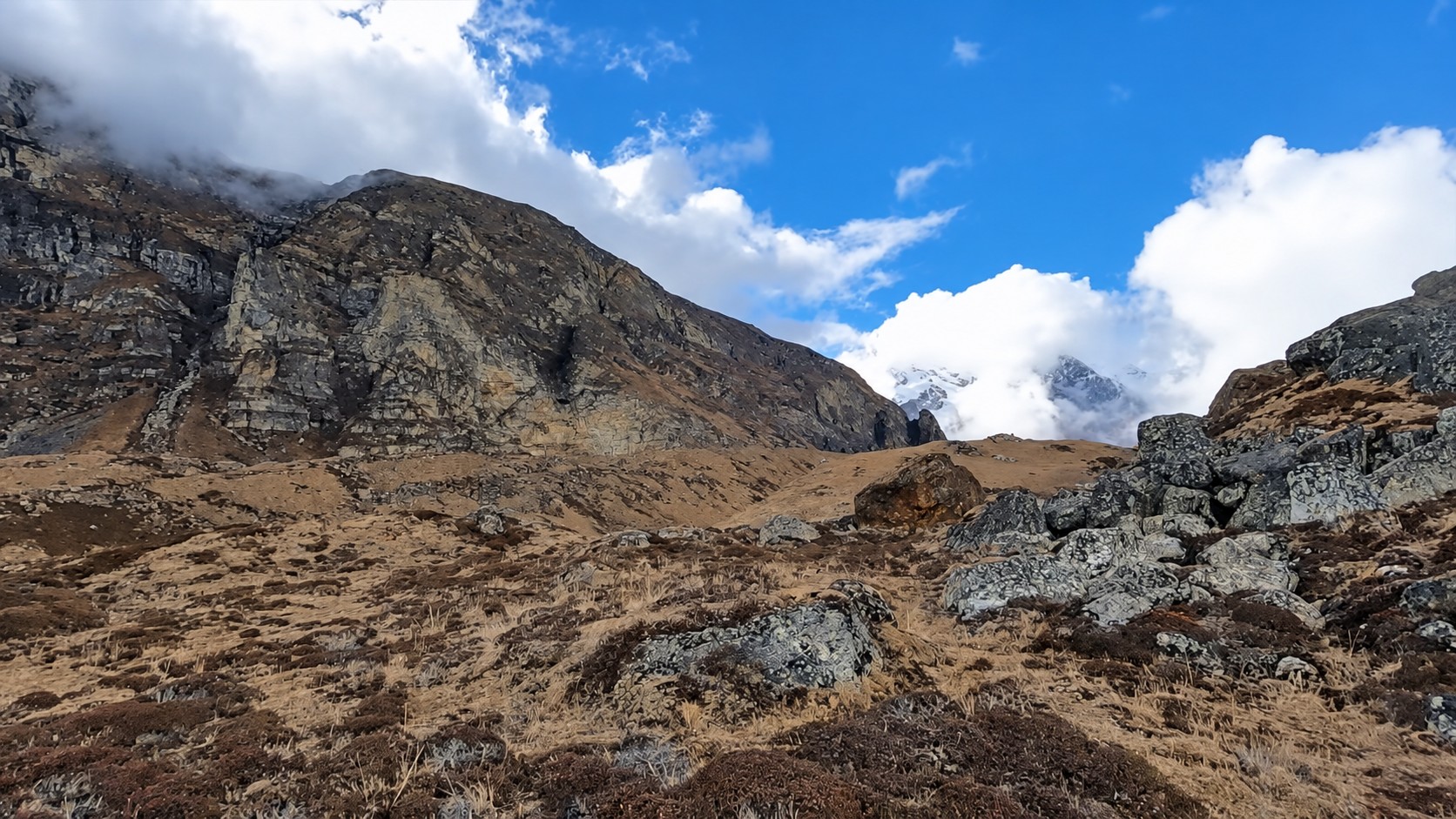
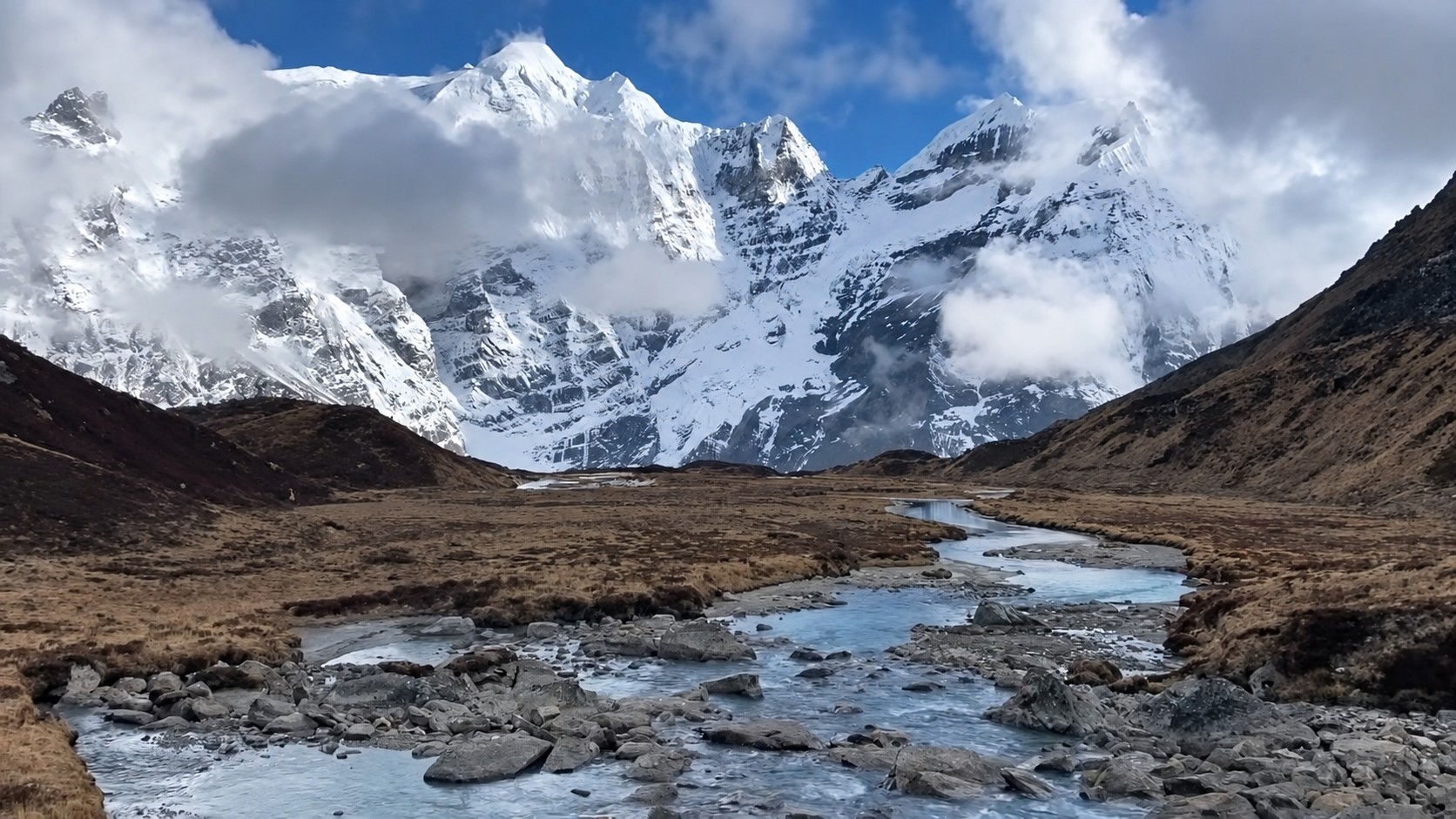
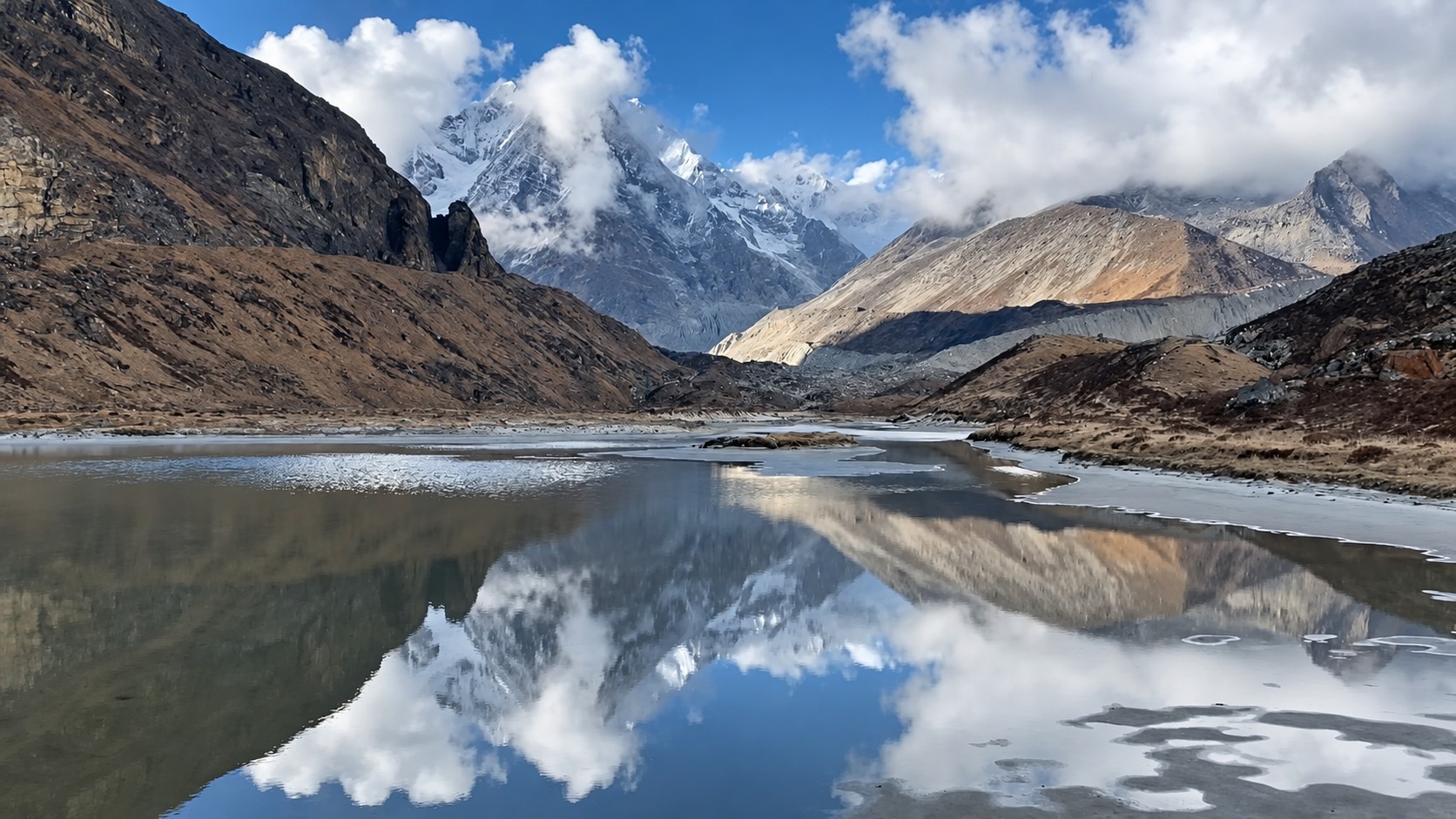
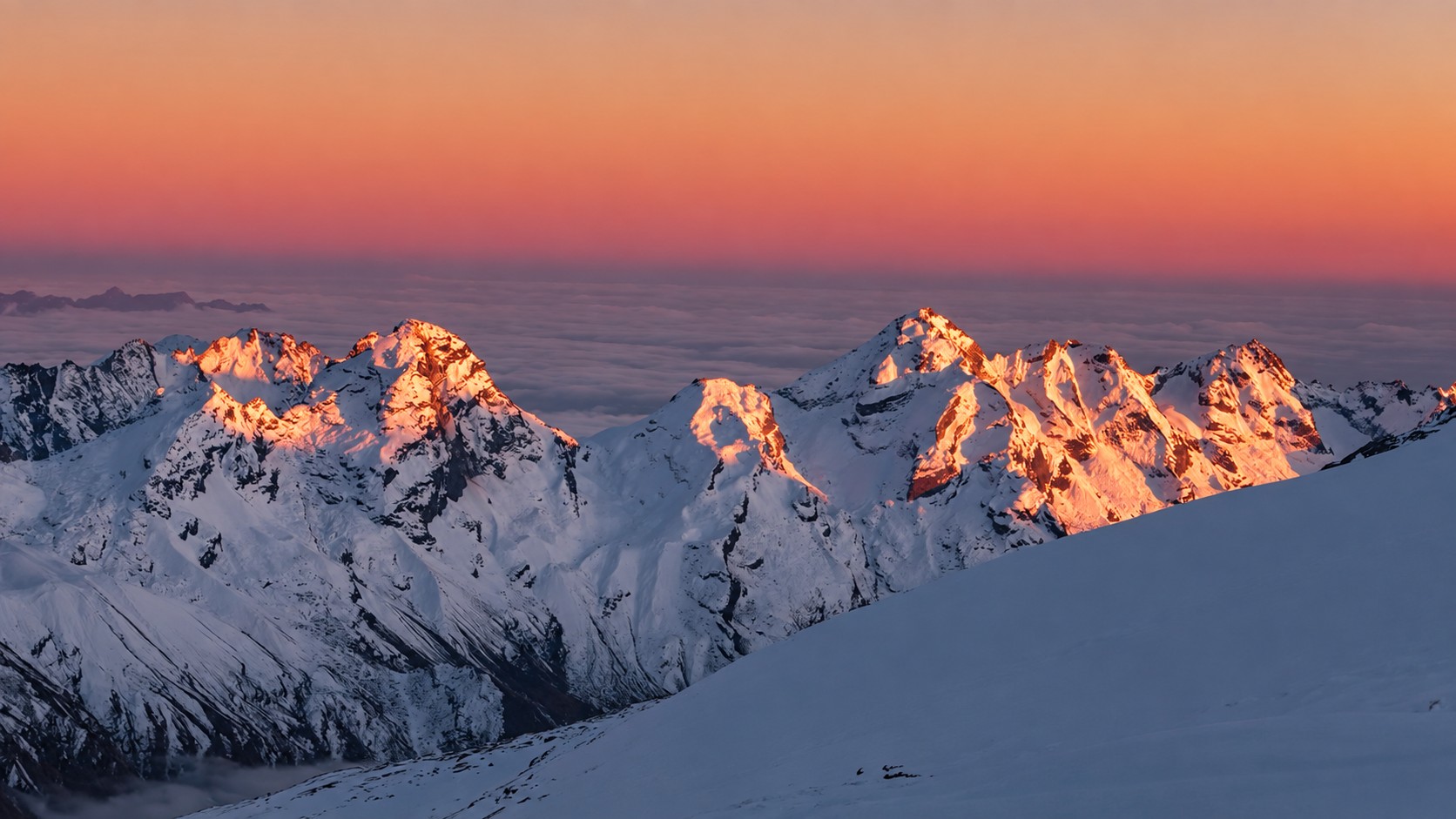
One of the biggest attractions of this route is the variety of landscapes encountered before reaching the mountain itself. The lower trail passes through rhododendron, bamboo and pine forests, hillside settlements, rivers and grazing areas before gradually entering the more open alpine terrain around Kothe and Thaknak. As the elevation increases, forests give way to rocky moraines, glacial landscapes and the snow-covered mountains surrounding Mera Peak.

While trekking from Kothe to Thaknak, the route passes through Gondishung, a traditional seasonal settlement in the upper Hinku Valley. Here, climbers can visit the historic Lungsumgba Gompa and see Buddhist rock carvings connected with the religious heritage of the region. This cultural stop adds another dimension to the journey before the trail continues into the higher alpine environment.
The climbing preparation takes place at Khare (5,045 m), the main staging point below Mera Peak. A dedicated acclimatization and training day allows climbers to adjust to the altitude while becoming familiar with essential equipment and techniques such as crampons, climbing harnesses, ropes, ice axe use and glacier travel. From Khare, the route continues through Mera La toward Mera High Camp at approximately 5,780 m, where the final preparations for the summit attempt are made.

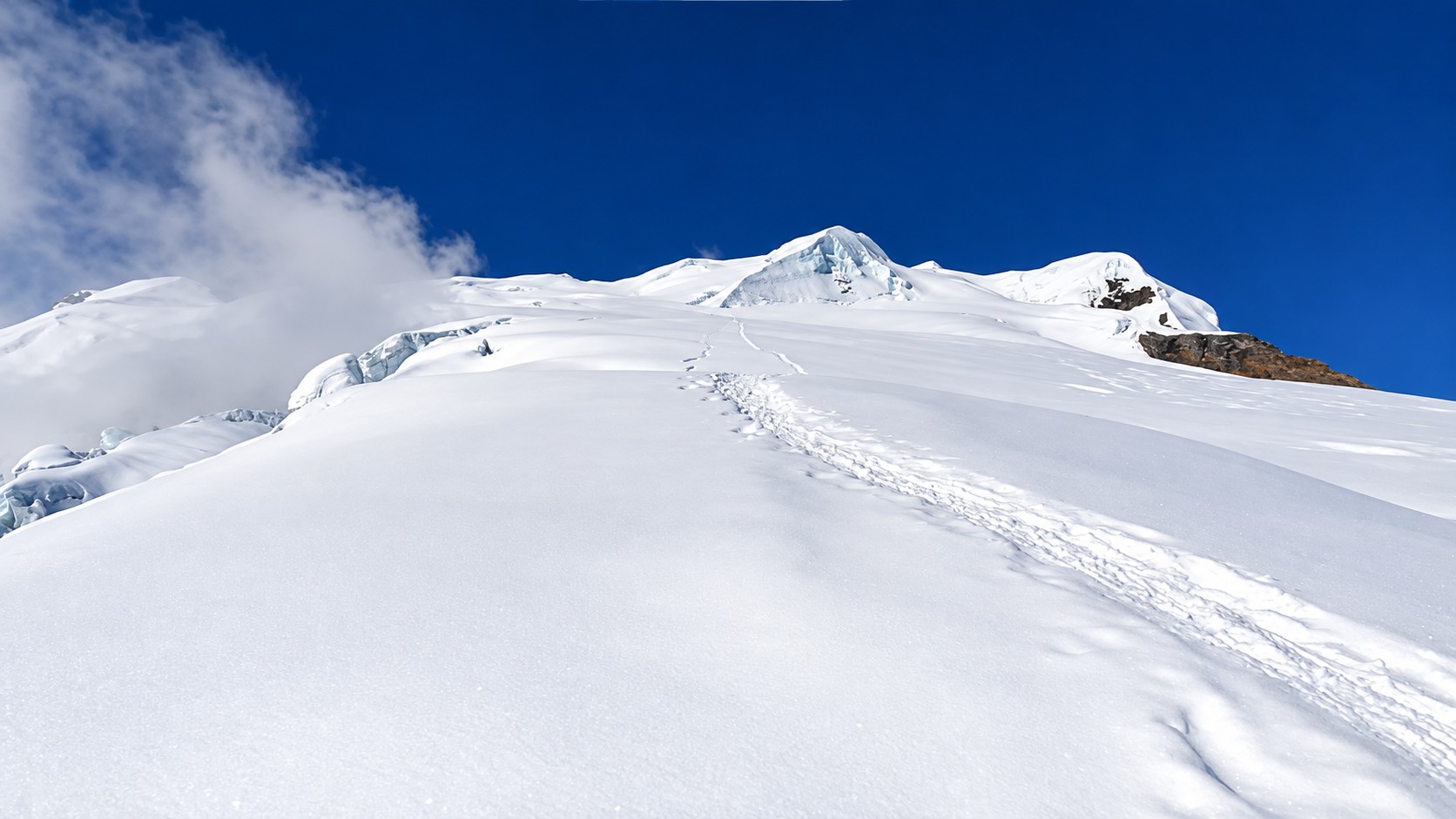
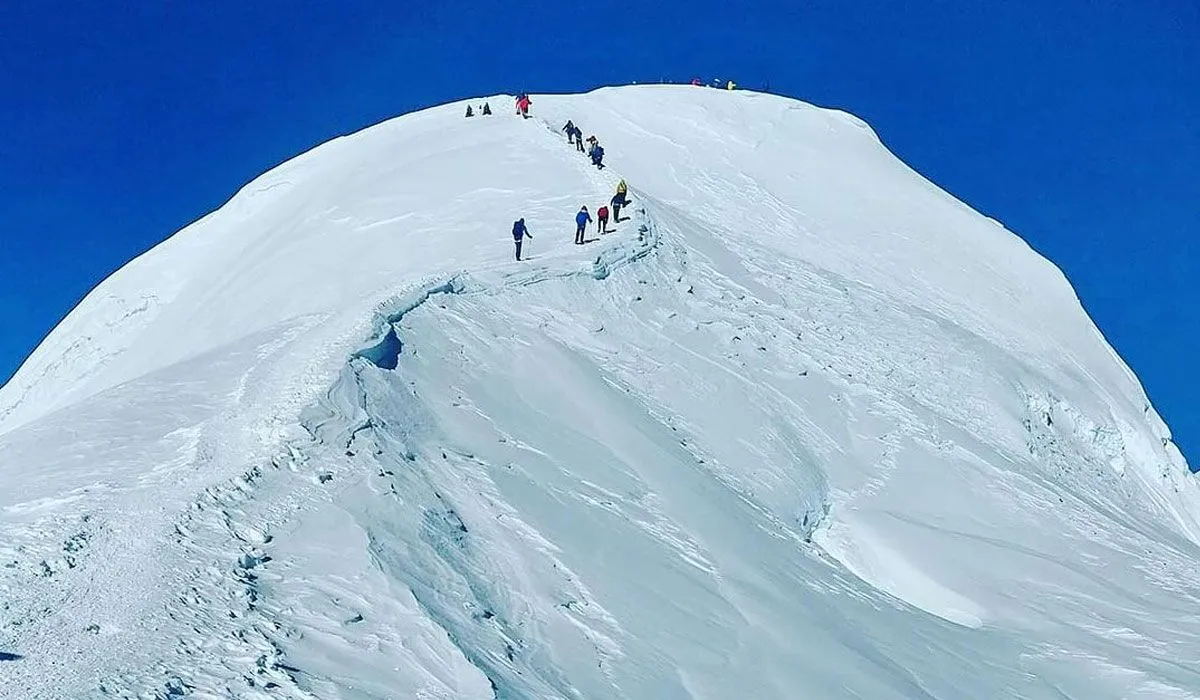
The summit climb normally begins during the early hours of the morning. Although the standard route is considered technically straightforward compared with more technical Himalayan climbs, reaching Mera Peak should never be considered easy. The combination of high altitude, cold temperatures, glacier travel, snow conditions and a long summit day requires good physical fitness, proper acclimatization and careful guidance.
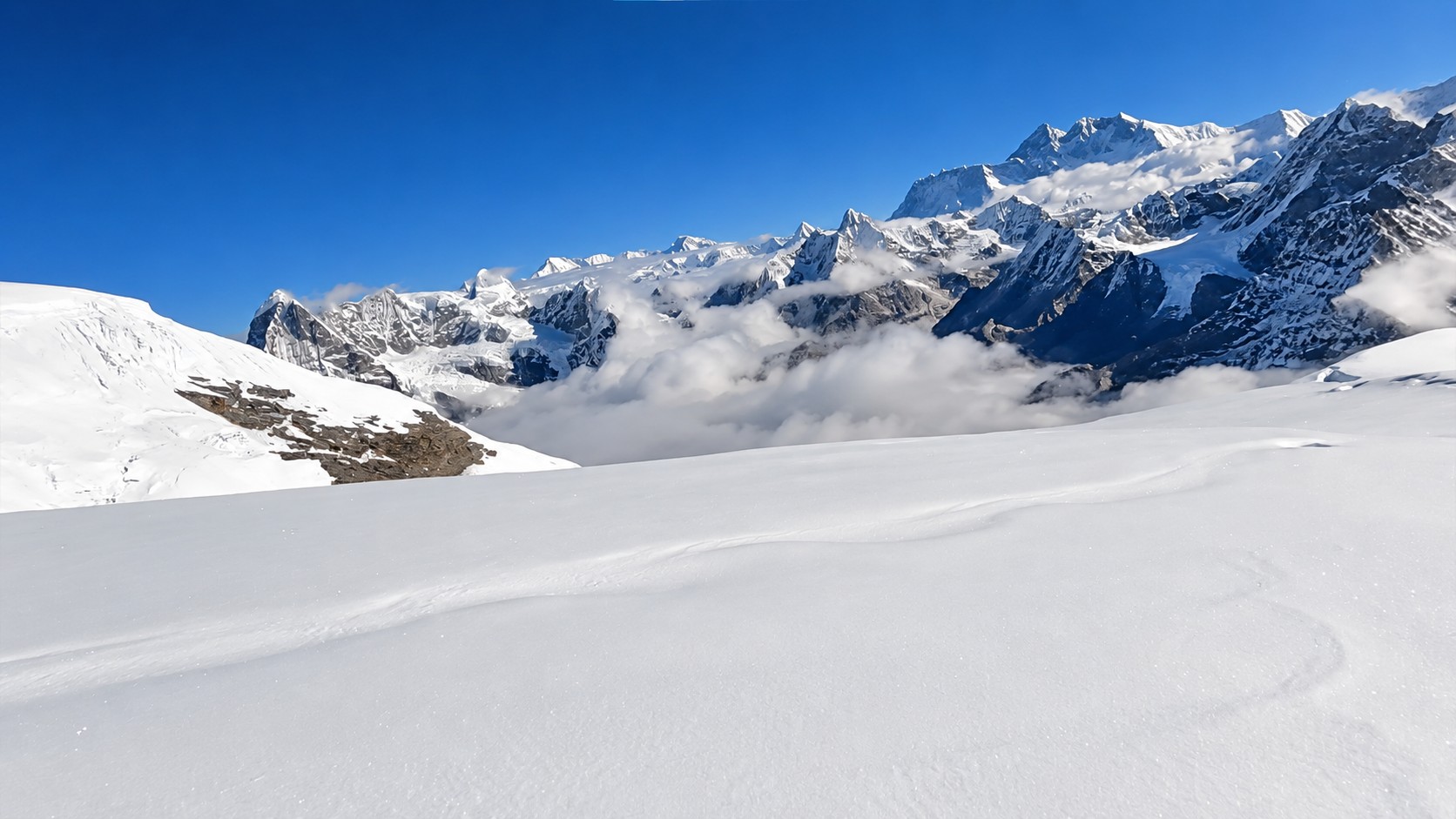
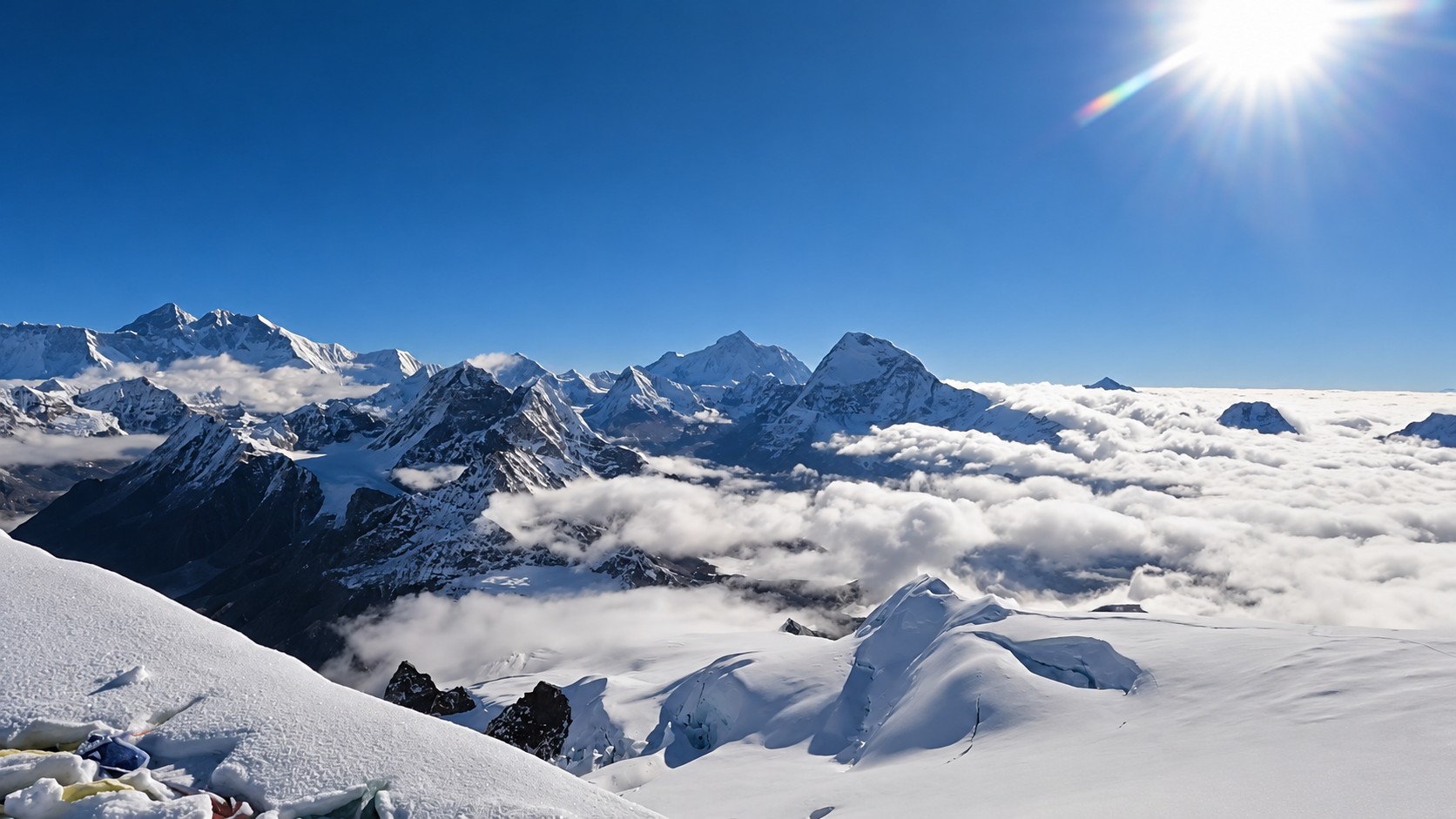
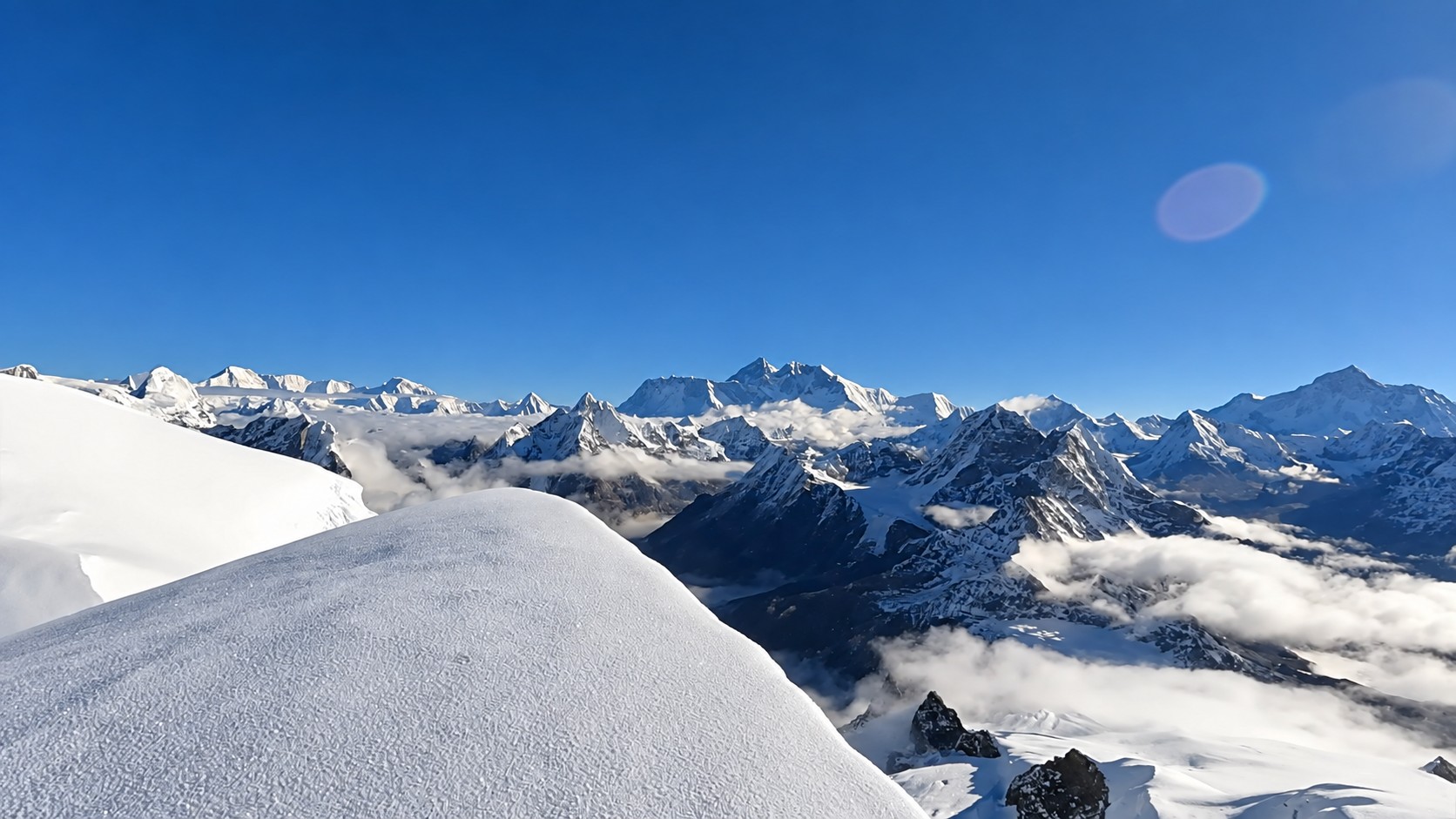
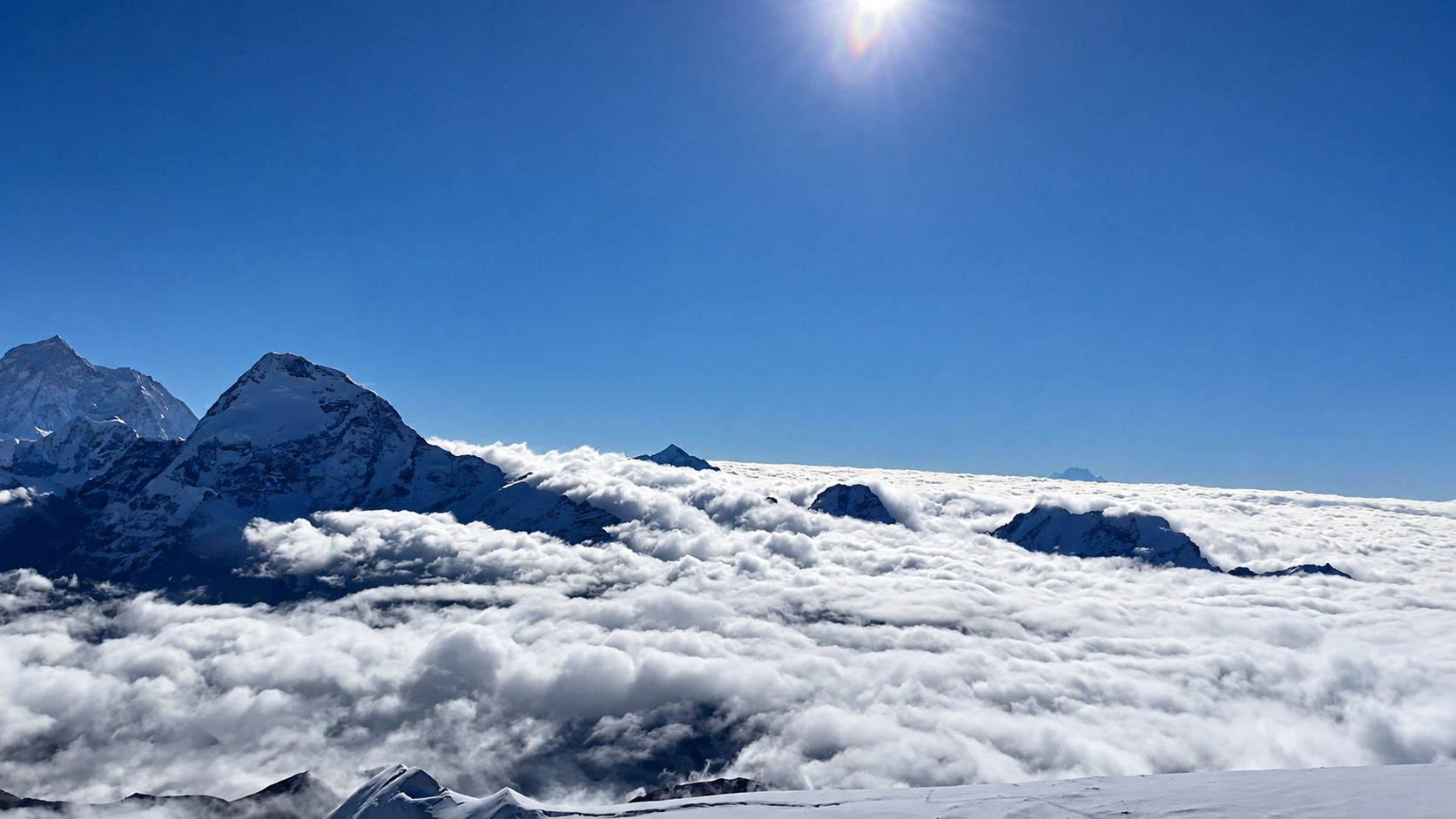
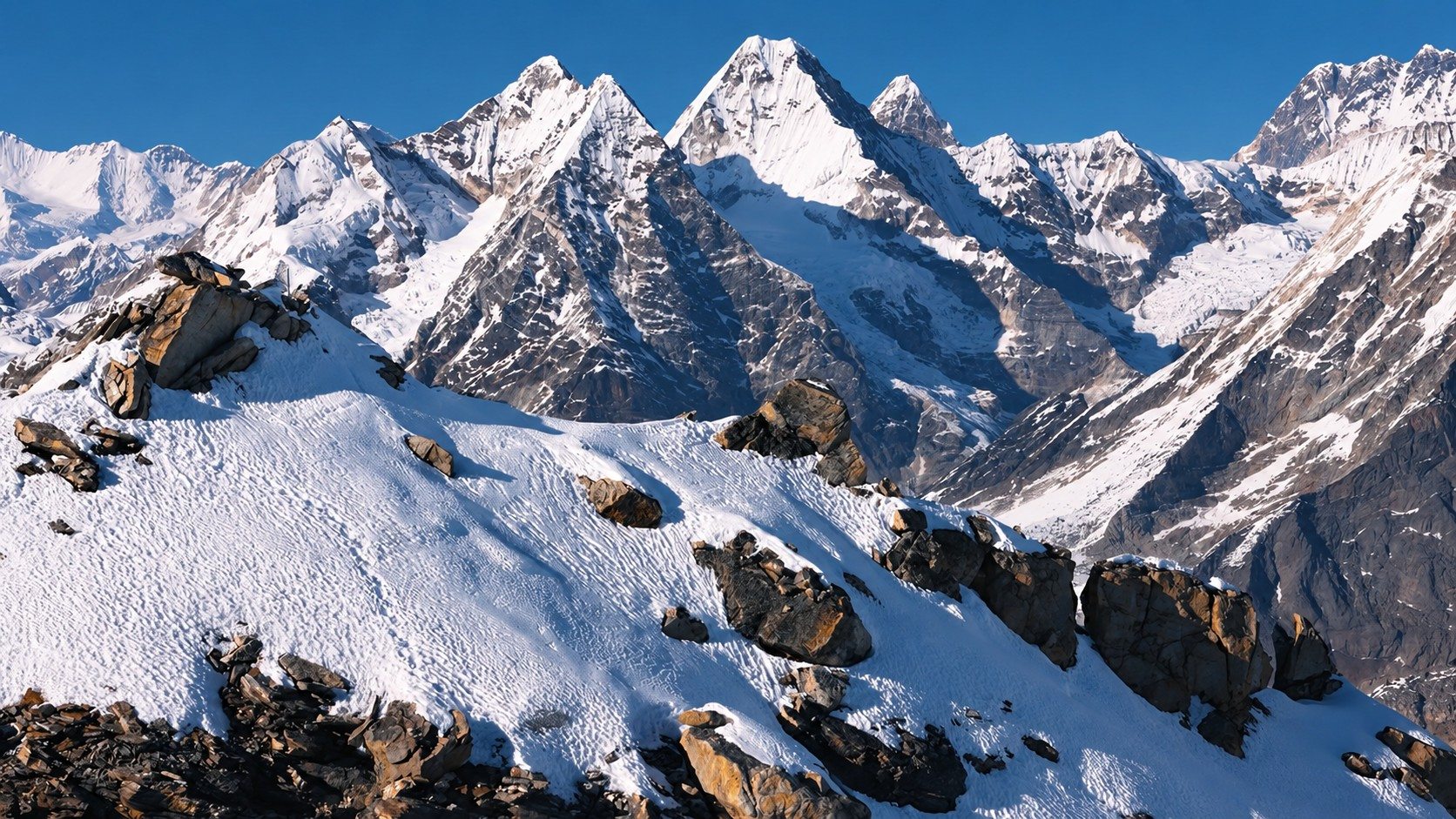
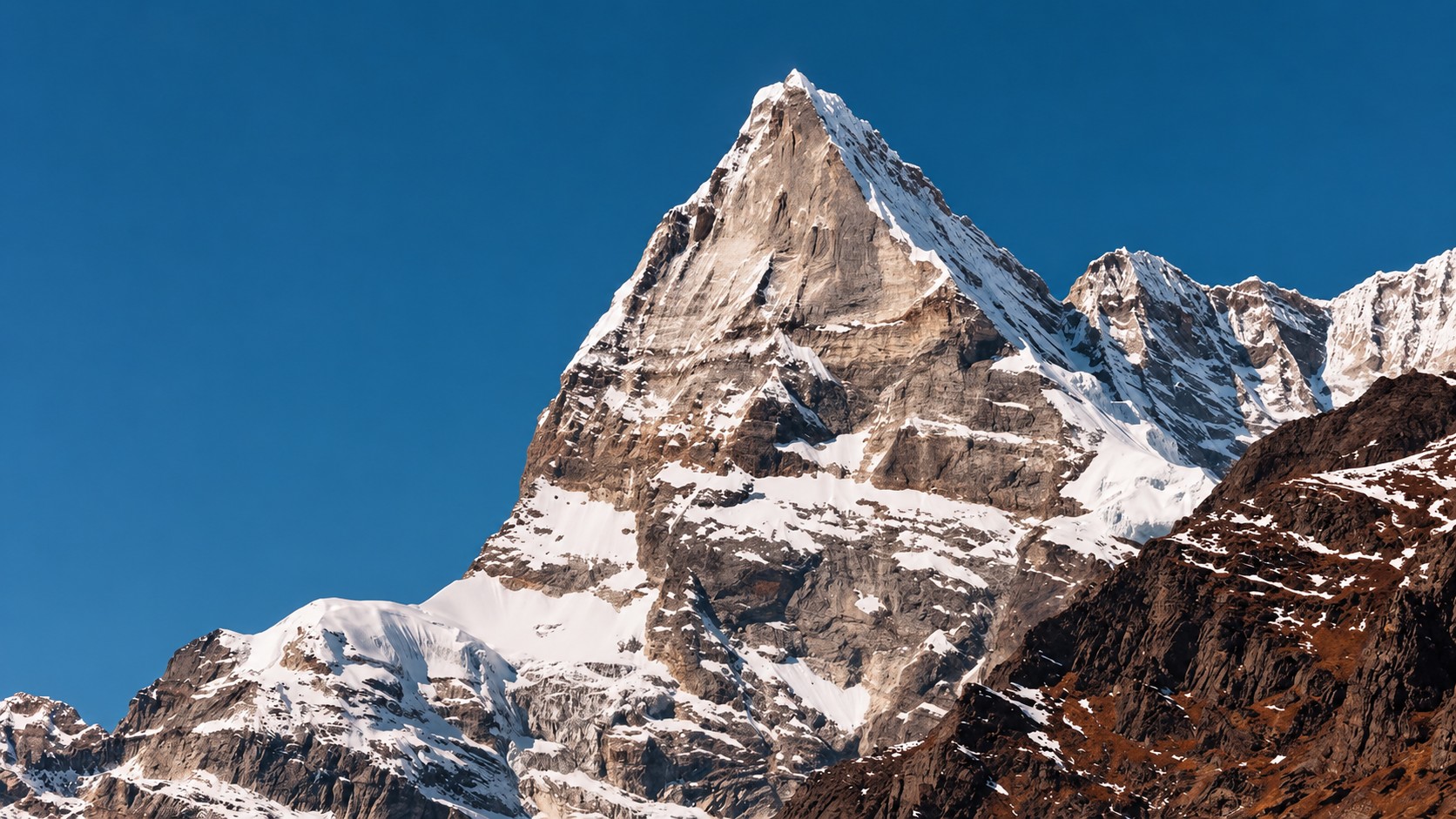
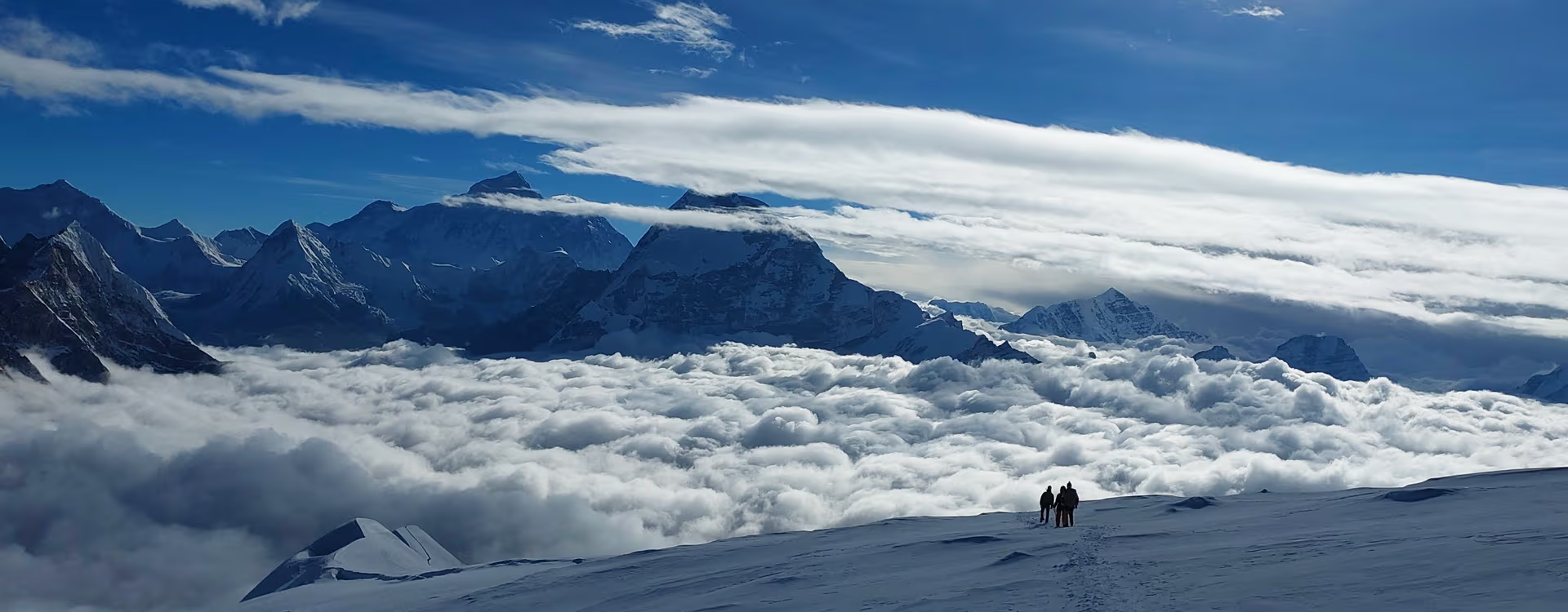
Reaching the 6,470 m summit of Mera Peak is the defining moment of the expedition. In clear weather, the summit provides an exceptional Himalayan panorama with views toward some of the world’s highest mountains, including Mount Everest, Lhotse, Makalu, Cho Oyu and Kanchenjunga, along with numerous other peaks across the eastern Himalaya.

After the climb, the journey descends through the Hinku Valley before crossing Zatrwa La and returning toward Lukla. This gives the trip a varied circuit-style character rather than simply following exactly the same trail in both directions. A dedicated contingency day is also included in the itinerary, providing valuable flexibility if weather, snow conditions or other circumstances prevent a safe summit attempt on the originally planned day.
Mera Peak is an excellent choice for fit trekkers who want to progress into Himalayan peak climbing. Previous technical mountaineering experience is not always essential on the normal route, but participants should arrive with strong fitness, good preparation and a realistic understanding of high-altitude conditions. The journey combines remote trekking, mountain culture, acclimatization, glacier travel and a 6,470 m summit experience into one complete Himalayan adventure.
Highlights
- Reach the summit of Mera Peak at 6,470 m and experience one of Nepal’s most rewarding high-altitude trekking peak climbs.
- Follow the quieter southern approach from Lukla into the Hinku Valley, away from much of the traffic of the main Everest Base Camp trail.
- Trek through Paiya, Pangom, Nagindingma, Khola Kharka, Kothe, Thaknak and Khare, experiencing the gradual transition from lower mountain settlements to the high Himalaya.
- Walk through a remarkable variety of landscapes, including rhododendron and bamboo forests, river valleys, alpine grazing areas, rocky moraines, glaciers and snow-covered terrain.
- Pass through Gondishung and visit the historic Lungsumgba Gompa and nearby Buddhist rock carvings on the trail between Kothe and Thaknak.
- Spend a dedicated acclimatization and climbing preparation day at Khare (5,045 m) before entering the higher climbing environment.
- Learn and practise essential mountaineering techniques, including crampon use, ice axe techniques, harnesses, rope handling and glacier travel.
- Spend a night at Mera High Camp at approximately 5,780 m, surrounded by dramatic high-altitude Himalayan scenery.
- Begin the summit attempt before dawn and take on a demanding climb through snow and glacier terrain toward the summit.
- Enjoy outstanding Himalayan views toward Mount Everest, Lhotse, Makalu, Cho Oyu and Kanchenjunga when weather and visibility are favourable.
- Descend through the Hinku Valley and cross Zatrwa La on the return toward Lukla.
- Benefit from a dedicated summit contingency day, providing additional flexibility when weather or mountain conditions affect the planned summit schedule.
- Combine remote Himalayan trekking and mountaineering in a single journey suitable for fit trekkers looking to progress toward their first major 6,000 m climbing experience.
Detailed Itinerary - Mera Peak Climbing (17 Days)
Your Mera Peak Climbing adventure begins with your arrival at Tribhuvan International Airport in Kathmandu. Our representative will meet you at the airport and transfer you to your hotel, where you can rest after your international journey.
Later, you will meet our team for a trek and climbing briefing covering the route, permits, equipment, altitude, weather conditions, safety procedures, and general preparation for the expedition. Your personal climbing gear will also be reviewed so that any necessary rental or last-minute equipment arrangements can be made before leaving Kathmandu.
The remainder of the day is free to relax or explore the nearby areas of the city at your own pace.
After an early breakfast, you take a scenic mountain flight to Lukla, the gateway to the Mera Peak region. Depending on the season and flight operations, Lukla flights may operate directly from Kathmandu or from Ramechhap Airport.
After landing at Lukla and meeting the trekking crew, you leave the busy Everest trekking route and head south toward the quieter trail leading into the Hinku region. The route descends toward Surke before continuing through forest, hillside settlements, and a series of climbs and descents toward Paiya.
The trail crosses the Chutok La area before reaching Paiya, also known as Chutok. This peaceful settlement provides your first overnight stop on the trekking route and a comfortable introduction to the days ahead.
Leaving Paiya, the trail initially descends through forest before crossing a small bridge and beginning the climb toward Kari La. Dense rhododendron and bamboo forest surrounds much of the route, while occasional openings provide views across the Dudh Koshi Valley and surrounding hills.
After crossing Kari La, the trail continues through a mixture of narrow hillside paths, forest, and small farming areas. Several sections involve steady climbs and descents, making this a varied trekking day despite the relatively small difference between the starting and sleeping elevations.
By afternoon, you reach Pangom, a traditional mountain settlement surrounded by cultivated slopes and forested ridges. The village provides an interesting glimpse into rural life away from the busier trekking routes of the Khumbu.
The trail leaves Pangom and climbs toward Pangkongma La, a forested ridge that provides another transition deeper into the remote approach toward the Hinku Valley. From the higher sections of the trail, the surrounding ridges and valleys begin to open more clearly.
After crossing the pass, you descend through rhododendron and bamboo forest toward the Hinku Khola. The route continues across streams and rugged hillside paths before making another climb toward Nagindingma.
Nagindingma is a small and quiet settlement surrounded by forest and mountain terrain. The lower sleeping elevation makes this a useful overnight stop before the significant climb toward Khola Kharka the following day.
Today is one of the more demanding approach days because of the considerable elevation gain between Nagindingma and Khola Kharka. The route climbs through increasingly rugged terrain toward Ramailo Danda, where clear weather can provide some of the first impressive views toward Mera Peak and the surrounding mountains.
The trail continues through a series of ascents and descents around the Surke La area before moving through rhododendron, bamboo, pine, and oak forest. Sections around Cholem Kharka and the upper Hinku landscape feel noticeably more remote as permanent settlements become fewer.
As you climb toward Khola Kharka, the forest gradually gives way to more open mountain terrain and seasonal grazing areas. Because of the significant altitude gain today, a slow and steady pace is important, and your guide will closely monitor how the group is adapting to the increasing elevation.
From Khola Kharka, the trail contours along the slopes above the Hinku Valley before gradually losing elevation. After the demanding climb of the previous day, today’s lower sleeping altitude provides some useful recovery while you continue deeper into the Mera Peak region.
The trail passes through rhododendron, oak, pine, and juniper forest, with several steep downhill sections and crossings of small mountain streams. As the valley opens, glimpses of higher ridges and snow-covered peaks begin to appear between the forested slopes.
Eventually, you reach Kothe beside the Hinku River. Kothe is an important stopping point on the Mera Peak route and marks the beginning of the sustained journey through the upper Hinku Valley toward Thaknak and Khare.
Today’s trek follows the Hinku River upstream as the valley becomes wider and increasingly alpine. Leaving Kothe, the trail passes through forest before emerging into more open terrain used as seasonal grazing land during the warmer months.
Along the way, you pass Gondishung, where the historic Lungsumgba Gompa and nearby Buddhist rock carvings provide an interesting cultural stop on the route. From here, the trail continues gradually upward as vegetation becomes thinner and the surrounding mountain scenery becomes more dramatic.
Thaknak is a small high-altitude settlement surrounded by rugged ridges, glacial valleys, and towering peaks. Reaching 4,358 m marks an important stage of the climb, and the slower pace at this elevation helps your body continue adapting before the ascent to Khare.
Leaving Thaknak, the trail enters a much more rugged high-mountain environment. You climb through rocky terrain and glacial moraines, with the upper Hinku Valley surrounded by increasingly impressive snow-covered peaks.
The route passes through the Dig Kharka area and continues beneath the glacial landscapes descending from the surrounding mountains. As you gain elevation, vegetation becomes scarce and the terrain changes almost completely to rock, moraine, ice, and high alpine slopes.
The final climb toward Khare is slow because of the altitude. Mera Peak becomes increasingly prominent as you approach the settlement, giving you a much clearer view of the mountain you are preparing to climb.
Khare is the final permanent settlement before the climbing section and serves as the main base for acclimatization, training, and equipment preparation.
Today is dedicated to acclimatization and preparation before entering the high-altitude climbing section. Rather than spending the entire day resting, you normally take a short acclimatization hike above Khare, gaining additional elevation before returning to the lodge.
Your climbing guide will also conduct practical training and review the equipment required for the ascent. Depending on conditions and the experience of the group, training may include the use of crampons, climbing harnesses, ropes, ice axe techniques, ascenders, and basic glacier travel procedures.
The day also provides time for a final climbing equipment check and preparation of the gear needed at High Camp. Spending another night at 5,045 m allows your body additional time to adjust before moving significantly higher.
Today you leave the comfort of Khare and begin the true climbing section of the expedition. The route ascends through rocky and boulder-covered terrain toward Mera La before continuing onto snow and glacier terrain leading toward High Camp.
From this point, your climbing equipment becomes increasingly important, and your guide will determine when crampons, ropes, and other technical equipment are required according to snow and glacier conditions.
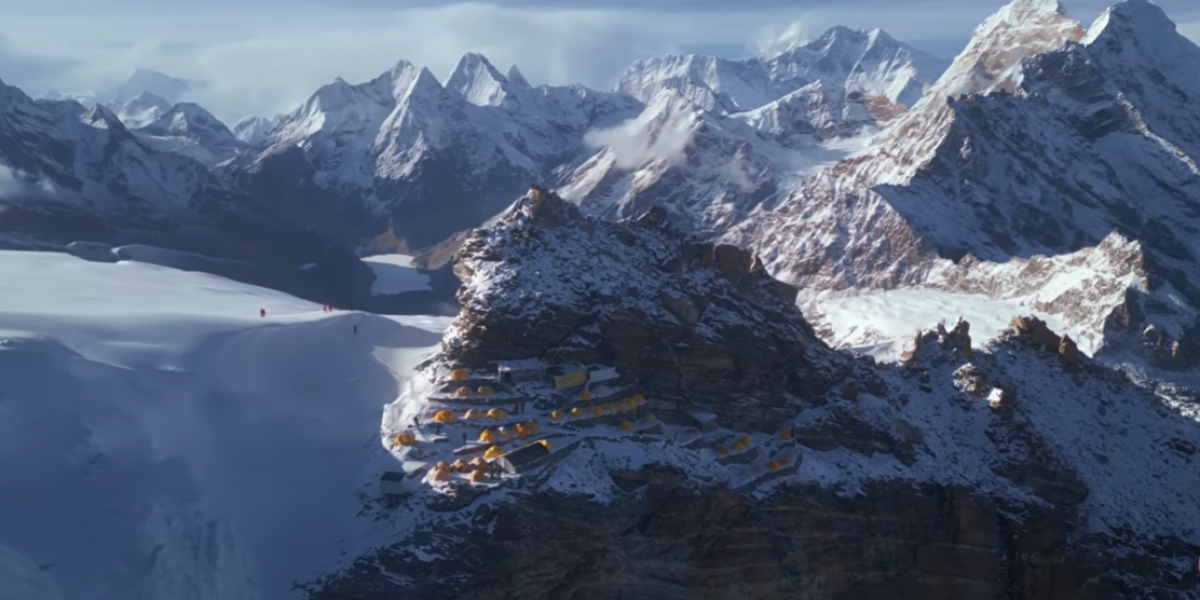
As you climb higher, the Himalayan panorama becomes increasingly impressive. In clear weather, the High Camp area provides outstanding views toward Everest, Lhotse, Makalu, Baruntse, Chamlang, and numerous surrounding peaks.
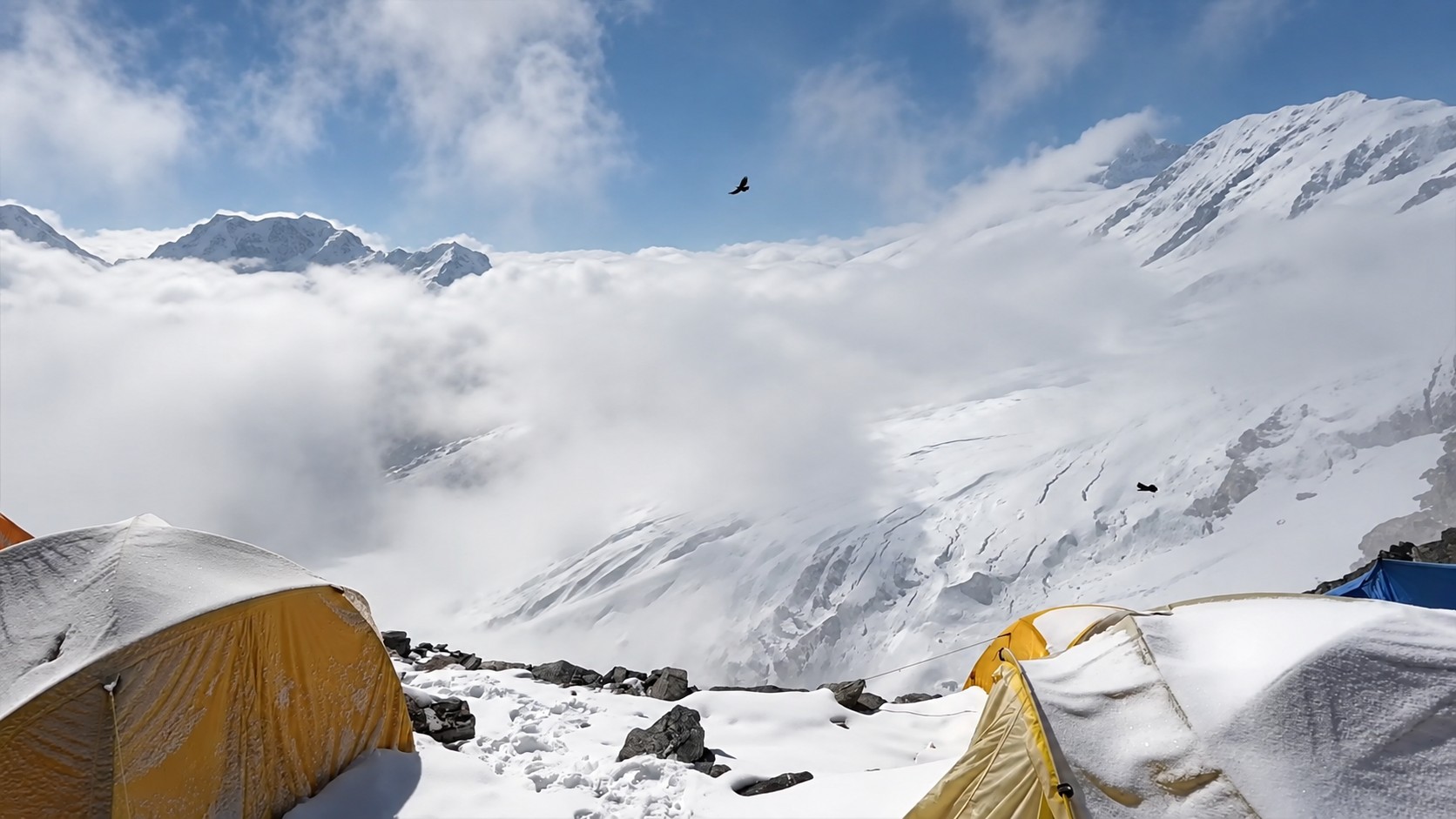
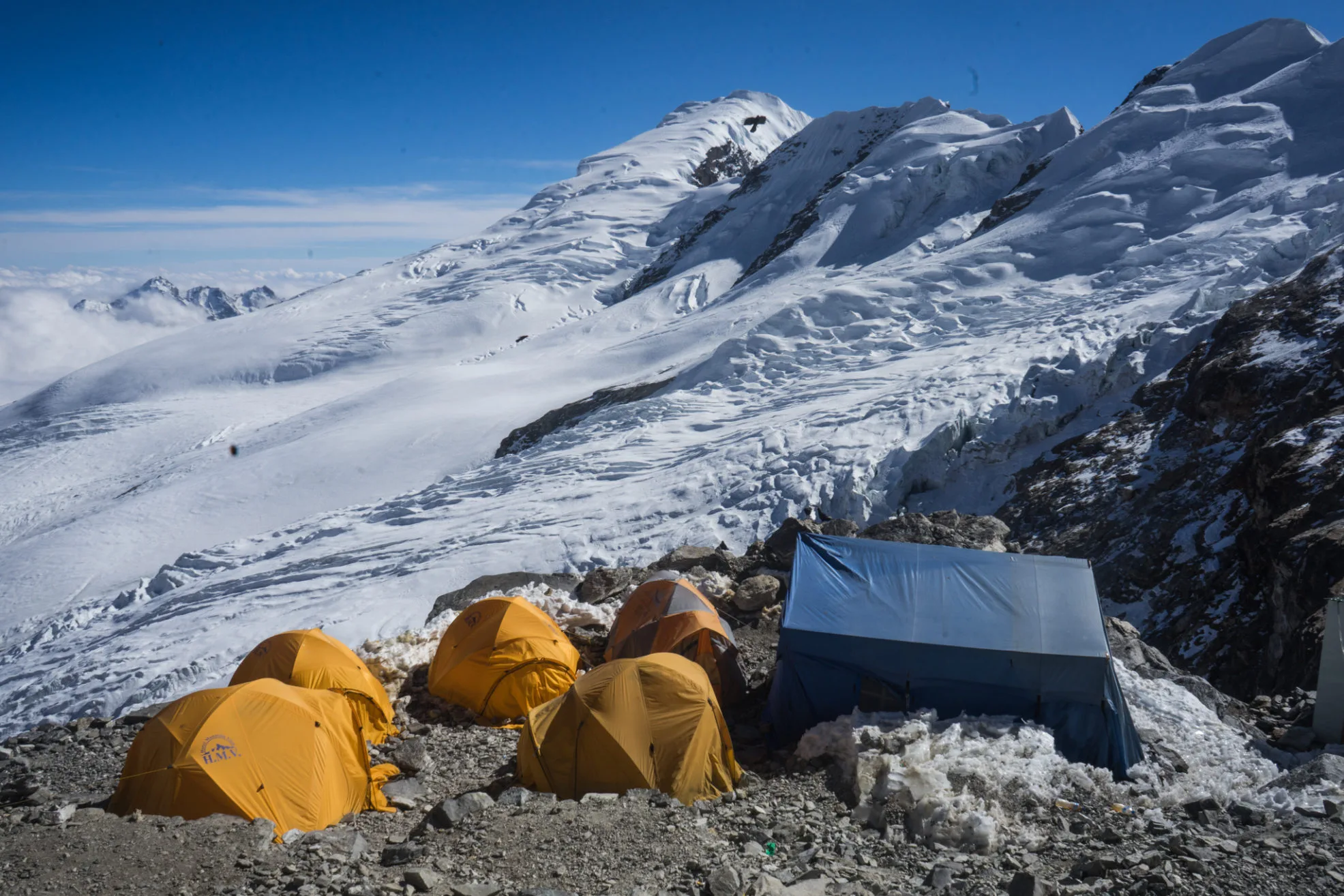
You spend the night in a tent at approximately 5,780 m. After an early dinner and final summit briefing, you rest for a few hours before beginning the summit attempt during the night.
This is the most challenging and rewarding day of the entire expedition. The summit attempt normally begins around 2:00 to 3:00 in the morning, allowing the climbing team to travel during colder and generally firmer snow conditions.
Using headlamps, crampons, ropes, harnesses, and other climbing equipment as required, you gradually ascend across the upper glacier and snow slopes. The climb is not extremely technical under normal conditions, but the combination of darkness, cold temperatures, glacier travel, and very high altitude makes it physically demanding.
With suitable weather, snow, health, and route conditions, you reach the summit of Mera Peak at 6,470 m. The summit offers one of the great Himalayan panoramas, with views extending toward Everest, Lhotse, Makalu, Baruntse, Chamlang, and numerous other peaks across eastern Nepal.
After spending a short time on the summit, you begin the careful descent to High Camp and continue downward to Khare. Returning to the lower elevation after the long summit push provides welcome relief and a well-earned opportunity to rest.
This day is kept as a contingency day because successful climbing in the Himalayas depends on weather, snow conditions, visibility, route safety, and the health of the climbing team.
If unfavorable conditions prevent the summit attempt on Day 11, this day provides an additional summit opportunity when conditions allow. Your climbing guide will make the final decision based on the safety of the route and the condition of the group.
If the summit has already been successfully completed on Day 11, the day becomes a recovery and rest day at Khare. After the demanding summit climb, the additional recovery time is valuable before beginning the long descent through the Hinku Valley.
After completing the climbing section, you begin the long descent from Khare through the upper Hinku Valley. The trail retraces the route toward Thaknak, passing once again through glacial moraine and rocky mountain terrain.
As you continue losing elevation, the air becomes noticeably thicker and vegetation gradually returns. From Thaknak, the trail follows the Hinku River downstream past alpine grazing areas and back toward the forests surrounding Kothe.
Although primarily downhill, this is still a relatively long trekking day after several demanding days at high altitude. Kothe provides a comfortable overnight stop and an opportunity to recover further after the summit.
The return journey continues through the lower Hinku Valley as you leave Kothe and move back into thick mountain forest. Rhododendron, pine, and other Himalayan vegetation become increasingly prominent as you travel away from the high glacial environment.
The route involves a mixture of climbs and descents across wooded slopes, small streams, and seasonal grazing areas. Although you are now at a considerably lower altitude than Khare, the undulating trail still requires steady walking.
By afternoon, you reach Chetarwa, a quiet mountain stopping point positioned along the return route toward Lukla. The evening is spent resting before the final major trekking day and the crossing back toward the Lukla side of the mountains.
Your final trekking day is also an important mountain crossing. From Chetarwa, the route climbs steadily toward Zatrwa La, the high pass separating the Hinku Valley from the Lukla side of the region.
The climb is demanding, especially after the many days already spent on the trail, but reaching the pass provides a final opportunity to look back toward the remote Hinku Valley and surrounding mountains. Zatrwa La reaches approximately 4,600 m before the trail begins its long descent.
From the pass, you descend through increasingly green mountain terrain toward Lukla. Forest and settlements gradually return as you approach the town, marking the completion of the trekking and climbing portion of your Mera Peak adventure.
The evening in Lukla is a chance to rest and celebrate the expedition with your trekking and climbing team.
After breakfast, you take the return flight from Lukla. Depending on the season, weather, and current flight operations, the flight may operate directly to Kathmandu or to Ramechhap, followed by a road transfer back to Kathmandu.
The flight provides one final aerial view of the Himalayan landscape before leaving the mountains behind. If your flight lands at Ramechhap, you continue to Kathmandu by road.
After reaching Kathmandu, you will be transferred to your hotel. The remainder of the day is free to rest, enjoy a hot shower, explore the city, shop for souvenirs, or simply relax after completing the Mera Peak expedition.
Your Mera Peak Climbing adventure officially comes to an end today. Depending on the departure time of your international flight, you will have some free time at your hotel before the scheduled airport transfer.
Our representative will transfer you to Tribhuvan International Airport for your onward journey. After trekking through remote mountain valleys, crossing high passes, travelling across glaciers, and attempting the 6,470 m summit of Mera Peak, you leave Nepal with the memories and experiences of a major Himalayan climbing adventure.
What's Included
Airport Transfers
|
Hotel Accommodation in Kathmandu
|
Domestic Flights
|
Meals During the Trek & Climb
|
Teahouse & Tented Accommodation
|
Professional Trekking & Climbing Team
|
Mera Peak Permits & Entry Fees
|
Group Climbing Equipment
|
Safety, Medical Support & Souvenir
|
Staff Insurance & Welfare
|
Taxes & Administrative Costs
|
What's Not Included
|
International Airfare
|
|
Nepal Visa
|
|
Travel & Climbing Insurance
|
|
Personal Climbing & Trekking Gear
Personal clothing, footwear and technical equipment required for the climb are the responsibility of the climber unless specifically listed in the inclusions
|
|
Meals in Kathmandu
Lunch and dinner in Kathmandu are not included
|
|
Personal Expenses
|
|
Tips for Trekking & Climbing Staff
Gratuities for guides, porters and climbing staff are appreciated but voluntary.
|
|
Emergency Evacuation
Helicopter rescue, medical evacuation and related emergency transportation costs are not included. These may be covered by travel insurance when the policy provides appropriate high altitude and emergency evacuation coverage.
|
|
Any Other Costs
Any services, activities, equipment, meals or expenses not specifically mentioned in the What’s Included section.
|
Departure Dates
Route Map & Gallery

Frequently Asked Questions - Mera Peak Climbing
Mera Peak (6,470m) is the highest trekking peak in Nepal and a popular climbing destination known for its panoramic views of Everest, Lhotse, Makalu, Cho Oyu, and Kanchenjunga.
Mera Peak is considered a moderately challenging trekking peak. It is non-technical but requires:
-
Glacier travel skills
-
Basic use of crampons and ice axe
-
Strong physical fitness
-
High-altitude endurance
Our complete Mera Peak Climbing itinerary takes 17 days from arrival in Kathmandu to final departure. The itinerary includes the approach through the Hinku Valley, an acclimatization and climbing preparation day at Khare, the summit attempt and a dedicated contingency day in case weather or mountain conditions affect the planned schedule.
Previous technical mountaineering experience is not always required for the standard Mera Peak route, particularly for physically fit trekkers climbing with an experienced guide. Beginners can attempt it with proper training. Prior high-altitude trekking experience is recommended, along with basic knowledge of:
-
Crampon use
-
Ice axe handling
-
Rope techniques
- Harness adjustment
Mera Peak is generally considered less technical than many other Himalayan climbing peaks, but it should not be treated as simply a trekking summit. The upper mountain involves snow and glacier travel, and climbers may use crampons, an ice axe, climbing harness, ropes and other mountaineering equipment depending on current conditions.
The Mera Peak journey requires the relevant Mera Peak Climbing Permit, Makalu-Barun National Park entry permit, applicable TIMS requirement, and any local entry requirements that apply at the time of travel.
Permit regulations and fees can change, so Top Trail Nepal arranges and confirms the required documentation according to current regulations and package inclusions.
Yes. A licensed climbing guide is mandatory for safety, rope management, glacier navigation, and emergency response.
The summit stands at 6,470 meters (21,227 ft), making it the highest trekking peak in Nepal.
Essential gear includes:
-
Mountaineering boots
-
Crampons
-
Ice axe
-
Harness & carabiners
-
Helmet
-
Down suit or expedition-grade down jacket
-
Sleeping bag (-20°C to -30°C)
Yes. The altitude is extreme, and proper acclimatization days in Khare or surrounding areas are essential to avoid AMS.
Mera Peak is higher but technically easier. Island Peak involves steeper ice sections and fixed ropes, making it more technical.
Absolutely. It offers a real Himalayan climbing experience with breathtaking views of five 8,000-meter peaks and is a perfect introductory climb for aspiring mountaineers.
The summit day is normally the longest and most demanding day of the expedition.
The climb often begins around 2:00 to 3:00 in the morning and can take approximately 9 to 12 hours for the climb and descent, depending on weather, snow conditions, pace and the physical condition of the team.
Our 17-day itinerary includes a dedicated summit contingency day.
If weather, snow, visibility, route conditions or another safety issue prevents the planned summit attempt, the contingency day may provide another climbing opportunity when conditions improve.
If the summit is completed as scheduled, the additional day becomes a recovery day at Khare.
Yes. Comprehensive travel insurance is strongly recommended and should specifically cover high-altitude trekking and peak climbing up to at least 6,470 m.
The policy should also include emergency medical treatment and helicopter evacuation where applicable.
Many standard travel insurance policies exclude mountaineering or impose altitude limits, so the policy wording should be checked carefully before travelling.
Useful Info
Mera Peak Climbing combines remote trekking through the Hinku Valley with a high-altitude climbing objective at 6,470 m. Conditions, accommodation and available facilities change considerably as the route moves from the lower forested trails toward Khare, Mera High Camp and the summit.
The information below covers the practical details you should understand before joining the climb, including the best seasons, accommodation, Lukla flights, fitness, acclimatization, permits, climbing preparation, food, water, connectivity, equipment, insurance and summit contingency.
Best Time for Mera Peak Climbing
The main climbing seasons for Mera Peak are spring from March to May and autumn from September to November. These periods generally provide the most suitable combination of mountain weather, trail conditions and visibility for trekking and climbing.
Spring normally brings gradually warmer conditions and longer daylight hours, while autumn often provides clearer skies following the monsoon. Conditions above Khare can still be very cold during either season, particularly at High Camp and during the pre-dawn summit attempt.
Winter climbing is possible only when conditions are suitable, but extreme cold and snow can make the route significantly more demanding. The summer monsoon brings rain to the lower approach, cloud, wet trails and less predictable mountain weather.
| Season | Typical Conditions | Suitability |
|---|---|---|
| March to May | Popular spring climbing season with generally favorable trekking and summit conditions | Excellent |
| June to August | Monsoon rain on lower trails, cloud, wet conditions and less predictable mountain weather | Less suitable |
| September to November | Generally clearer skies, good visibility and favorable post-monsoon climbing conditions | Excellent |
| December to February | Very cold high-altitude conditions with possible snow and difficult summit weather | Limited and condition dependent |
Accommodation Along the Mera Peak Route
Accommodation during most of the trekking section is provided in local teahouses and mountain lodges. Rooms are normally simple and usually arranged on a twin-sharing basis. Facilities are generally better around Lukla and the lower villages and become progressively more basic as the trail moves deeper into the Hinku Valley.
At Khare (5,045 m), teahouse accommodation is used during the acclimatization and climbing preparation period. Above Khare, conventional lodges are no longer available, and the night at Mera High Camp (approximately 5,780 m) is spent in a tent.
| Place | Elevation | Accommodation | What to Expect |
|---|---|---|---|
| Kathmandu | 1,350 m | Hotel | Private room and standard city facilities |
| Paiya | 2,730 m | Teahouse | Simple mountain lodging and basic facilities |
| Pangom | 2,846 m | Teahouse | Local lodge accommodation in a quieter mountain settlement |
| Nagindingma | 2,650 m | Teahouse | Basic accommodation with limited facilities |
| Khola Kharka | 3,930 m | Teahouse | Simple remote mountain accommodation |
| Kothe | 3,691 m | Teahouse | Established trekking lodges beside the Hinku River |
| Thaknak | 4,358 m | Teahouse | Basic high-altitude lodge accommodation |
| Khare | 5,045 m | Teahouse | Main acclimatization and climbing preparation base |
| Mera High Camp | Approx. 5,780 m | Tented Camp | Basic high-altitude climbing camp with limited facilities |
| Lukla | 2,840 m | Teahouse | More developed lodge facilities at the end of the trek |
Hot showers, charging and Wi-Fi may be available at selected teahouses for an additional fee. These services become less reliable as the route gains altitude, and they should not be expected at High Camp.
Lukla Flights and Ramechhap Transfers
The Mera Peak journey normally begins and ends with a mountain flight to and from Lukla. Flight arrangements depend on the season, airline schedules, airport congestion and weather conditions.
During busy spring and autumn trekking periods, Lukla flights are frequently operated from Manthali Airport in Ramechhap instead of Kathmandu. When this occurs, an early road transfer from Kathmandu to Ramechhap is required before the flight.
Outside the busiest periods, direct Kathmandu-Lukla services may operate depending on airline arrangements. The actual departure airport is therefore confirmed close to the trekking date.
| Route | Transport | Important Information |
|---|---|---|
| Kathmandu to Lukla | Mountain flight | Available when direct services are operating |
| Kathmandu to Ramechhap | Road transfer | Required when peak-season Lukla flights operate from Manthali |
| Ramechhap to Lukla | Mountain flight | Common during busy spring and autumn trekking periods |
| Lukla Return Flight | Mountain flight | Final destination may be Kathmandu or Ramechhap depending on operations |
Mountain flights are highly dependent on weather and visibility. Delays or cancellations can occur, so travelers should avoid scheduling an international flight too close to the planned return from Lukla.
Fitness and Previous Experience
Mera Peak is a physically demanding high-altitude climb. Although the standard route is technically straightforward compared with more technical Himalayan peaks, the altitude, long trekking days, cold conditions and summit day make good physical preparation essential.
Previous technical climbing experience is not always necessary for a fit and well-prepared participant because climbing preparation is included at Khare. However, previous trekking experience, particularly above 4,000 m, is a significant advantage.
You should be comfortable walking for approximately five to seven hours on normal trekking days and prepared for a considerably longer summit day that can involve approximately nine to twelve hours of climbing and descending depending on conditions.
Training before the trip should include regular cardiovascular exercise, uphill walking, stair climbing, leg and core strengthening, and longer hikes while carrying a daypack. Consistent endurance is more important than speed.
Altitude and Acclimatization
Altitude is one of the most important challenges on Mera Peak. The route gradually moves from Lukla and the lower approach into the Hinku Valley before reaching Thaknak at 4,358 m and Khare at 5,045 m.
A dedicated acclimatization and climbing preparation day is included at Khare. A short hike to a higher elevation may be used before returning to Khare to sleep, following the principle of gaining altitude gradually while allowing the body additional time to adjust.
Participants should immediately inform their guide about symptoms such as persistent headache, nausea, dizziness, unusual fatigue, loss of coordination or difficulty breathing. Decisions about continuing higher are based on the condition of the individual, the group and the judgment of the guide.
No summit is more important than personal safety. The climbing schedule may be changed when altitude, weather or physical condition makes continuing unsafe.
Mera Peak Climbing Permits
Mera Peak is a regulated trekking peak, and several permits or local entry requirements apply to the journey. These are arranged before or during the expedition according to current government, tourism and local regulations.
| Permit or Requirement | Purpose / Information |
|---|---|
| Mera Peak Climbing Permit | Required for the 6,470 m summit attempt. Climbing royalty varies according to the season and current regulations. |
| Makalu-Barun National Park Entry Permit | Required for the protected area containing the Mera Peak and Hinku Valley mountain environment. The current entry fee for foreign visitors is NPR 3,000 per person per entry. |
| TIMS Card | Arranged according to the trekking regulations applicable to the Mera Peak route at the time of travel. |
| Local Trek-Card / Entry Requirement | Local tourism or Trek-Card requirements applicable around Lukla and the Khumbu Pasang Lhamu Rural Municipality are arranged according to current local regulations. |
Permit fees and regulations can change. Top Trail Nepal will confirm the applicable requirements during booking and arrange the necessary trekking and climbing documentation according to the package inclusions.
Climbing Preparation at Khare
The acclimatization day at Khare (5,045 m) also serves as the main preparation period before entering the climbing section.
Your climbing guide will review the use of important mountaineering equipment and techniques. Depending on route conditions and previous experience, training can include crampon movement, ice axe use, harness adjustment, rope handling, ascender use and glacier travel procedures.
This preparation is particularly useful for participants who have strong trekking experience but limited previous mountaineering experience.
The training day is not intended to replace extensive technical mountaineering instruction. Instead, it provides practical preparation for the equipment and procedures expected on the standard Mera Peak route.
How Difficult Is Mera Peak?
Mera Peak is often described as one of Nepal’s more technically straightforward trekking peaks, but this description should not be confused with an easy climb.
The principal difficulty comes from the 6,470 m altitude, prolonged exposure to cold, glacier and snow travel, the night spent at High Camp and the long summit day.
Depending on current mountain conditions, climbers may use crampons, ropes, harnesses, ice axes and other mountaineering equipment while moving across the upper glacier and summit slopes.
Good fitness, proper acclimatization, suitable equipment, favorable weather and the judgment of the climbing guide all play an important role in a safe and successful summit attempt.
Food During the Trek and Climb
Meals during the trekking section are served mainly in local teahouses. Typical choices include dal bhat, rice, vegetables, noodles, pasta, potatoes, soup, eggs, Tibetan-style bread, pancakes and other simple mountain meals.
Food choices become more limited and generally more expensive as supplies have to be transported higher into the remote Hinku Valley.
At Mera High Camp, meals are simpler and are arranged as part of the climbing camp. Appetite can decrease significantly at high altitude, so easily digestible food and warm drinks become particularly important.
Participants may also carry personal snacks such as energy bars, chocolate, nuts, electrolyte products or dried fruit for longer trekking and climbing days.
Drinking Water
Drinking water is available from teahouses and selected local sources during much of the trek. Water from untreated sources should not automatically be considered safe for drinking.
Boiled water, filtration systems or appropriate purification methods should be used throughout the journey.
Carry sufficient water capacity each day. Reliable refill opportunities become less frequent as the route moves above Thaknak and Khare and into the High Camp section.
Proper hydration is especially important at altitude, but it should be maintained steadily rather than forcing excessive amounts of water.
Electricity, Wi-Fi and Mobile Network
Electricity, charging and internet access vary considerably along the Mera Peak route. Services are easier to find around Lukla and selected lower settlements and become increasingly limited deeper inside the Hinku Valley.
Some teahouses may offer Wi-Fi and battery charging for an additional fee. Mobile network coverage can be intermittent and should not be expected throughout the journey.
A high-capacity power bank is strongly recommended for phones, cameras, headlamps and other personal electronics.
Above Khare and around Mera High Camp, travelers should treat the route as a remote mountain environment and should not depend on mobile data, Wi-Fi or regular electricity.
Weather and Summit Contingency
Mountain weather can change rapidly on Mera Peak. Strong wind, snowfall, low cloud, poor visibility, extreme cold or unsafe glacier conditions can affect the planned climbing schedule even during the normal spring and autumn seasons.
The itinerary therefore includes a dedicated contingency day after the planned summit attempt.
If suitable conditions allow the team to summit on the scheduled day, the contingency day becomes a recovery day at Khare. If the planned summit attempt cannot proceed safely, the additional day provides flexibility for another attempt when conditions permit.
The final summit decision always belongs to the climbing guide and is based on weather, route conditions, snow and glacier conditions, visibility and the physical condition of the team.
What to Pack for Mera Peak Climbing
Mera Peak requires equipment for both multi-day trekking and high-altitude mountaineering. Clothing should work as a layering system so that you can adapt to warm lower trails, cold evenings and extremely cold summit conditions.
| Category | Recommended Items |
|---|---|
| Base Layers | Moisture-wicking thermal tops and bottoms suitable for cold high-altitude conditions |
| Mid Layers | Fleece jacket, lightweight insulating layer and trekking shirts |
| Outer Layers | Waterproof and windproof jacket, waterproof trousers and warm insulated down jacket |
| Trekking Footwear | Broken-in trekking boots, trekking socks and comfortable camp footwear |
| Climbing Footwear | Suitable mountaineering boots compatible with the crampons used for the climb |
| Climbing Equipment | Crampons, harness, helmet, ice axe, ascender and other technical equipment according to operator arrangements |
| Head and Hand Protection | Thermal hat, balaclava or neck gaiter, liner gloves, insulated gloves and suitable summit gloves |
| Sleeping Gear | Warm high-altitude sleeping bag and optional sleeping bag liner |
| Daypack | Comfortable daypack, rain cover and dry bags for important equipment |
| Sun Protection | High UV-protection sunglasses or glacier glasses, sunscreen, lip balm and sun hat |
| Trekking Accessories | Trekking poles, headlamp with spare batteries, gaiters, water bottles and personal snacks |
| Personal Items | Toiletries, quick-drying towel, power bank, camera and personal medication |
| Documents | Passport, travel insurance details, permit information and emergency contact details |
The exact technical equipment supplied by Top Trail Nepal should be checked against the package inclusions before departure. Travelers should not assume that every personal climbing item listed above is automatically supplied unless specifically stated.
Money and Personal Expenses on the Trail
Cash is useful during the trek because card payments and ATMs should not be relied upon once you leave Lukla.
Personal expenses can include hot showers, Wi-Fi, battery charging, boiled drinking water, snacks, additional drinks and other personal purchases. Prices generally increase with altitude because goods have to be transported into the remote mountain region.
Carry enough Nepalese rupees for expected personal expenses, together with a reasonable emergency reserve.
Travel Insurance and Emergency Evacuation
Comprehensive travel insurance is essential for Mera Peak Climbing. A standard trekking policy may not provide sufficient protection because the itinerary includes a 6,470 m climbing objective.
Your insurance policy should specifically cover high-altitude trekking, peak climbing up to or above the maximum elevation of the trip, emergency medical treatment and helicopter evacuation where applicable.
Check the maximum-altitude limitation and mountaineering exclusions of the policy carefully before purchasing it.
Emergency helicopter evacuation and medical treatment are not normally included in the standard trekking package unless specifically stated. Travelers should carry their insurance details and emergency contact information throughout the expedition.
Climbing With an Experienced Guide
Professional trekking and climbing support is an important part of Mera Peak because the journey moves from remote trails into a high-altitude glacier environment.
Your trekking and climbing team assists with route finding, accommodation, altitude management, equipment preparation, glacier travel, rope systems and decisions regarding weather and summit safety.
During the climbing section, instructions from the climbing guide should always be followed. Mountain conditions can change quickly, and the route used on one expedition may differ slightly from another because of snow, ice and glacier conditions.
Responsible Trekking and Climbing
The Hinku Valley and Mera Peak lie within a sensitive high-mountain environment. Travelers should minimize unnecessary plastic waste, use refillable water bottles, stay on established trails and follow the instructions of guides regarding rubbish and camp waste.
Respect local settlements, monasteries, religious sites and community customs along the route. At higher camps, all waste should be managed according to the climbing team’s procedures and applicable mountain regulations.
The goal should be to leave the trail and climbing area in the same or better condition than you found it.
Important: Walking times, elevations, accommodation, Lukla flight arrangements, climbing camps, permits and summit schedules can change according to weather, trail conditions, airline operations, lodge availability, snow and glacier conditions, and the physical condition of the climbing team. Top Trail Nepal may adjust the itinerary when necessary to maintain safety and provide the best possible trekking and climbing experience.
Book Mera Peak Climbing with Confidence
Join Top Trail Nepal, your trusted local trekking agency in Kathmandu, for the journey of a lifetime. Our experienced guides, strong safety record, and personal service make your Everest dream come true.

- $2390 1 people
- $2250 2 people
- $2150 4 to 6 people
- $2090 7 to 12 people