
 Call Us or Whatsapp 9779808220612
 Email Us [email protected]
- English [EN]
- Espanol [ESP]
- France [FR]
- Deutsch [DE]
- China [CN]
- Japan [JP]
- Arabic [AR]
- Hindi [HI]

Upper Mustang Trek
 Duration: 15 Days
Difficulty: Moderate
Accomodation: Hotel/ Lodge/ Teahouse
Meal: B-L-D
Max. Altitude: 4,298 m
Best Seasons: Spring (March-April-May) & Autumn (Sep-Oct-Nov)
Duration: 15 Days
Difficulty: Moderate
Accomodation: Hotel/ Lodge/ Teahouse
Meal: B-L-D
Max. Altitude: 4,298 m
Best Seasons: Spring (March-April-May) & Autumn (Sep-Oct-Nov)
Upper Mustang Trek
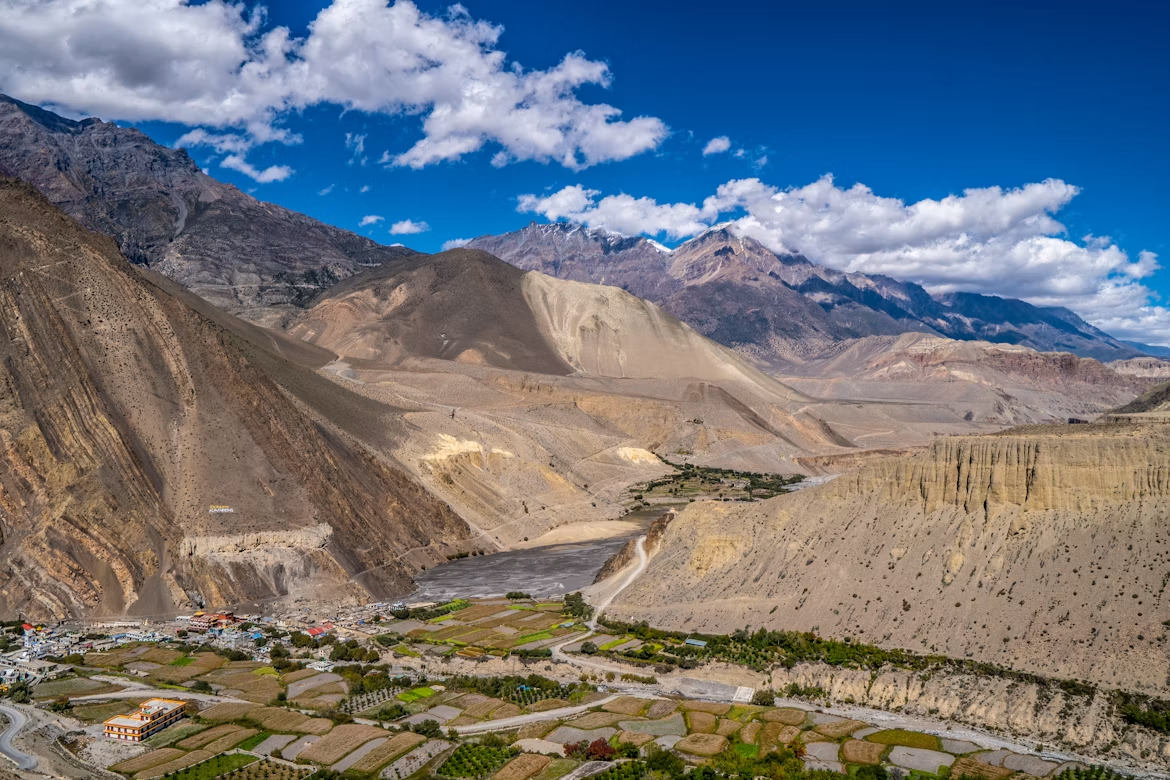
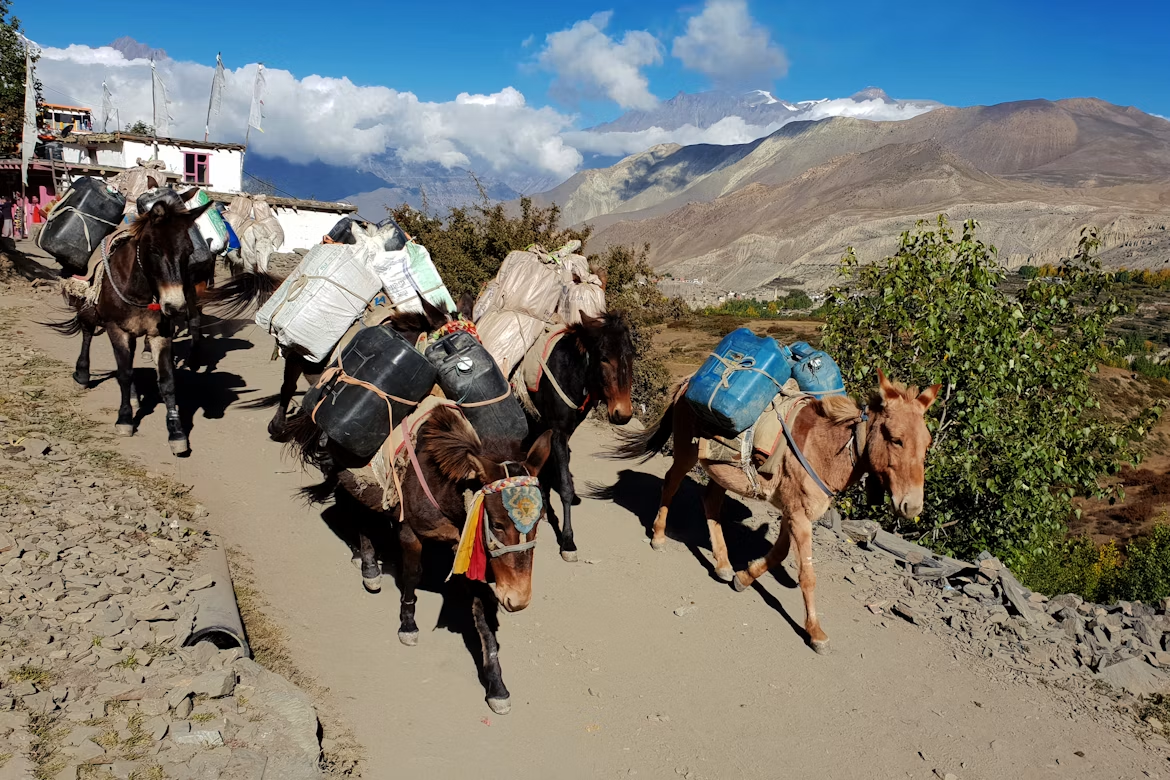
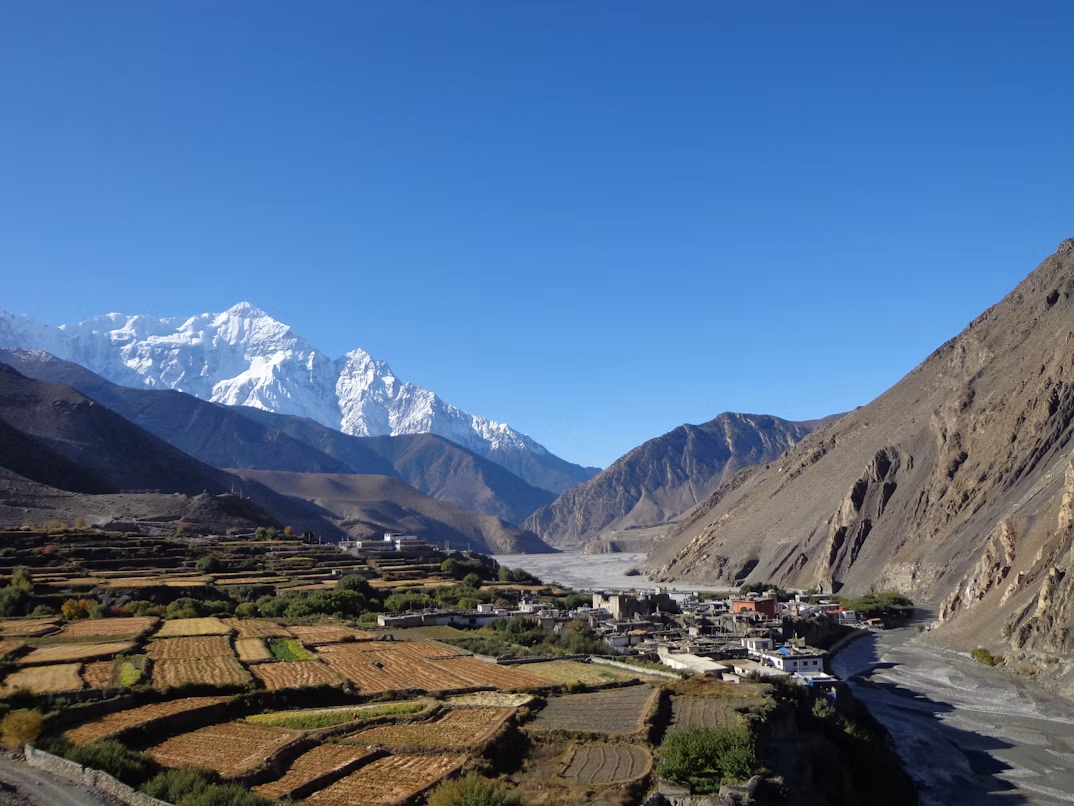
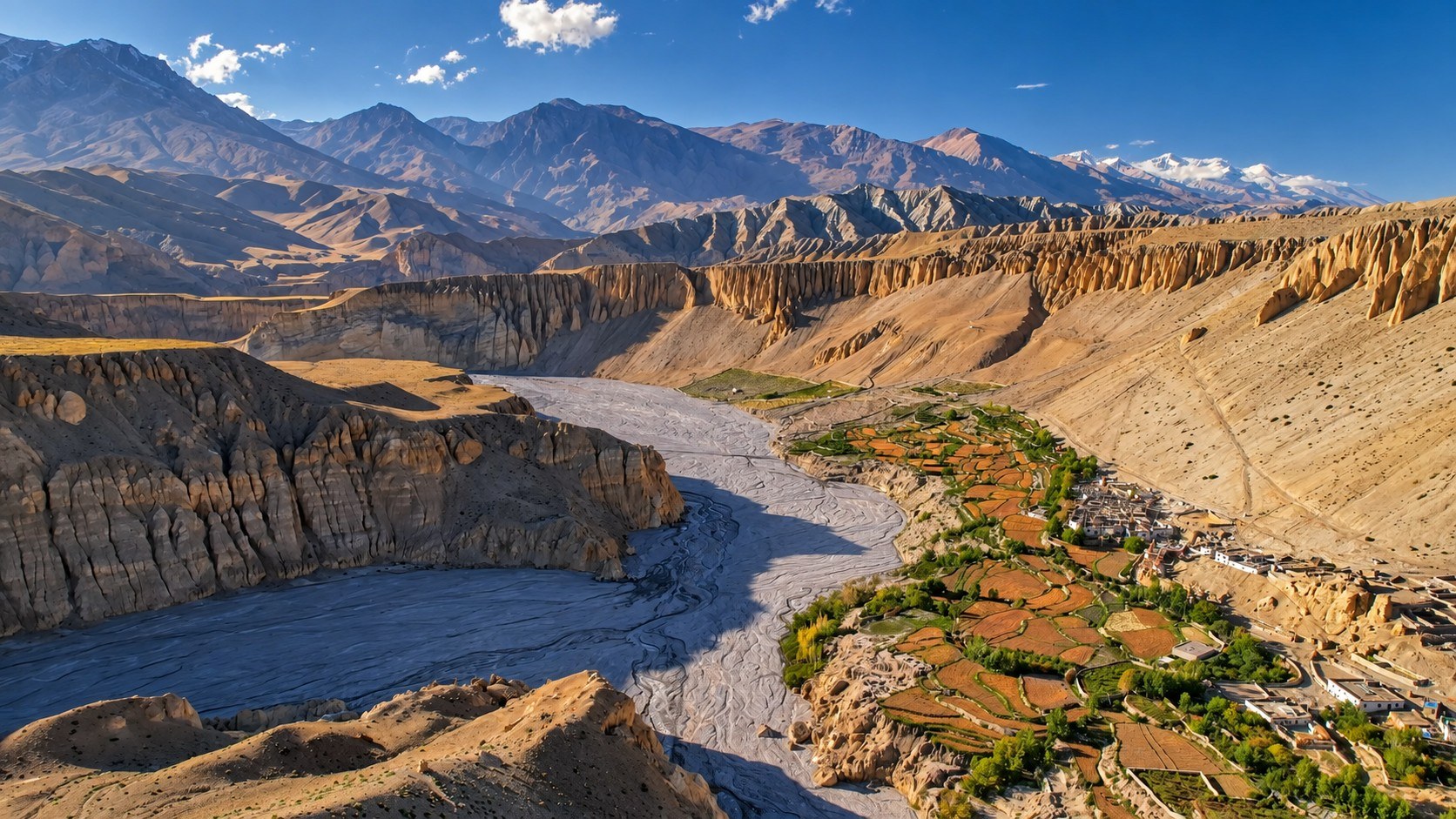
The Upper Mustang Trek takes you into one of Nepal’s most distinctive mountain regions, where the green valleys of the lower Himalaya gradually give way to a landscape of dry canyons, wind-carved cliffs, high plateaus and ancient settlements. Lying in the rain shadow of the Annapurna and Dhaulagiri ranges, Upper Mustang has a dry, almost desert-like character that feels very different from most other trekking regions in Nepal.
The journey begins in Kathmandu before travelling through Pokhara and flying into the Kali Gandaki Valley at Jomsom. From Kagbeni, the trail enters the restricted Upper Mustang region and continues north through Tangbe, Chhusang, Chele, Samar, Syangboche, Ghami and Charang. Along the way, the route crosses a series of high passes and open ridges where the scale of the Mustang landscape becomes increasingly impressive.
Culture is one of the strongest reasons to make this journey. For centuries, Upper Mustang developed with close historical and cultural connections to Tibet, and those influences remain visible in its Buddhist monasteries, chortens, mani walls, prayer flags, traditional houses and village architecture. Even small settlements along the trail contain reminders of the religious traditions and trading history that shaped the region.
The cultural heart of the trek is Lo Manthang, the historic walled capital of the former Kingdom of Lo. Time here is set aside to explore its narrow lanes, traditional houses, former royal palace and important monasteries such as Jampa Lhakhang, Thubchen Gompa and Chode Gompa. Depending on the day’s excursion, you can also explore areas toward Namgyal, Tingkhar or Chhoser, where ancient caves carved into the cliffs reveal another fascinating part of Mustang’s history.
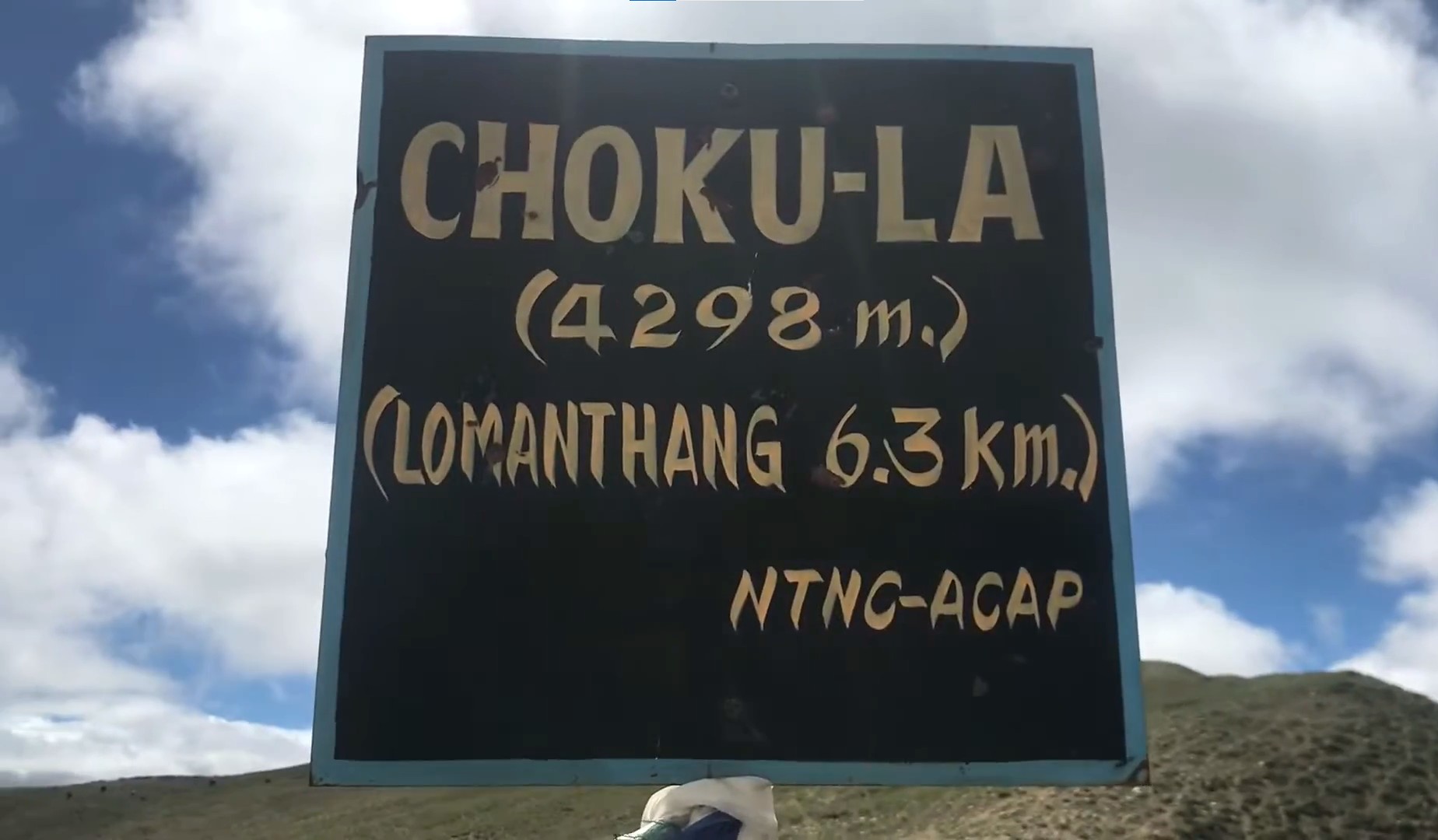
The scenery is equally memorable. The trek crosses passes including Taklam La, Nyi La, Charang La, Lo La and Chogo La, with the highest point of this itinerary reaching approximately 4,298 m at Chogo La (Choku-La). From the higher ridges, the trail opens toward the Annapurna, Dhaulagiri, Nilgiri and Damodar ranges, while below lie vast valleys filled with red, orange, grey and ochre rock formations.
Instead of returning entirely by the same trail, the journey from Lo Manthang follows a different route toward Ghar Gompa and Dhakmar. Ghar Gompa is one of the important Buddhist sites of the region, while Dhakmar is known for the enormous red cliffs rising behind the village. This alternative return route adds variety and allows you to experience another side of Upper Mustang before descending toward Ghiling, Chhuksang and Kagbeni.
The trek eventually reconnects with the Kali Gandaki Valley and finishes the walking section in Jomsom. By then, the journey has combined much more than mountain scenery. It offers an experience of ancient Himalayan culture, remote villages, Buddhist heritage, dramatic geology and high-altitude desert landscapes within one of Nepal’s most unusual trekking regions.
For travelers who are drawn as much to history and culture as they are to trekking, Upper Mustang is an exceptional choice. Rather than being centered on a single mountain objective, the journey is about exploring an entire landscape and the communities that have developed within it.
Highlights
- Travel deep into Upper Mustang and explore the historic former Kingdom of Lo, one of Nepal’s most culturally distinctive Himalayan regions.
- Enter the restricted region from Kagbeni, the traditional gateway between Lower and Upper Mustang.
- Trek through villages including Tangbe, Chhusang, Chele, Samar, Ghami and Charang before reaching Lo Manthang.
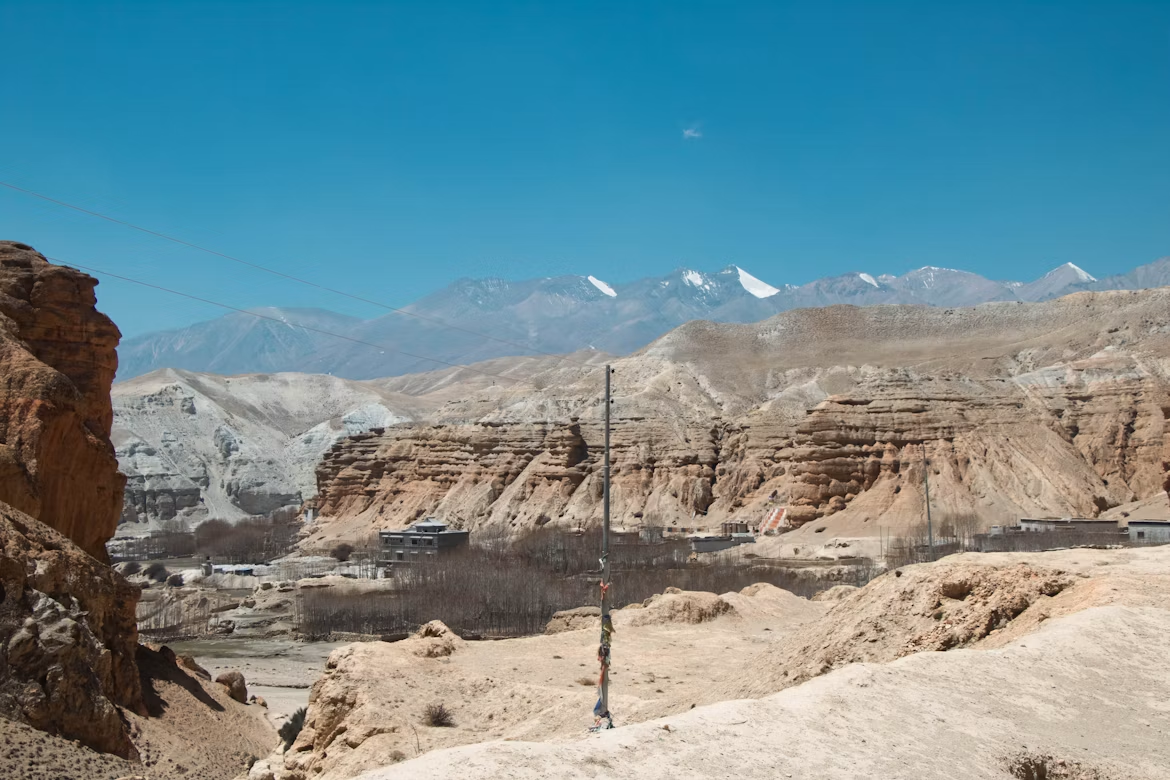
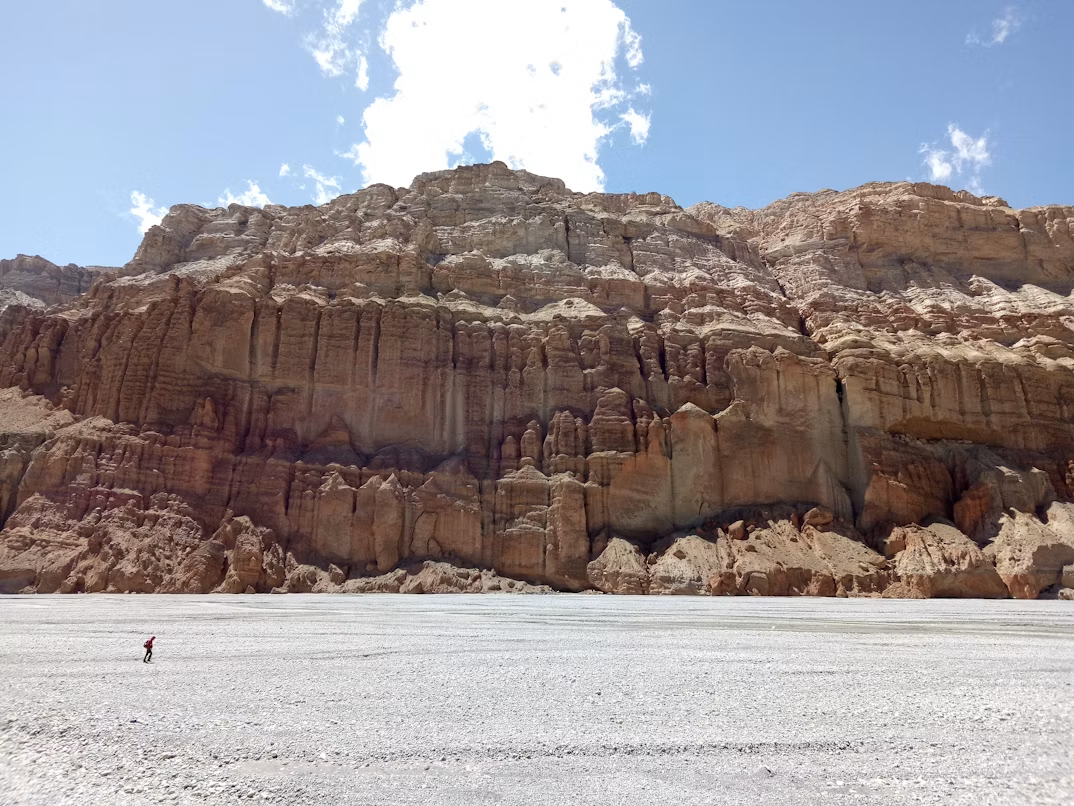
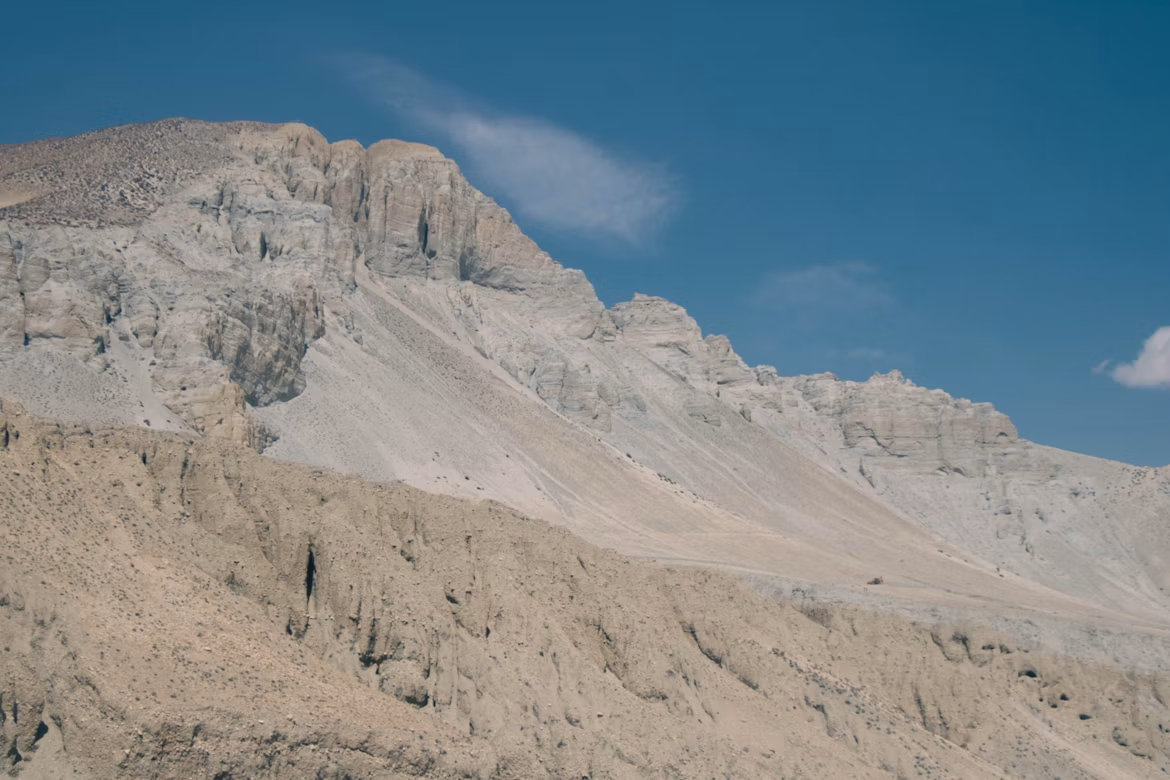
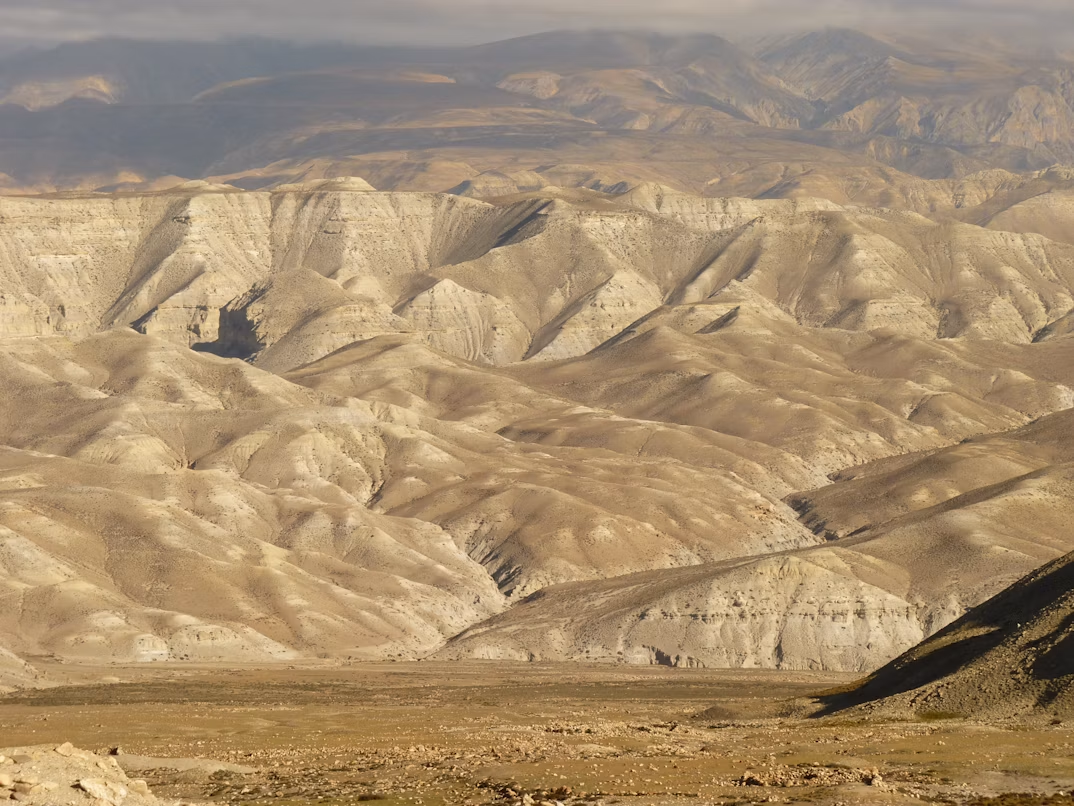
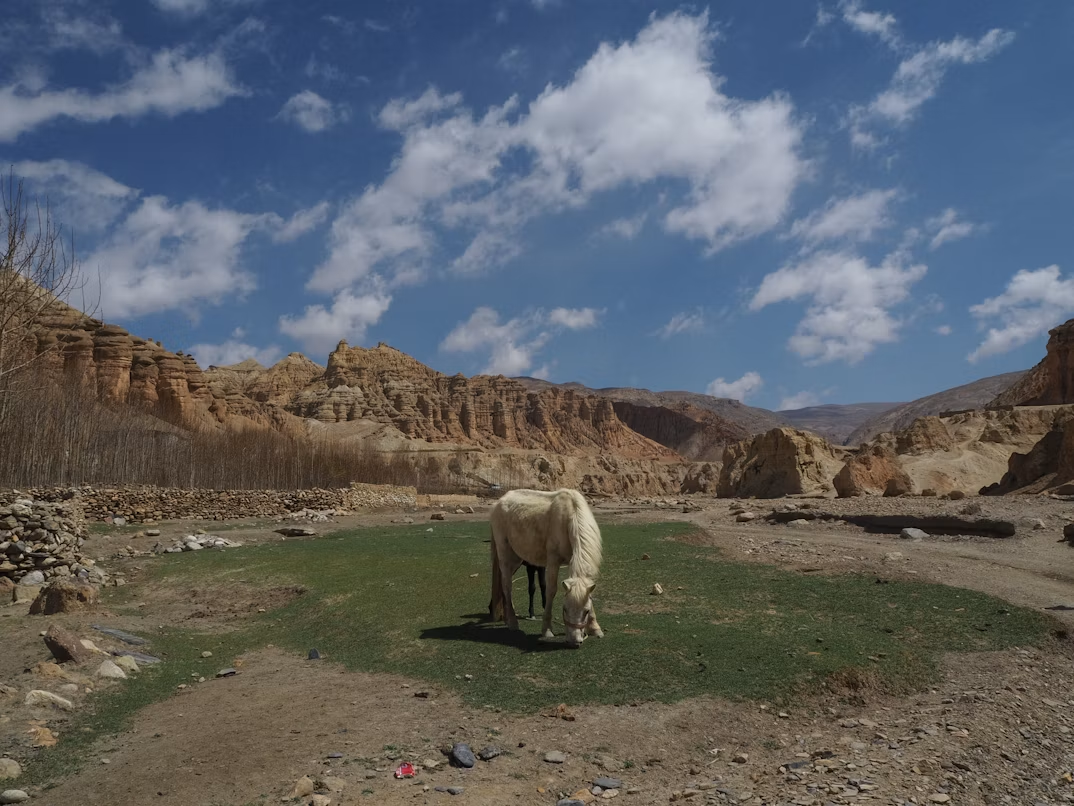
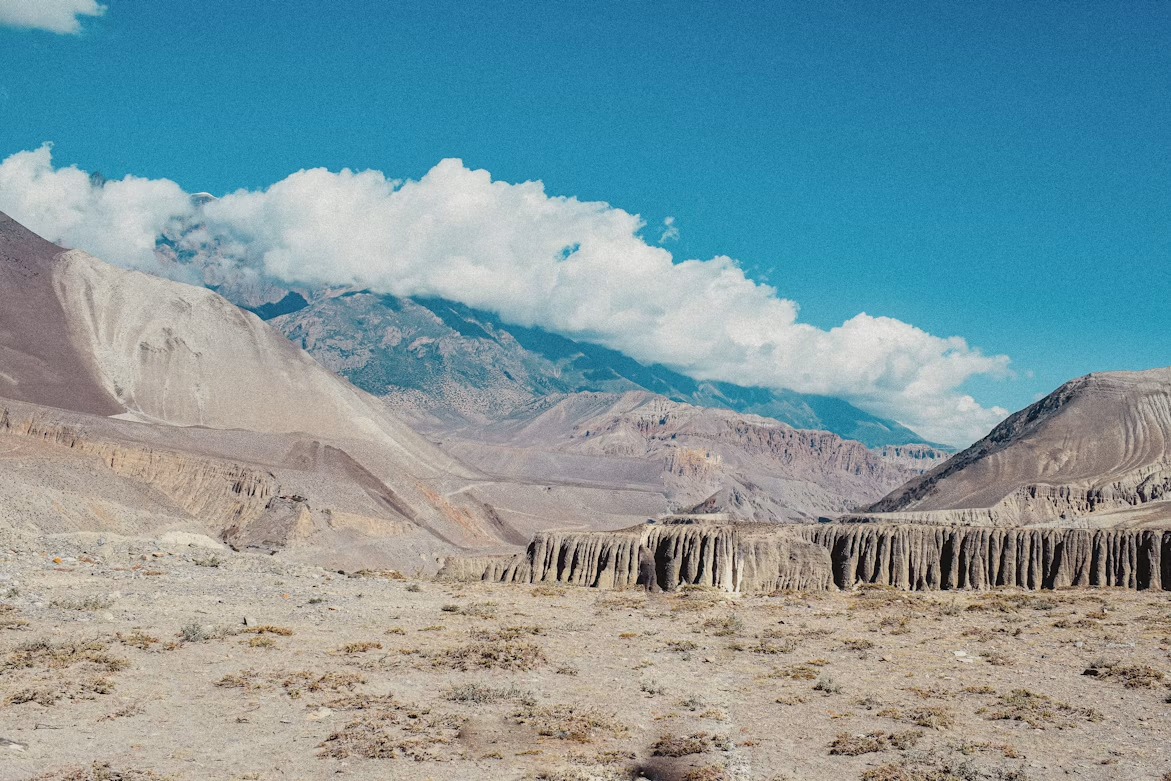
- Experience the remarkable rain-shadow landscape of Mustang, with dry valleys, deeply eroded cliffs, narrow canyons and wide high-altitude plateaus.
- Reach Lo Manthang, the historic walled capital known for its traditional architecture, monasteries, narrow lanes and former royal palace.
- Spend a full day exploring Lo Manthang and, depending on the excursion, visit the Namgyal, Tingkhar or Chhoser areas surrounding the old city.
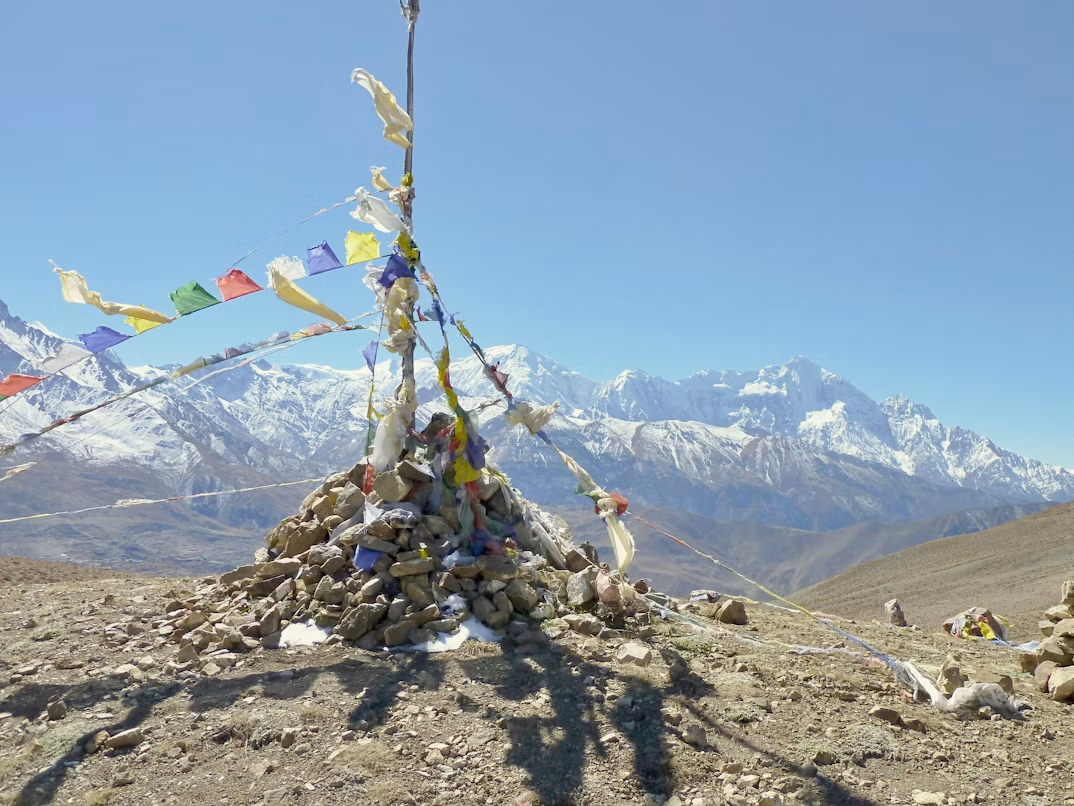
- Discover centuries of Buddhist heritage through chortens, mani walls, prayer wheels, monasteries and religious artwork found throughout the route.
- Cross a series of mountain passes, including Taklam La, Nyi La, Charang La, Lo La and Chogo La, with changing views across the Mustang plateau.
- Reach the trek’s highest point at approximately 4,298 m at Chogo La on the return route from Lo Manthang.
- Visit Ghar Gompa at Lo Gekar, an important Buddhist monastery traditionally associated with Guru Rinpoche.
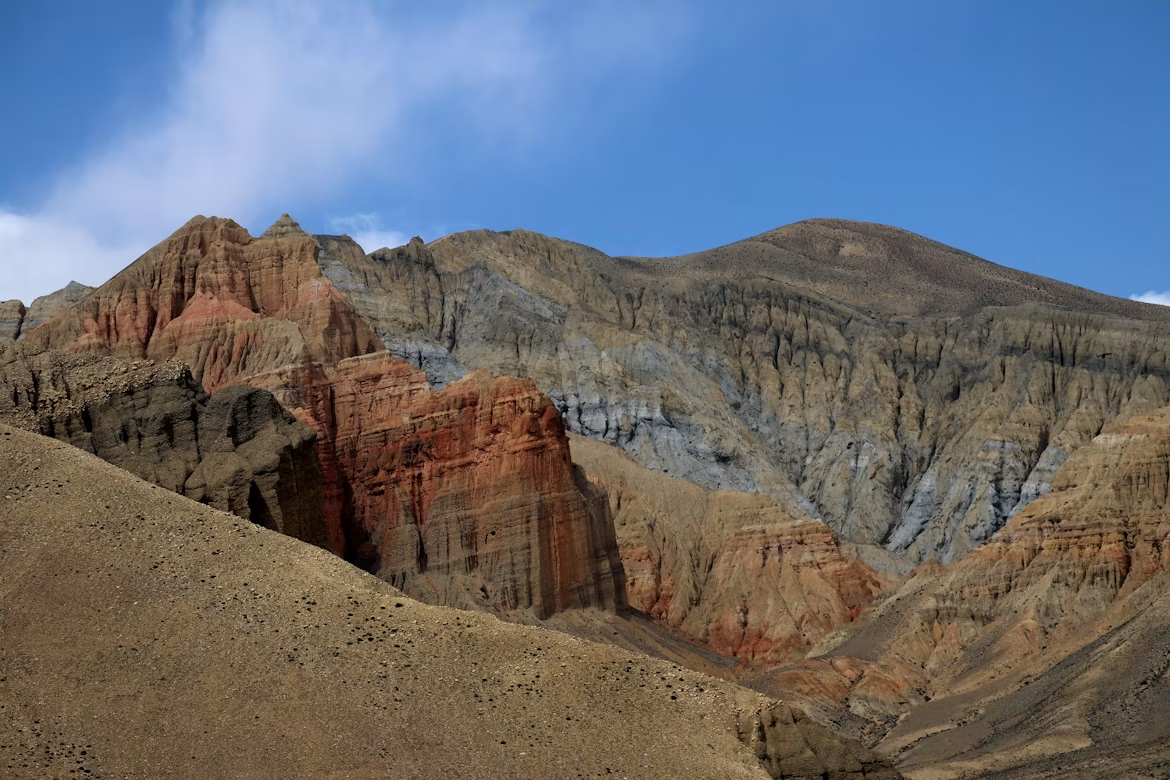
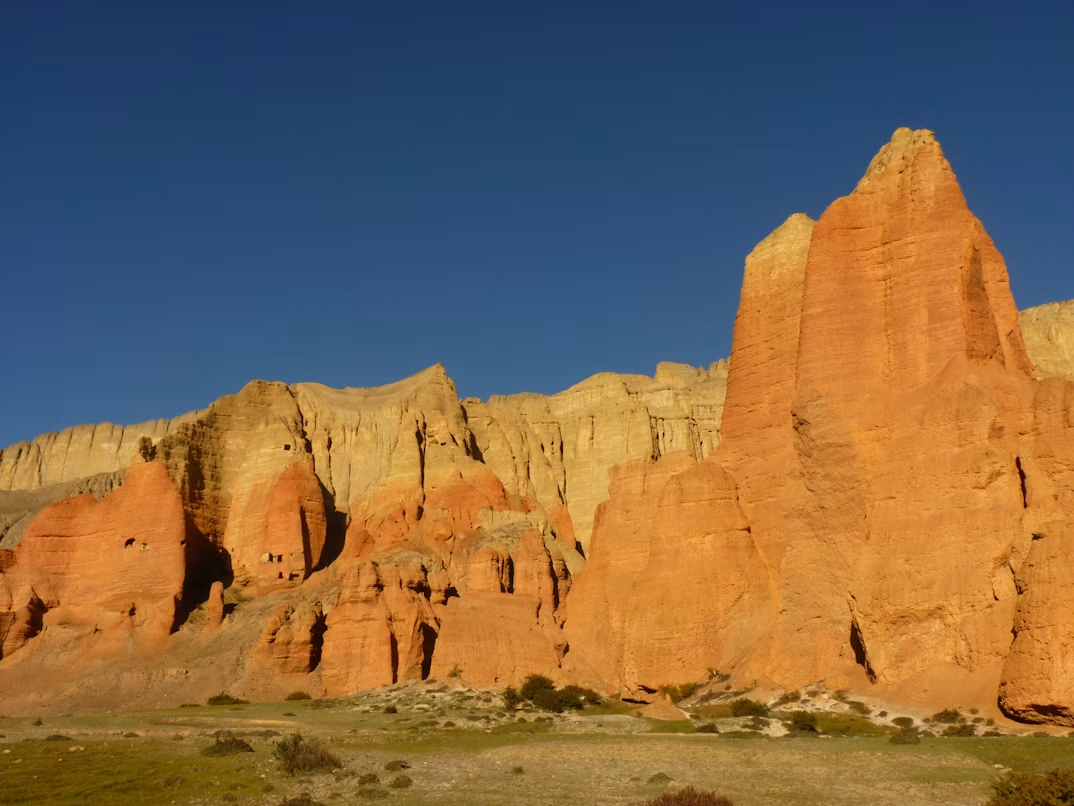
- Walk beneath the striking red and orange cliffs of Dhakmar, one of the most recognizable landscapes in Upper Mustang.
- Enjoy distant views toward the Annapurna, Dhaulagiri, Nilgiri and Damodar ranges when weather and visibility are clear.
- Follow sections of the historic Kali Gandaki corridor, which has long connected the Himalayan valleys with trading routes toward the Tibetan Plateau.
- See how communities have adapted to the dry environment through irrigated fields, barley and buckwheat cultivation, orchards and traditional village settlements.
- Combine remote trekking with history, Buddhist culture, high mountain scenery and unusual desert-like landscapes in one complete journey.
Detailed Itinerary - Upper Mustang Trek (15 Days)
Your Upper Mustang Trek begins with your arrival at Tribhuvan International Airport in Kathmandu. A representative from Top Trail Nepal will meet you at the airport and transfer you to your hotel.
After checking in, you can rest after your journey or spend some time exploring the nearby streets of Kathmandu. Later, you will meet the trekking team for a briefing covering the route, restricted-area permits, accommodation, transportation, weather conditions and other important preparations for Upper Mustang.
This is also a good opportunity to check your trekking equipment and arrange any last-minute items before leaving Kathmandu.
After breakfast, you leave Kathmandu and travel west toward Pokhara. The drive follows the Prithvi Highway through the hills of central Nepal, passing river valleys, terraced farmland, roadside settlements and forested slopes.
Much of the journey follows the Trishuli and Marsyangdi river corridors before the road eventually enters the Pokhara Valley. On clear days, sections of the drive provide distant views toward the Himalayan ranges.
After reaching Pokhara, you check into your hotel and have the remainder of the day to relax around Lakeside or prepare for the early journey to Jomsom the following morning.
Distance: Approximately 200 km
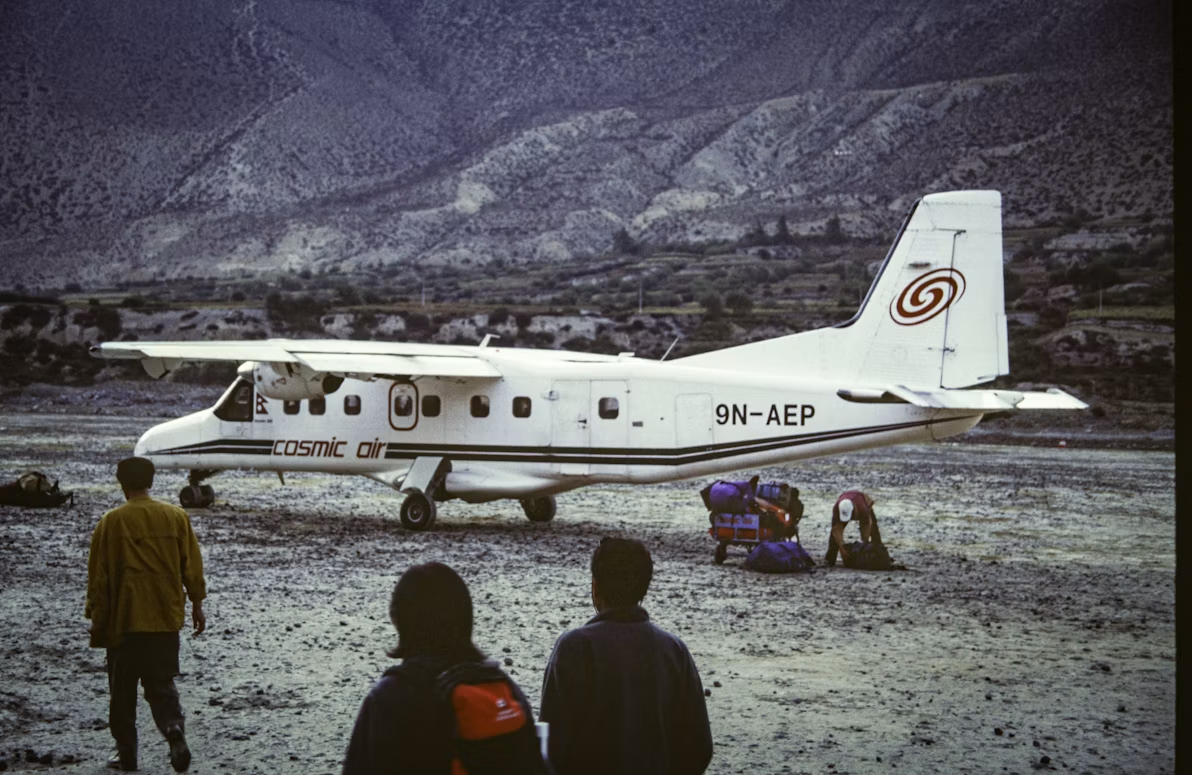
The day begins with a morning mountain flight from Pokhara to Jomsom, weather permitting. The flight follows the dramatic Kali Gandaki corridor between the Annapurna and Dhaulagiri massifs and provides a striking introduction to the Mustang landscape.
After landing in Jomsom, you begin trekking north along the broad Kali Gandaki Valley. The terrain quickly becomes drier and more open, and strong afternoon winds are common in this part of Mustang.
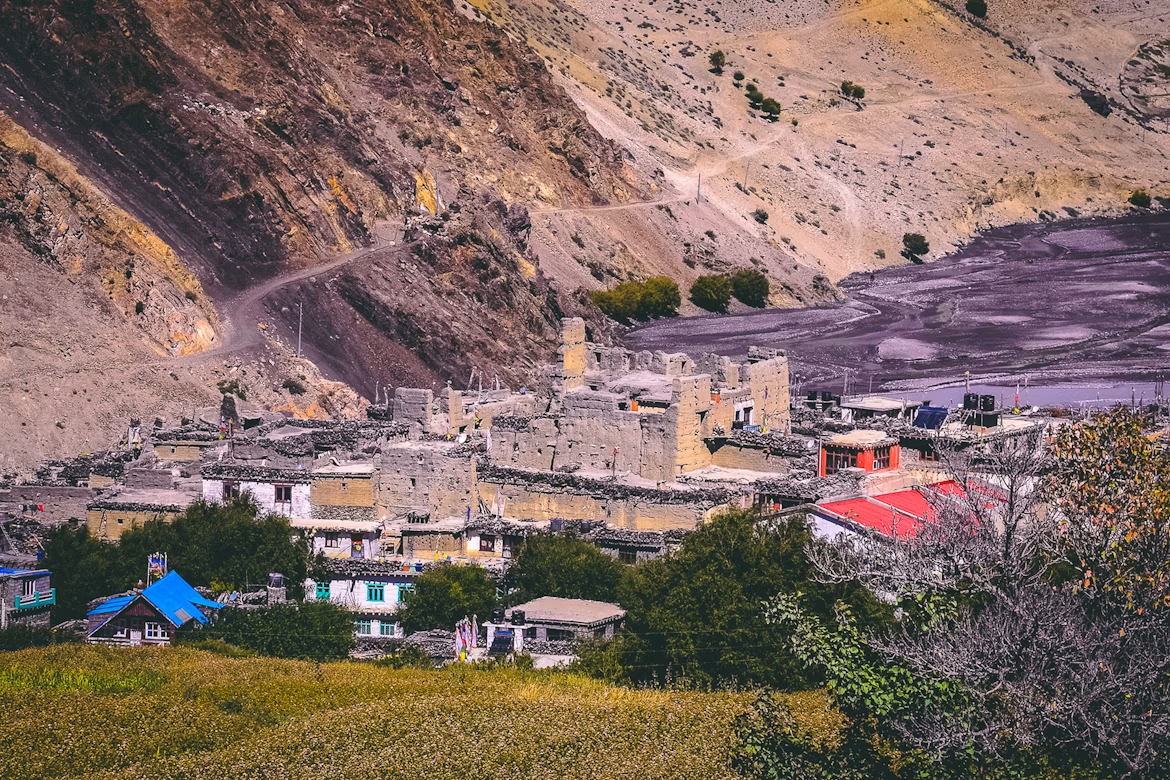
The trail passes through Ekle Bhatti before reaching Kagbeni, a historic village at the entrance to Upper Mustang. Its narrow lanes, mud-brick houses, prayer wheels and old monastery provide your first real introduction to the Tibetan-influenced culture found farther north.
Kagbeni is also the main checkpoint before entering the restricted Upper Mustang area.
Flight Time: Approximately 20 to 25 min
After the required permit formalities at Kagbeni, you officially enter the restricted Upper Mustang region and begin following the Kali Gandaki upstream.
The trail passes through Tangbe, where whitewashed houses, narrow lanes, buckwheat and barley fields create a striking contrast with the surrounding dry cliffs. You then continue toward Chhusang, surrounded by colorful rock formations and cave-pitted cliffs.
Beyond Chhusang, the route crosses the river and climbs away from the Kali Gandaki toward Chele. As you gain elevation, the landscape becomes increasingly arid, with wind-shaped rock formations, narrow ridges and deep canyons replacing the greener environment of Lower Mustang.
Chele is a small settlement positioned above the river valley and marks the beginning of the higher plateau section of the trek.
Today’s trek introduces you to the series of high passes and deeply eroded valleys that characterize Upper Mustang.
Leaving Chele, the trail climbs through exposed terrain toward Taklam La at approximately 3,624 m and continues across higher ridges around Dajori La at approximately 3,735 m. From these elevated sections, there are wide views across the dry Mustang landscape and toward the distant Himalayan ranges.
The trail then descends toward Samar, a beautiful settlement surrounded by poplar trees and cultivated fields. After leaving Samar, the route continues through a landscape of narrow valleys, streams, juniper and eroded cliffs.
Depending on the trail used, you may also pass near Ramchung or Chungsi Cave, an important Buddhist pilgrimage site associated with Guru Rinpoche.
The final section leads to Syangboche, where you spend the night surrounded by the open high-desert landscape.
The trail continues higher today as you cross some of the major passes of the Upper Mustang route.
After leaving Syangboche, you climb through open terrain toward Yamda La at approximately 3,850 m. The route passes chortens, small settlements and cultivated areas before beginning the longer ascent toward Nyi La at approximately 4,010 m.
Nyi La is one of the highest points reached on the outward journey and provides broad views across the barren Mustang plateau.
From the pass, the trail descends toward Ghami, one of the larger traditional settlements in the region. The village is surrounded by cultivated fields and lies close to dramatic red cliffs and an impressive mani wall made from stones carved with Buddhist prayers.
Leaving Ghami, the trail descends toward the Ghami Khola before crossing the river and beginning another climb through the dry Mustang landscape.
One of the highlights of the day is the long mani wall outside Ghami, accompanied by chortens and prayer stones that reflect the strong Tibetan Buddhist traditions of the region.
The route then climbs toward Charang La (Tsarang La), at approximately 3,870 m. From the pass, you descend toward the broad Charang Valley.
Charang, also known as Tsarang, was historically an important center of the Kingdom of Lo. The village contains traditional mud-brick houses, cultivated fields, an old fortress or dzong and a striking red monastery.
You normally have enough time in the afternoon to explore the village and its historic surroundings.
Today you reach the cultural heart of Upper Mustang: Lo Manthang, the historic walled capital of the former Kingdom of Lo.
After leaving Charang, the trail descends toward the Charang Chu before crossing the river and beginning a steady climb through the open plateau.
The route eventually reaches Lo La at approximately 3,950 m. From the pass, you get one of the most memorable views of the trek as the walled settlement of Lo Manthang appears across the broad high-altitude valley.
You then descend from the pass and continue toward the city. Entering Lo Manthang through its traditional walls feels completely different from the small settlements passed earlier in the trek.
The afternoon can be spent taking an initial walk through the narrow lanes and getting your first look at the monasteries, traditional houses and historic architecture of the old capital.
With breathtaking views of Nilgiri, Tilicho, Annapurna I, and Bhrikuti peak along the trek, you hike to Lo Manthang today.
Today is dedicated to exploring the cultural and historical treasures of Lo Manthang and its surroundings.
Inside the walled city, you can visit important monasteries including Jampa Lhakhang, Thubchen Gompa and Chode Gompa. The narrow lanes, traditional mud-brick houses, chortens and former royal palace reflect centuries of Tibetan Buddhist influence and the history of the former Kingdom of Lo.
Depending on the day’s plan and local conditions, you may also travel toward Namgyal Gompa, Tingkhar village or the Chhoser area north of Lo Manthang.
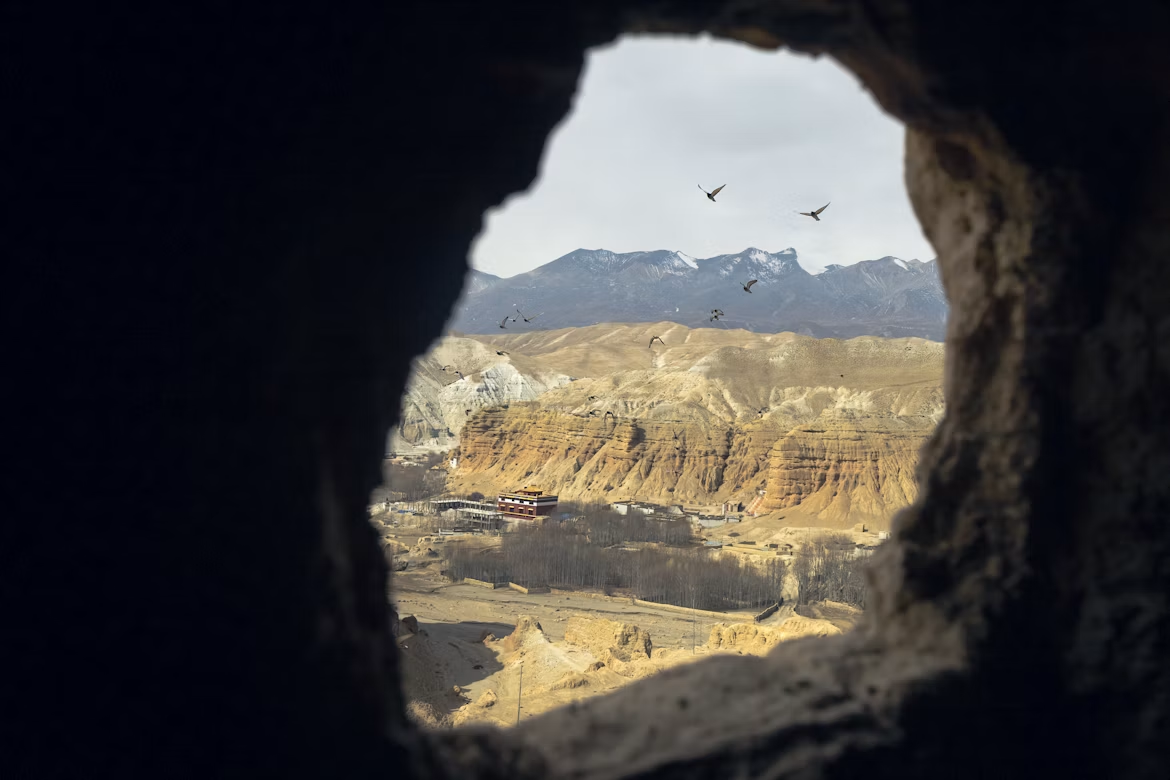
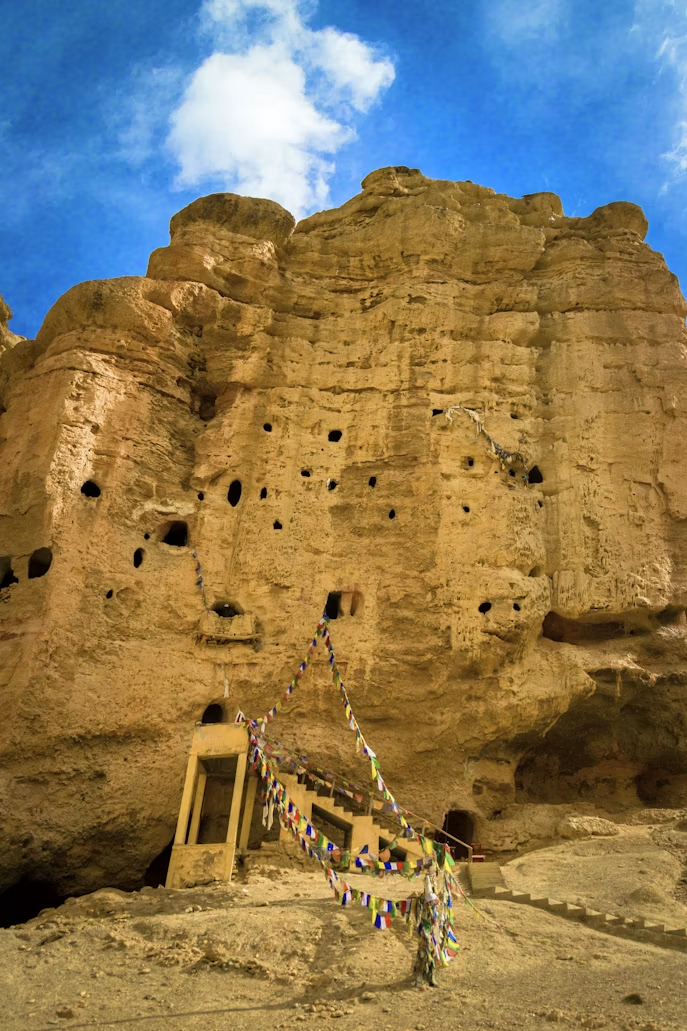
The Chhoser region is particularly known for its remarkable sky caves and cliff settlements, including multi-level cave complexes carved into the rock. The excursion provides a deeper understanding of the history, religion and traditional lifestyle of the communities living close to the Tibetan border.
After exploring the surrounding area, you return to Lo Manthang for another night.
The return journey begins today, but instead of simply following the same trail back, you take a higher and more adventurous route through the western side of Upper Mustang.
The trail climbs steadily away from Lo Manthang toward Chogo La at approximately 4,298 m, the highest point of the main trekking itinerary. From the pass, you can look across an enormous landscape of barren ridges, valleys and distant mountains.
After descending from the pass, you reach Ghar Gompa at Lo Gekar, one of the most important Buddhist monasteries in Upper Mustang and a site traditionally associated with Guru Rinpoche, which is over 1200 years old.
After visiting the monastery, the route continues across rugged high-altitude terrain and may cross the Mui La area at approximately 4,170 m before descending toward Dhakmar.
Dhakmar is one of the most visually striking villages on the trek, famous for the huge red and orange cliffs rising directly behind the settlement.
Leaving the red cliffs of Dhakmar behind, you continue south through a mixture of barren ridges, dry valleys and traditional Mustang settlements.
The route gradually reconnects with the main trail around Ghami and continues across the high plateau toward Ghiling. Depending on the exact trail used, the day may again involve crossings around Ghami La and Nyi La, so despite the lower overnight elevation there are still significant climbs and descents.
As you move south, you can look back toward the colorful cliffs of Dhakmar and the wide landscape surrounding the former Kingdom of Lo.
Eventually, the trail reaches Ghiling, a traditional village surrounded by fields, chortens and mud-brick houses. Afternoon winds can be strong across this exposed section of Mustang, so an earlier start is generally more comfortable.
Today you continue descending toward the lower Mustang Valley, retracing part of the route through the high passes and settlements encountered earlier in the trek.
The trail passes through the Syangboche area and continues across exposed ridges before descending toward Samar. Depending on the trail conditions and route selected by your guide, the day may cross passes around Syangboche La and Bhena La, reaching elevations close to 3,860 m.
As you descend farther south, the landscape gradually changes. The broad high plateau begins to narrow into deeper river valleys, while cultivated fields and settlements become more frequent.
You eventually reach Chhuksang, surrounded by beautiful red and ochre cliffs close to the Kali Gandaki River.
Your final trekking day follows the Kali Gandaki Valley south toward Jomsom.
From Chhuksang, you retrace the lower part of the route toward Kagbeni, where you officially leave the restricted Upper Mustang region. The familiar landscape around Kagbeni marks the transition from the remote high-desert settlements of Upper Mustang back toward the busier Lower Mustang corridor.
After a break in Kagbeni, you continue following the broad Kali Gandaki Valley toward Jomsom. Afternoon winds can be strong, so an early start is useful for this longer walking day.
On reaching Jomsom, you check into your lodge and have time to rest after completing the trekking section of the journey.
After an early breakfast, you take the morning flight from Jomsom to Pokhara, subject to weather and flight conditions.
The short flight follows the spectacular Kali Gandaki corridor between the Dhaulagiri and Annapurna ranges, providing one final aerial view of the Mustang landscape.
After arriving in Pokhara, you continue to Kathmandu according to the transportation arrangement for your trip. This may be by domestic flight or by road.
If travelling by flight, the journey to Kathmandu is relatively short. If travelling by road, expect a considerably longer transfer through the hills of central Nepal. You can choose any option before opting for final package price.
After reaching Kathmandu, you are transferred to your hotel and have the remainder of the evening free to relax.
Flight Time: Approximately 20 to 25 min from Jomsom to Pokhara and 25 to 30 min from Pokhara to Kathmandu
Pokhara to Kathmandu Distance: Approximately 200 km by road
Your Upper Mustang Trek officially comes to an end today.
Depending on the departure time of your international flight, you may have some free time in Kathmandu before leaving the hotel.
A representative from Top Trail Nepal will transfer you to Tribhuvan International Airport for your onward journey.
After exploring the Kali Gandaki Valley, ancient villages, Buddhist monasteries, high desert passes, the walled city of Lo Manthang and the remarkable landscapes of Upper Mustang, you leave Nepal with the memories of one of the country’s most distinctive trekking regions.
What's Included
Airport Transfers
|
Hotel Accommodation in Kathmandu & Pokhara
|
Transportation
|
Meals During the Trek
|
Teahouse & Lodge Accommodation
|
Professional Trekking Team
|
Upper Mustang Trekking Permits
|
Safety & Trekking Support
|
Taxes & Administrative Costs
|
What's Not Included
|
International Airfare
|
|
Nepal Visa
|
|
Travel Insurance
Travel insurance covering trekking and emergency evacuation is the responsibility of the traveler
|
|
Personal Trekking Gear
Personal clothing, footwear, backpack and other trekking equipment required for the journey
|
|
Drinks & Beverages
|
|
Personal Expenses
|
|
Tips for Guide & Porter
Gratuities are not included. Tipping is voluntary but appreciated for good service.
|
|
Emergency Rescue & Evacuation
Any helicopter rescue, medical evacuation or related emergency transportation costs are not included. These expenses may be covered by travel insurance if the policy provides appropriate trekking and emergency evacuation coverage.
|
|
Any Other Costs
Any services, meals, activities or expenses not specifically mentioned in the What’s Included section.
|
Departure Dates
Route Map & Gallery

Frequently Asked Questions - Upper Mustang Trek
Upper Mustang is a culturally sensitive and geopolitically strategic area bordering Tibet. The region requires a Restricted Area Permit to preserve its heritage and limit mass tourism.
Our Upper Mustang Trek is 15 days, including arrival in Kathmandu, travel through Pokhara and Jomsom, the full trekking route and final departure.
The best time is:
- Spring (March–May)
- Autumn (September–November)
Upper Mustang also has a rain-shadow climate, making it suitable even during monsoon (June–August).
The trek is moderate to challenging. There is no technical climbing, but several days involve 4 to 7 hours of walking, high passes, strong winds and sustained trekking above 3,000 m.
You need:
- Restricted Area Permit (RAP): USD 500 for 10 days
- ACAP (Annapurna Conservation Area Permit)
A TIMS card is not required for this region.
Yes. Hiring a licensed guide is mandatory for restricted areas, including Upper Mustang.
The highest point of this itinerary is approximately 4,298 m at Chogo La, reached on the return route from Lo Manthang toward Dhakmar.
Highlights include:
- Lo Manthang (walled city)
- Chhoser Cave & Sky Caves
- Ghar Gompa
- Charang Village
- Barley fields and Tibetan-style settlements
- Rugged desert canyons and sandstone cliffs
Yes. Upper Mustang receives much less rainfall than many other trekking regions because it lies behind the Annapurna and Dhaulagiri ranges, although flights and lower access routes can still be affected by monsoon weather.
Yes. It’s suitable for beginners with good fitness and an experienced guide. Trails are dry but not technically difficult.
No. Teahouse lodging is available along the entire Upper Mustang route, though facilities are basic.
Lo Manthang is known for its walled old city, monasteries, traditional houses, former royal palace and Tibetan Buddhist heritage. Nearby areas also include villages and ancient cave settlements.
On clear days, the route offers views toward the Annapurna, Dhaulagiri, Nilgiri and Damodar ranges, along with the dramatic high-desert landscape of Mustang.
Yes. Travel insurance is strongly recommended and should cover trekking up to at least 4,298 m, along with emergency medical treatment and evacuation where applicable.
Useful Info
The Upper Mustang Trek combines high-altitude walking with cultural exploration through one of Nepal’s most unusual Himalayan landscapes. Although the route does not involve technical climbing, trekkers cross several high passes, walk through exposed and windy terrain and spend many days above 3,000 m.
The information below covers the practical details you should understand before travelling to Upper Mustang, including difficulty, permits, current permit costs, accommodation, transportation, weather, festivals, food, drinking water, connectivity, equipment and cultural considerations.
How Difficult Is the Upper Mustang Trek?
The Upper Mustang Trek is best described as a moderate to challenging high-altitude trek. It does not involve technical climbing, ropes or mountaineering equipment, but most trekking days require approximately four to seven hours of walking over dry, uneven and frequently exposed terrain.
The route includes repeated ascents and descents across the Mustang plateau and crosses several passes above 3,500 m. The highest point of this itinerary is approximately 4,298 m at Chogo La on the return journey from Lo Manthang toward Dhakmar.
Strong afternoon winds, dry air, dust and prolonged exposure to the sun can make some days feel more demanding than the walking distance alone suggests.
Previous trekking experience is helpful but not essential for a healthy traveler with reasonable fitness. Regular walking, hiking, stair climbing and cardiovascular exercise before the trip will make the experience considerably more comfortable.
Altitude and Acclimatization
Although Upper Mustang does not reach the extreme elevations of Nepal’s high mountain passes and climbing routes, altitude should still be taken seriously.
The journey gradually climbs from Kagbeni at approximately 2,810 m toward settlements such as Ghami, Charang and Lo Manthang before crossing passes above 4,000 m.
The itinerary provides a gradual approach and includes two nights around Lo Manthang, allowing additional time at altitude before the higher return route toward Chogo La.
Symptoms such as persistent headache, dizziness, nausea, unusual fatigue or difficulty breathing should be reported to your guide immediately. Walking at a steady pace, drinking appropriate amounts of water and avoiding unnecessary overexertion can help your body adjust.
Upper Mustang Permits and Current Costs
Upper Mustang is a restricted trekking area. Foreign travelers cannot simply arrive in Kagbeni and continue into the restricted region independently. The necessary documentation must be arranged before entering Upper Mustang.
Under the current Department of Immigration fee schedule, the Upper Mustang Restricted Area Permit is charged at USD 50 per person per day spent within the designated restricted area.
For an itinerary spending approximately ten days inside the restricted region, this works out to approximately USD 500 per person for the restricted-area permit.
| Permit | Current Fee | Purpose |
|---|---|---|
| Upper Mustang Restricted Area Permit | USD 50 per person per day | Required for entry into the designated restricted areas north of Kagbeni |
| Annapurna Conservation Area Permit | NPR 3,000 for foreign visitors | Required for travel within the Annapurna Conservation Area |
| TIMS Card | NPR 2,000 for most foreign visitors | Trekking information and safety registration required under the current trekking system |
Government fees and trekking regulations can change. Top Trail Nepal will confirm the current charges and arrange the required documentation according to the package inclusions at the time of booking.
Can You Trek Upper Mustang Without a Guide?
Upper Mustang is not treated like an unrestricted independent trekking route.
The restricted-area permit must be processed through an authorized trekking agency, and the current trekking regulations require travelers on the Upper Mustang route to be accompanied by a licensed trekking guide.
Your guide also assists with permit checkpoints, navigation, accommodation, communication with local communities, weather conditions and any changes that may be required during the trek.
Best Time for the Upper Mustang Trek
The most popular trekking periods are spring from March to May and autumn from September to November. These months generally provide comfortable trekking conditions and good mountain visibility.
Upper Mustang is unusual because it lies within the rain shadow of the Annapurna and Dhaulagiri ranges. As a result, the region receives considerably less monsoon rainfall than many other parts of Nepal.
This makes June, July and August possible trekking months as well, although rain and poor weather can still affect Pokhara, lower Mustang, road access and flights to or from Jomsom.
| Season | Typical Conditions | Suitability |
|---|---|---|
| March to May | Generally favorable trekking weather with improving temperatures; Tiji Festival usually falls around May | Excellent |
| June to August | Upper Mustang remains relatively dry because of the rain shadow, although access routes can be affected by monsoon weather | Good |
| September to November | Generally clearer skies, dry trails and excellent visibility across the Mustang landscape | Excellent |
| December to February | Very cold conditions, possible snow, strong winds and reduced lodge availability in some settlements | Limited |
Festivals in Lo Manthang
Traveling during one of Upper Mustang’s major festivals can add a completely different dimension to the trek. Two of the most important celebrations associated with Lo Manthang are Tiji and Yartung.
Festival dates follow traditional calendars and can change each year. Travelers planning specifically around a festival should confirm the final dates before booking flights and trekking arrangements.
| Festival | Usual Period | What to Expect |
|---|---|---|
| Tiji Festival | Usually May | Sacred Buddhist ceremonies and ritual masked dances performed in Lo Manthang, with communities gathering around the historic walled city |
| Yartung Festival | Usually mid to late August | Traditional horse racing, local celebrations, music, dancing, community gatherings and seasonal rituals |
Tiji is one of the most famous festivals in Upper Mustang and normally attracts additional visitors to Lo Manthang. Accommodation can therefore fill quickly during the festival period.
Yartung has a different atmosphere and is especially known for Mustang’s strong horse culture. Traveling during the festival can provide an opportunity to see Lo Manthang at one of its most active and colorful times of the year.
If your trekking dates are planned around either festival, the itinerary may need to be adjusted slightly so that your nights in Lo Manthang coincide with the main celebrations.
Accommodation During the Trek
Accommodation is mainly provided by local teahouses and mountain lodges. Rooms are normally simple and arranged on a twin-sharing basis.
Facilities around Jomsom and Kagbeni are generally more developed, while accommodation becomes simpler as you move farther into Upper Mustang.
Lo Manthang has several lodge options, but room availability can become limited during popular trekking periods and particularly during festivals such as Tiji and Yartung.
| Area | Accommodation | What to Expect |
|---|---|---|
| Kathmandu / Pokhara | Hotel | Private rooms and standard city facilities |
| Jomsom / Kagbeni | Teahouse / Lodge | More developed trekking facilities and a wider choice of lodges |
| Upper Mustang Villages | Local Teahouse | Simple twin rooms, shared facilities and traditional mountain hospitality |
| Lo Manthang | Teahouse / Lodge | Several lodge options, but demand can be high during festival periods |
Hot showers, Wi-Fi and battery charging may be available at some lodges for an additional fee.
Jomsom Flights and Transportation
The itinerary uses a combination of road transport, domestic flights and trekking.
The journey begins with a road transfer from Kathmandu to Pokhara, followed by a morning flight from Pokhara to Jomsom. At the end of the trek, the route returns to Jomsom for the flight back to Pokhara before continuing to Kathmandu.
Jomsom flights are particularly sensitive to wind, cloud and visibility. Flights normally operate earlier in the day because strong winds frequently develop in the Kali Gandaki Valley later in the morning and afternoon.
Delays and cancellations can occur. When flights cannot operate, alternative road transportation may need to be arranged depending on road conditions, available vehicles and the overall schedule.
Travelers should maintain some flexibility around domestic mountain flights and avoid planning unnecessarily tight onward connections.
Weather, Wind and Trail Conditions
Mustang is famous for its dry climate, but the weather can still change quickly at altitude.
Sun exposure can be intense during the day, while mornings and evenings can become cold. Strong winds are one of the most noticeable features of the region, particularly along the Kali Gandaki Valley and across exposed sections of the Upper Mustang plateau.
For this reason, many trekking days begin relatively early.
Dust, loose trails, dry riverbeds and exposed ridges are common. Sunglasses, sun protection, a windproof layer and a buff or neck covering are especially useful in Mustang.
Food During the Upper Mustang Trek
Meals are served mainly in local teahouses and lodges. Common trekking meals include dal bhat, rice, vegetables, noodles, pasta, soup, potatoes, eggs, Tibetan-style bread and other simple dishes.
Local food traditions are also an important part of travelling through Mustang. Depending on the village and season, you may encounter foods made from barley, buckwheat, potatoes and locally grown produce.
Apple products are especially common in Lower Mustang, where the region is well known for its orchards.
Food choices generally become more limited and more expensive farther inside Upper Mustang because supplies must be transported over long distances.
Carrying a few personal snacks such as energy bars, nuts, chocolate or dried fruit can be useful for longer trekking days.
Drinking Water
Drinking water is available in settlements and teahouses along the route, but untreated water should not automatically be considered safe.
Boiled water, an appropriate filtration system or purification tablets can be used during the trek.
A refillable bottle is recommended instead of relying entirely on disposable plastic bottles. Carry enough water for exposed pass crossings and longer sections where refill opportunities may be limited.
Electricity, Wi-Fi and Mobile Network
Electricity and mobile connectivity are available in many settlements, but service quality varies considerably.
Jomsom and Kagbeni generally have better connectivity, while internet and mobile coverage can become slower or less reliable farther inside Upper Mustang.
Some lodges provide Wi-Fi and battery charging for an additional fee. A power bank is recommended for phones, cameras and other electronics.
Travelers should not expect continuous mobile data or high-speed internet throughout the trek.
Money and Personal Expenses
Carry sufficient Nepalese rupees in cash for personal expenses during the trekking section.
ATMs and reliable card-payment facilities should not be expected once you travel beyond the more developed settlements around Jomsom.
Typical personal expenses include hot showers, charging, Wi-Fi, boiled water, snacks, soft drinks and additional food or drinks not included in the package.
Prices tend to increase farther into Upper Mustang because supplies have to be transported into remote settlements.
What to Pack for the Upper Mustang Trek
Upper Mustang requires equipment suitable for strong sun, wind, cold mornings and long days on dry mountain trails.
| Category | Recommended Items |
|---|---|
| Clothing | Trekking shirts, thermal layers, fleece, warm jacket, windproof and waterproof outer layer |
| Footwear | Comfortable broken-in trekking boots, trekking socks and lightweight camp footwear |
| Sun and Wind Protection | Sunglasses, sunscreen, lip balm, sun hat, buff or neck gaiter and windproof layer |
| Trekking Equipment | Trekking poles, daypack, headlamp, water bottles and backpack rain cover |
| Cold Weather Items | Warm hat, gloves, thermal layers and sleeping bag suitable for the expected season |
| Personal Items | Toiletries, quick-drying towel, power bank, personal medication and reusable water bottle |
| Documents | Passport, travel insurance details, permit copies and emergency contact information |
Culture and Local Etiquette
Upper Mustang remains a culturally sensitive region where Tibetan Buddhist traditions are an important part of daily life.
When visiting monasteries, follow the instructions of your guide and any resident monks. Photography may be restricted inside certain religious buildings or around sacred objects, so always ask before taking photographs.
Dress respectfully when visiting monasteries and traditional homes. Avoid touching religious objects unless invited, and ask permission before photographing local people.
Chortens, mani walls and other Buddhist monuments are traditionally passed on the appropriate clockwise side where local custom requires it.
A respectful approach is particularly important during religious festivals such as Tiji, when ceremonies are primarily cultural and spiritual events for the local community rather than performances created only for visitors.
Travel Insurance and Emergency Preparation
Comprehensive travel insurance is strongly recommended for the Upper Mustang Trek.
Your policy should cover trekking to at least the maximum altitude of approximately 4,298 m, along with emergency medical treatment and evacuation where applicable.
Because the itinerary also includes domestic mountain flights, travelers may want coverage for trip interruption, delays and cancellations.
Carry your insurance details, emergency contact information and any important medical information during the trek.
Responsible Trekking in Upper Mustang
Upper Mustang has a fragile desert environment and contains culturally important villages, caves, monasteries and archaeological sites.
Use refillable water bottles where possible, avoid unnecessary single-use plastic, stay on established trails and dispose of rubbish responsibly.
Do not enter caves, archaeological structures or religious sites that are closed or restricted without permission.
Respecting local culture is just as important as protecting the landscape. Your behavior should help preserve the character of Upper Mustang for the communities who live there and for future visitors.
Important: Permit fees, festival dates, flights, walking times, accommodation and road or trail conditions can change. Upper Mustang festival dates follow traditional calendars, and Jomsom flights are especially dependent on weather and wind. Top Trail Nepal will confirm the current permit requirements, festival dates and transportation arrangements before departure and may adjust the itinerary when necessary for safety and practical reasons.
Book Upper Mustang Trek with Confidence
Join Top Trail Nepal, your trusted local trekking agency in Kathmandu, for the journey of a lifetime. Our experienced guides, strong safety record, and personal service make your Everest dream come true.
- $2185 2 people
- $2090 4 - 6 people
- $1995 7 - 12 people