
 Call Us or Whatsapp 9779808220612
 Email Us [email protected]
- English [EN]
- Espanol [ESP]
- France [FR]
- Deutsch [DE]
- China [CN]
- Japan [JP]
- Arabic [AR]
- Hindi [HI]

Everest Base Camp with Island Peak Climbing
 Duration: 19 Days
 Difficulty: Challenging
 Accomodation: Hotel / Teahouse/Camping
 Meal: B -L - D
 Max. Altitude: 6,189m
 Best Seasons: Spring (March-April-May) & Autumn (Sep-Oct-Nov)
Everest Base Camp with Island Peak Climbing
The Everest Base Camp Trek with Island Peak Climbing brings together two very different Himalayan experiences in one journey. You first follow the classic trail through the Khumbu toward Everest Base Camp, then leave the regular trekking route and continue into the Imja Valley for an ascent of Island Peak at 6,189 m.
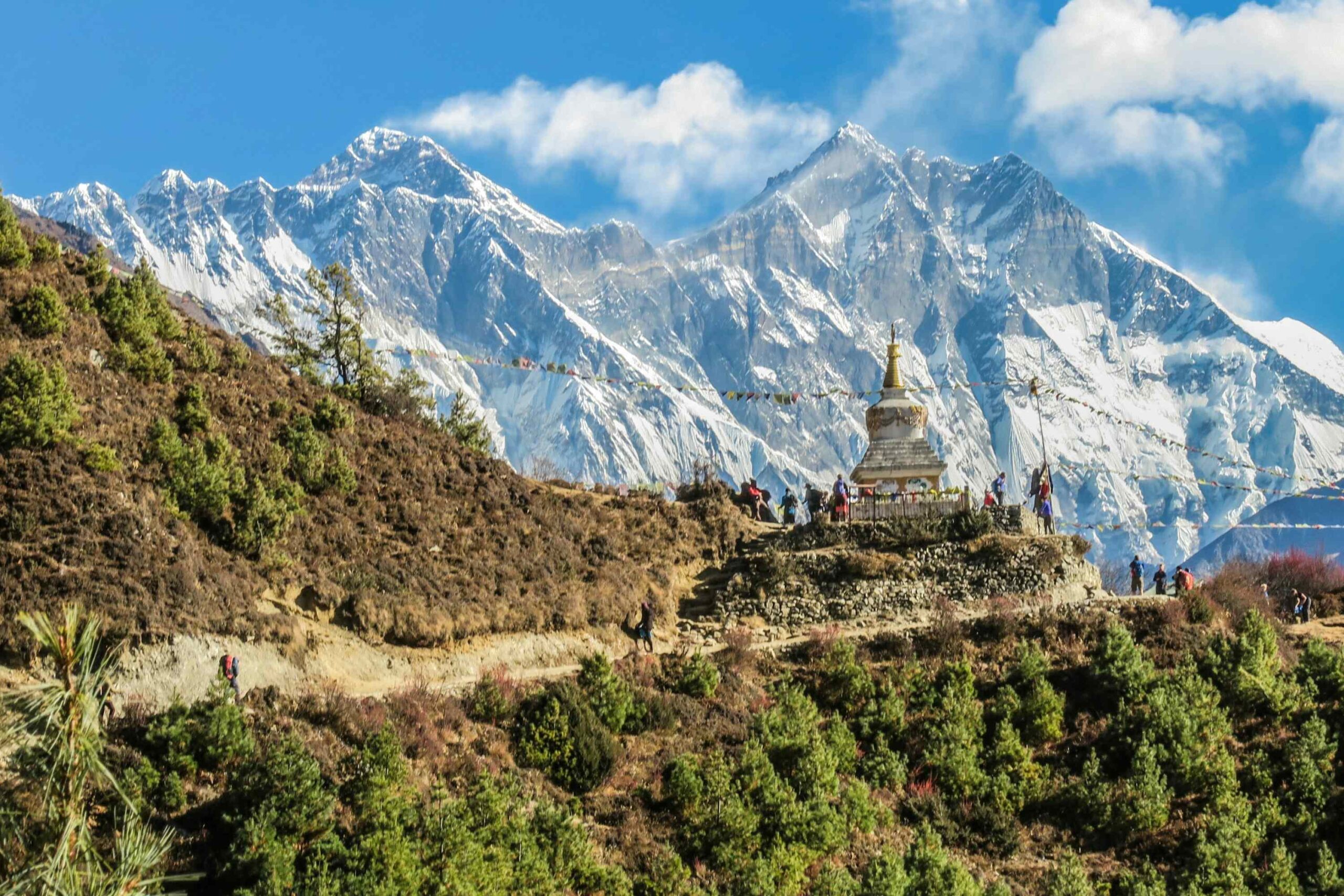
The adventure begins with a mountain flight to Lukla and follows the Dudh Koshi Valley through Phakding toward Namche Bazaar. Suspension bridges, pine and rhododendron forests, mani stones, prayer wheels and Sherpa settlements gradually lead you deeper into the Everest region. Namche provides the first major acclimatization stop, with a hike toward the Everest View Hotel and Khumjung before the journey continues higher.

Beyond Namche, the trail passes through Tengboche, Pangboche and Dingboche, with Ama Dablam becoming one of the most striking mountains along the route. A visit to Tengboche Monastery also adds an important cultural element to the journey, while the landscape gradually changes from forested valleys to open alpine terrain.
The route then climbs through Lobuche toward Gorak Shep and Everest Base Camp at 5,364 m. Walking beside the Khumbu Glacier and reaching the base camp area brings you into the heart of Everest’s expedition landscape, surrounded by ice, moraine and some of the highest mountains on Earth.
The following morning, you climb to Kala Patthar at 5,545 m, where clear conditions provide one of the finest views of Mount Everest, Nuptse, Lhotse, Pumori and the Khumbu Glacier. From here, the journey changes direction and continues toward Chhukung in the Imja Valley.

At Chhukung (4,730 m), the focus shifts from trekking to climbing. Your climbing guide reviews equipment and techniques including crampon use, ice axe handling, harnesses, ascenders and rope travel before you continue to Island Peak Base Camp.
The Island Peak summit attempt is the most demanding part of the expedition. Starting in the early hours, the route moves through rocky alpine terrain before reaching the glacier and upper snow slopes. Depending on mountain conditions, fixed ropes and technical equipment are used on the steeper sections leading toward the summit.
Reaching Island Peak at 6,189 m rewards you with an exceptional high-altitude panorama. Lhotse rises dramatically nearby, while Nuptse, Ama Dablam, Makalu and other peaks of the Khumbu and eastern Himalaya fill the surrounding skyline when visibility is clear.

Because mountain conditions cannot be controlled, the itinerary includes a dedicated contingency day for Island Peak. Strong wind, snowfall, poor visibility, route conditions or the physical condition of the team may affect the planned summit day, so having an additional window gives the climb valuable flexibility.
After the climbing section, the trail descends through Chhukung, Dingboche, Pangboche and Tengboche before returning to Namche and Lukla. By the time you fly back to Kathmandu, the journey has combined Sherpa culture, Everest Base Camp, Kala Patthar, glacier travel and a 6,189 m Himalayan summit into one complete adventure.
For trekkers who want to go beyond the traditional Everest Base Camp route and experience their first serious Himalayan climbing objective, this itinerary offers a natural progression from trekking into mountaineering.
Highlights
- Begin with a dramatic mountain flight to Lukla, the gateway to Nepal’s Everest region.
- Follow the Dudh Koshi Valley through suspension bridges, forests and traditional Sherpa settlements.
- Spend time acclimatizing in Namche Bazaar and hike toward the Everest View Hotel and Khumjung.
- Visit historic Tengboche Monastery, surrounded by impressive mountain scenery in the Khumbu.
- Walk beneath Ama Dablam, Lhotse, Nuptse and other Himalayan giants as the trail climbs toward the upper Khumbu.
- Reach Everest Base Camp at 5,364 m beside the Khumbu Glacier and experience the famous Everest expedition environment.
- Climb Kala Patthar at 5,545 m for outstanding views of Everest, Nuptse, Lhotse, Pumori and the surrounding glaciers.
- Leave the main Everest Base Camp trail and enter the quieter Imja Valley toward Chhukung.
- Complete practical climbing preparation covering crampons, ice axe use, harnesses, ascenders and rope techniques.
- Spend a night at Island Peak Base Camp at 5,100 m before the summit attempt.
- Take on a demanding alpine summit day and attempt Island Peak at 6,189 m.
- Experience glacier travel, snow slopes and steeper climbing sections under the guidance of an experienced climbing team.
- Enjoy summit views toward Lhotse, Nuptse, Ama Dablam, Makalu and the surrounding Khumbu mountains when conditions are clear.
- Benefit from a dedicated summit contingency day, providing additional flexibility if weather or mountain conditions change.
- Combine the classic Everest Base Camp trek with a genuine 6,000 m climbing experience in one 18-day Himalayan journey.
Detailed Itinerary - Everest Base Camp with Island Peak Climbing (19 Days)
Your Everest Base Camp and Island Peak Climbing adventure begins with your arrival at Tribhuvan International Airport in Kathmandu. A representative from Top Trail Nepal will meet you at the airport and transfer you to your hotel.
After checking in, you can rest after your international journey or explore the surrounding area. Later, you will meet our team for a briefing covering the trekking route, Island Peak climb, altitude, accommodation, permits, weather and equipment requirements.
This is also a good time to discuss any questions about the journey and make the final preparations before heading into the Everest region.
Today is set aside for the final preparation required for the trek and climb. Our team will complete the necessary trekking and climbing documentation while you review your personal equipment for Island Peak.
Your climbing guide will explain the route, acclimatization plan, summit strategy and safety procedures. Your trekking and climbing gear will also be checked so that any missing items can be purchased or rented in Kathmandu.
The rest of the day is free for final packing and preparation before the mountain journey begins.
An early morning mountain flight takes you toward Lukla, the gateway to the Everest region. Depending on the season and current flight operations, the flight may depart from Kathmandu or from Manthali Airport in Ramechhap.
After landing in Lukla, you meet the rest of the trekking crew and begin walking through the Dudh Koshi Valley. The trail passes small Sherpa settlements, mani stones, prayer wheels and suspension bridges while gradually descending toward Phakding.
The relatively short first trekking day gives you time to settle into the trail without gaining too much altitude immediately after the flight.
Flight Time: 30 to 40 min, subject to conditions
After breakfast, the trail continues along the Dudh Koshi River through villages such as Toktok and Benkar before reaching Monjo, the entrance to Sagarmatha National Park.
The route crosses several suspension bridges and continues through Jorsale before reaching the famous high bridge above the river. From here, a long and steady uphill climb begins toward Namche Bazaar.
On a clear day, sections of the climb can offer your first distant glimpse of Mount Everest. Eventually, you reach Namche Bazaar, the main trading center and trekking hub of the Khumbu region.
Today is dedicated to acclimatization. Rather than simply resting at the lodge, you hike to a higher elevation before returning to Namche to sleep.
The route climbs toward Syangboche and the Everest View Hotel at around 3,880 m, where clear weather provides impressive views of Everest, Lhotse, Nuptse, Ama Dablam and surrounding peaks.
Depending on the pace of the group, the hike can continue toward Khumjung and Khunde, traditional Sherpa villages located above Namche. After exploring the area, you return to Namche Bazaar for another night.
Leaving Namche, the trail follows a scenic mountainside path with excellent views of Everest, Lhotse, Nuptse, Ama Dablam and Thamserku.
After a gradual section, the trail descends toward Phunki Tenga beside the Dudh Koshi River. From here, you begin a steady climb through rhododendron and pine forest toward Tengboche.
Tengboche is home to the famous Tengboche Monastery, one of the most important Buddhist monasteries in the Everest region. Surrounded by Himalayan peaks, the village has one of the most memorable settings on the trek.
The morning begins with a descent through rhododendron forest toward Deboche before crossing the Imja Khola and climbing toward Pangboche.
From Pangboche, the route continues through Shomare and gradually enters a more open alpine environment. Trees become scarce as the trail moves higher into the Imja Valley.
By afternoon, you reach Dingboche, a high-altitude Sherpa settlement surrounded by impressive peaks including Ama Dablam, Lhotse and Island Peak. Reaching 4,410 m marks an important stage of the journey as you prepare to move deeper into the high Himalaya.
Leaving Dingboche, you climb gradually across the open valley toward Thukla, with views of the surrounding peaks and glaciers becoming increasingly dramatic.
From Thukla, a steeper climb leads toward the Thukla Pass memorials, where stone monuments commemorate climbers and mountaineers who lost their lives in the Everest region.
Beyond the memorial area, the trail follows glacial terrain toward Lobuche. The landscape is now almost completely alpine, with rocky moraine, barren slopes and towering mountains surrounding the route.
Today you reach one of the major landmarks of the journey. From Lobuche, the trail follows the edge of the Khumbu Glacier toward Gorak Shep, the final settlement on the Everest Base Camp route.
After reaching Gorak Shep and taking a short break, you continue toward Everest Base Camp. The trail crosses rocky glacial terrain beside the Khumbu Glacier, with increasingly close views of the surrounding icefall and mountains.
At Everest Base Camp (5,364 m), you have time to experience the famous expedition area and the dramatic landscape beneath Everest. During the main climbing seasons, expedition camps may be visible across the glacier.
After spending some time at Base Camp, you retrace the trail to Gorak Shep for the night.
The day begins before sunrise with a climb toward Kala Patthar, one of the best-known viewpoints in the Everest region. Although the distance is relatively short, the high altitude makes the climb demanding.
From the viewpoint, clear conditions reveal a remarkable panorama of Everest, Nuptse, Lhotse, Pumori and the Khumbu Glacier.
After descending to Gorak Shep for breakfast, you begin the long journey back through Lobuche and toward Dingboche. From the main trail, the route turns east into the Imja Valley and continues toward Chhukung.
Chhukung is the main staging settlement for the Island Peak section of the expedition.
After the demanding Everest Base Camp and Kala Patthar section, today provides valuable recovery time while preparing specifically for the Island Peak climb.
Your climbing guide will check the technical equipment and demonstrate important techniques including crampon movement, ice axe handling, harness use, ascender operation and rope travel.
Depending on conditions and the group’s acclimatization, a short hike above Chhukung may also be included before returning to the lodge.
The remainder of the day is used to rest, organize equipment and prepare for the move to Base Camp.
Today you leave Chhukung and follow the trail deeper into the Imja Valley toward Island Peak Base Camp.
The route gradually climbs through increasingly rugged terrain, passing rocky slopes and glacial moraines with views toward Island Peak and the surrounding mountains.
After reaching Base Camp, the climbing team sets up the final preparations for the summit attempt. Equipment is checked once more, and your guide provides any additional instruction required for the conditions on the mountain.
After an early meal, you rest in preparation for the summit climb during the night.
This is the main climbing day of the expedition. The summit attempt normally begins very early, often during the night, so that the team can make the most of the available weather and climbing conditions.
From Base Camp, the route climbs through rocky high-altitude terrain before reaching the glacier and upper snow slopes. Crampons, harnesses, ropes, ascenders and other climbing equipment are used where required.
The upper section becomes steeper, and fixed ropes may be used depending on current snow, ice and route conditions. With suitable weather and a strong team, you reach the 6,189 m summit of Island Peak.
From the summit, the panorama includes Lhotse, Nuptse, Ama Dablam, Makalu and many of the surrounding Khumbu peaks.
After a short time on the summit, you carefully descend the same route and return to Base Camp.
A contingency day is included because high-altitude climbing depends heavily on weather, snow conditions, visibility and the physical condition of the team.
If the Island Peak summit is completed successfully on Day 13, this day can be used for recovery and the return toward Chhukung.
If poor conditions prevent the planned summit attempt, the day provides another opportunity to climb when the guide considers the mountain safe.
The exact schedule for this day therefore depends on the outcome of the previous day’s climb and the conditions on Island Peak.
After completing the Island Peak section, you begin the long descent through the Khumbu region.
From Chhukung, the route returns through Dingboche and Pangboche before continuing toward Tengboche. You then descend through forest toward Phunki Tenga and cross the Dudh Koshi before climbing back toward Namche Bazaar.
Although this is a long walking day, the decreasing altitude makes the journey progressively more comfortable after several nights high in the mountains.
Reaching Namche gives you a final evening to relax in the main Sherpa town before returning to Lukla.
Your final trekking day retraces the route through the Dudh Koshi Valley.
From Namche, you descend toward Jorsale and Monjo before continuing through familiar Sherpa settlements and suspension bridges toward Phakding.
The final section climbs back toward Lukla, where the trekking portion of the Everest Base Camp and Island Peak journey comes to an end.
After reaching your lodge, you can rest and spend the final evening with the trekking and climbing team.
After breakfast, you take the return mountain flight from Lukla. Depending on the season and current aviation arrangements, the flight may operate directly to Kathmandu or to Ramechhap.
If the flight lands at Ramechhap, you continue to Kathmandu by road. Once back in the city, you are transferred to your hotel.
The remainder of the day is free to rest, enjoy a hot shower, explore Kathmandu or do some final shopping after completing the expedition.
This day also creates a useful buffer between the mountain journey and your international departure.
Flight Time: 30 to 40 min, subject to conditions
Your Everest Base Camp and Island Peak Climbing adventure officially comes to an end today.
Depending on the departure time of your international flight, you may have some free time at your hotel before leaving for the airport.
A representative from Top Trail Nepal will transfer you to Tribhuvan International Airport for your onward journey.
After trekking through the Khumbu Valley, reaching Everest Base Camp at 5,364 m, climbing to Kala Patthar at 5,545 m and attempting the 6,189 m summit of Island Peak, you leave Nepal after completing a journey that combines two of the Everest region’s major trekking and climbing objectives.
What's Included
Airport Transfers
|
Hotel Accommodation in Kathmandu
|
Domestic Flights & Transfers
|
Accommodation During the Trek & Climb
|
Meals During Trek & Climbing Period
|
Professional Trekking & Climbing Team
|
All Required Permits & Fees
|
Group Climbing & Camping Equipment
|
Safety Support, Medical Kits & Gifts
|
Taxes & Administrative Costs
|
What's Not Included
|
International Travel & Airfare
|
|
Nepal Visa
|
|
Travel & Climbing Insurance
Insurance should provide appropriate coverage for high-altitude trekking, peak climbing and emergency evacuation.
|
|
Personal Trekking & Climbing Gear
Personal clothing, footwear, mountaineering boots and other individual trekking or climbing equipment not specifically listed under the inclusions.
|
|
Personal Expenses
|
|
Tips for Trekking & Climbing Staff
Gratuities for guides, porters and climbing staff are not included. Tipping is voluntary but appreciated for good service.
|
|
Emergency Evacuation Costs
Helicopter rescue, medical evacuation and related emergency transportation costs are not included. These expenses may be covered by travel insurance when the policy provides suitable high-altitude and emergency evacuation coverage.
|
|
Any Other Costs
Any services, activities, equipment, meals or expenses not specifically mentioned in the What’s Included section.
|
Departure Dates
Route Map & Gallery









Frequently Asked Questions - Everest Base Camp with Island Peak Climbing
Everest Base Camp with Island Peak Climb is a combined trekking and mountaineering adventure that includes a classic trek to Everest Base Camp (5,364m) followed by a summit climb of Island Peak (Imja Tse – 6,189m) in the Everest region of Nepal.
This trip is rated challenging. While the Everest Base Camp trek is moderate to challenging, Island Peak requires basic mountaineering skills, good physical fitness, and strong endurance at high altitude.
Previous climbing experience is helpful but not mandatory. However, trekkers should have good high-altitude trekking experience. Basic climbing training on using crampons, ice axe, harness, and ropes is provided before the summit attempt.
The highest point of the expedition is the summit of Island Peak at 6,189 meters (20,305 ft).
The standard itinerary takes 18 to 21 days, including acclimatization days, Everest Base Camp visit, Island Peak Base Camp, High Camp, and summit day.
The best climbing seasons are:
- Spring (April–May) – Best snow conditions and stable weather
- Autumn (September–October) – Clear skies and excellent visibility
Winter is very cold, and monsoon season is not recommended.
You will need:
- Sagarmatha National Park Entry Permit
- Khumbu Pasang Lhamu Rural Municipality Permit
- Island Peak Climbing Permit
- TIMS Card (if applicable)
These permits are arranged by your trekking agency.
Yes. Since the trek and climb exceed 6,000 meters, altitude sickness is a serious concern. Proper acclimatization days, gradual ascent, hydration, and professional guidance are essential for safety.
Accommodation includes:
- Teahouse lodges during the Everest Base Camp trek
- Tented camping at Island Peak Base Camp and High Camp
Yes. A licensed trekking guide and a certified climbing guide are required for safety, route navigation, fixed rope setup, and summit support.
Required equipment includes:
- Mountaineering boots
- Crampons
- Ice axe
- Harness & helmet
- Down jacket & sleeping bag
Most technical climbing gear can be rented in Kathmandu.
Yes. Travel insurance is mandatory and must cover:
- High-altitude trekking & climbing (above 6,000m)
Emergency helicopter evacuation
- Medical treatment and trip interruption
Yes. The itinerary can be customized with extra acclimatization days, additional training, or side trips such as Kala Patthar, Chukhung Ri, or extended Everest region trekking.
You will enjoy spectacular views of Mount Everest, Lhotse, Nuptse, Ama Dablam, Makalu, and surrounding Himalayan peaks.
Useful Info
The Everest Base Camp with Island Peak Climbing journey combines a classic high-altitude trek through the Khumbu with a more demanding climbing section in the Imja Valley. The route reaches Everest Base Camp at 5,364 m, Kala Patthar at 5,545 m and Island Peak at 6,189 m, so good preparation, gradual acclimatization and the right equipment are essential.
The information below covers the main practical details to understand before the trip, including seasons, difficulty, altitude, permits, accommodation, Lukla flights, food, climbing equipment, insurance and summit conditions.
Best Time for Everest Base Camp and Island Peak
The main seasons for this trek and climb are spring from March to May and autumn from September to November. These months generally provide the most favorable combination of trekking weather, mountain visibility and conditions for the Island Peak ascent.
Spring usually brings gradually warmer conditions and flowering rhododendrons in the lower Khumbu, while autumn is known for clearer skies after the monsoon. Weather in the Himalaya can never be guaranteed, however, especially around Island Peak where wind, snow and temperature can change quickly.
| Season | Typical Conditions | Suitability |
|---|---|---|
| March – May | Popular climbing season with improving temperatures and generally favorable mountain conditions. | Excellent |
| June – August | Monsoon cloud, rain at lower elevations and greater chance of flight and trail disruption. | Less suitable |
| September – November | Generally clearer skies, good visibility and one of the main Island Peak climbing periods. | Excellent |
| December – February | Very cold at altitude with possible snow, stronger winter conditions and shorter daylight hours. | Condition dependent |
Difficulty of the Trek and Island Peak Climb
This is a challenging high-altitude trekking and climbing itinerary. The Everest Base Camp section involves several consecutive walking days, long ascents and time above 4,000 m before the route continues into the more technical Island Peak section.
Island Peak is much more than a normal trekking day. The summit climb can take 10 to 12 hours and involves rocky alpine terrain, glacier travel, snow slopes and steeper sections where ropes and climbing equipment may be required.
Previous mountaineering experience is useful but not essential for every climber. You should, however, arrive with strong cardiovascular fitness, good walking endurance and the ability to remain active for long hours at altitude. Previous high-altitude trekking experience is strongly recommended.
Altitude and Acclimatization
Altitude is one of the biggest challenges of the journey. The route climbs gradually from Lukla through Namche, Tengboche and Dingboche before entering the higher terrain around Lobuche, Gorak Shep and Everest Base Camp.
The itinerary includes acclimatization around Namche Bazaar and further preparation at Chhukung before the Island Peak ascent. These days help your body adjust while still allowing controlled activity at higher elevations.
| Location | Altitude | Importance |
|---|---|---|
| Namche Bazaar | 3,440 m | First major acclimatization stop with a higher day hike. |
| Dingboche | 4,410 m | Important stage before moving toward Lobuche and Gorak Shep. |
| Chhukung | 4,730 m | Recovery, acclimatization and climbing preparation before Base Camp. |
| Island Peak Base Camp | 5,100 m | Final camp before the summit attempt. |
Headache, nausea, dizziness, unusual exhaustion, loss of coordination or breathing difficulties should never be ignored. Any symptoms should be reported to the guide immediately so that the route or schedule can be adjusted when necessary.
Accommodation During the Trip
Accommodation changes as the journey moves from Kathmandu into the mountains. Kathmandu accommodation is in a 3-star hotel, while the trekking section uses local teahouses and lodges.
Facilities become simpler at higher elevations. The Island Peak Base Camp section uses tented accommodation and group camping facilities, which are arranged as part of the climbing package.
| Part of Journey | Accommodation | Facilities |
|---|---|---|
| Kathmandu | 3-star Hotel | Standard city hotel facilities |
| EBC Trekking Route | Teahouses / Lodges | Simple mountain rooms; facilities reduce with altitude |
| Island Peak Base Camp | Tented Camp | Basic expedition-style camping setup |
Lukla Flights and Ramechhap Transfers
The mountain journey begins and ends with flights to and from Lukla. Depending on the season and current aviation arrangements, flights can operate directly from Kathmandu or through Manthali Airport in Ramechhap.
Lukla flights are sensitive to weather, visibility and airport conditions, so delays or cancellations are possible. When flights operate through Ramechhap, the required road transfers between Kathmandu and Manthali are arranged according to the itinerary and are included in the package.
Island Peak Climbing Preparation
Before heading to Island Peak Base Camp, time is set aside at Chhukung for equipment checks and practical preparation with the climbing guide.
Training may cover crampon movement, ice axe handling, harness use, ascenders, rope travel and safe movement on snow and glacier terrain. The exact techniques used on summit day depend on current route, snow and ice conditions.
Permits and Current Fees
Several permits are required because the trip combines trekking inside Sagarmatha National Park with a permitted Himalayan peak climb. The required permits and standard processing fees are included in this package, so they are arranged by Top Trail Nepal before or during the trip as applicable.
| Permit / Fee | Current Reference Fee | Package Status |
|---|---|---|
| Island Peak Climbing Permit | Spring: USD 350 Autumn: USD 175 Winter/Summer: USD 175 |
Included |
| Sagarmatha National Park | NPR 3,000 for foreign visitors NPR 1,500 for SAARC nationals |
Included |
| Khumbu Pasang Lhamu Local Permit | NPR 3,000 for most foreign visitors NPR 2,000 for SAARC and Chinese visitors |
Included |
| TIMS Card | NPR 2,000 for non-SAARC NPR 1,000 for SAARC, where applicable |
Included when required |
Permit regulations and government fees can change. The final requirements and applicable rates are confirmed when your booking and climbing documentation are processed.
Meals and Drinking Water
The package includes breakfast, lunch and dinner during the trekking and climbing period, along with tea or coffee at breakfast. Teahouse menus commonly include dal bhat, rice, noodles, potatoes, soups, pasta, eggs and Tibetan-style dishes.
Meals at Island Peak Base Camp are prepared as part of the climbing camp arrangement. Food choices become more limited at higher elevations because supplies must be transported into remote mountain settlements.
Drinking water can be obtained along the trekking route, but untreated water should be purified or filtered before drinking. Carrying a reusable bottle or hydration system is recommended. Personal snacks, bottled drinks and food purchased outside the included meals are considered personal expenses.
Wi-Fi, Charging and Mobile Network
Wi-Fi, electricity and mobile coverage are available in parts of the Everest region, particularly around larger settlements such as Namche Bazaar. Services become less reliable as you travel toward Gorak Shep, Chhukung and Island Peak Base Camp.
Charging and Wi-Fi may require an additional payment at teahouses. These charges are personal expenses and are not included in the package. Carrying a good power bank is strongly recommended.
Group Climbing Equipment and Personal Gear
The expedition requires both group equipment supplied by the climbing team and personal equipment that each climber must bring or arrange separately.
| Included Group Equipment | Personal Equipment |
|---|---|
| High-altitude tents and camping equipment | Trekking and mountaineering boots |
| Climbing and fixed ropes | Personal clothing and insulated layers |
| Snow bars and ice screws where required | Personal climbing equipment not specifically listed as included |
| Dining and kitchen camp equipment | Sleeping bag and personal accessories |
| Cooking utensils, fuel and basic camp furniture | Headlamp, sunglasses, gloves and personal mountain gear |
A detailed personal equipment list should be reviewed before travelling to Nepal. Missing personal climbing equipment can often be purchased or rented in Kathmandu before departure.
Travel and Climbing Insurance
Travel insurance is not included in the package and should be arranged before travelling to Nepal. A normal holiday insurance policy may not be enough for this itinerary.
Your policy should specifically cover high-altitude trekking and peak climbing up to at least 6,189 m, together with emergency medical treatment and helicopter evacuation where applicable.
Top Trail Nepal can assist with emergency evacuation coordination when necessary, but helicopter rescue, medical evacuation and related emergency costs are not included. These expenses are the responsibility of the traveler or their insurer.
Weather and Summit Conditions
Conditions on Island Peak can change quickly. Wind, snowfall, temperature, visibility and snow or ice conditions on the climbing route can all affect whether a summit attempt is considered safe.
The final decision regarding the summit attempt is made by the climbing team based on actual mountain and weather conditions. Reaching the summit can never be guaranteed, even when a climber is physically strong and well prepared.
Why the Itinerary Includes a Contingency Day
Day 14 is kept as a dedicated Island Peak contingency day. High-altitude climbing cannot always follow a fixed schedule, and unsuitable conditions may require the planned summit attempt to be postponed.
If Island Peak is successfully climbed on the original summit day, the extra day can be used for recovery and the return journey. If the first attempt cannot safely take place, the contingency day provides another possible climbing window.
Responsible Trekking and Climbing
The Khumbu is both a sensitive Himalayan environment and the home of long-established Sherpa communities. Please respect local customs and monasteries, remain on established trails, minimize single-use plastics and dispose of waste responsibly throughout the trek and climb.
Important: Mountain weather, Lukla flights, trail conditions, climbing routes and summit schedules can change at short notice. Top Trail Nepal may adjust the daily plan when necessary for safety, acclimatization or operational reasons. Permit fees and regulations are also subject to change, and the current requirements will be confirmed before departure.
Book Everest Base Camp with Island Peak Climbing with Confidence
Join Top Trail Nepal, your trusted local trekking agency in Kathmandu, for the journey of a lifetime. Our experienced guides, strong safety record, and personal service make your Everest dream come true.

- $2350 2 people
- $2285 4-6 people