
 Call Us or Whatsapp 9779808220612
 Email Us [email protected]
- English [EN]
- Espanol [ESP]
- France [FR]
- Deutsch [DE]
- China [CN]
- Japan [JP]
- Arabic [AR]
- Hindi [HI]

Annapurna Base Camp (ABC) Trek
 Duration: 10 Days
 Difficulty: Moderate
 Accomodation: Hotel/ Lodge/ Teahouse
 Meal: B-L-D
 Max. Altitude: 4,130 m
 Best Seasons: Spring (March-April-May) & Autumn (Sep-Oct-Nov)
Annapurna Base Camp (ABC) Trek
The Annapurna Base Camp Trek is a journey into the heart of one of Nepal’s most remarkable mountain landscapes. Rather than taking the longer route through Ghorepani and Poon Hill, this 10-day itinerary follows a more direct approach into the Annapurna Sanctuary, gradually moving from the green foothills below Pokhara to Annapurna Base Camp at 4,130 m.
After travelling from Kathmandu to Pokhara, the mountain journey begins with a drive toward the Samrung and Jhinu Danda area. From the roadhead, the trail climbs through cultivated hillsides and small settlements toward Chhomrong, one of the best-known villages on the Annapurna Base Camp route. On a clear day, Annapurna South, Hiunchuli and the distinctive summit of Machhapuchhre rise above the valley ahead.

Beyond Chhomrong, the scenery changes quickly. Stone stairways lead down to the Chhomrong Khola before the route climbs toward Sinuwa and disappears into thick bamboo, rhododendron and mixed Himalayan forest. The trail then follows the narrow Modi Khola valley through Bamboo, Dovan and Himalaya, with steep mountain slopes rising on either side.
The climb from Bamboo to Deurali at 3,230 m marks the transition from the forested valley to the higher Annapurna Sanctuary. The trees gradually become thinner, the temperature drops and exposed rock begins to replace the dense vegetation of the lower trail. Passing the area around Hinku Cave, you start to feel that you are entering a completely different mountain environment.

The following day takes you deeper into the Sanctuary and past Machhapuchhre Base Camp at around 3,700 m. From here, the valley opens dramatically into a broad glacial basin enclosed by some of the highest and most recognisable mountains in the Annapurna region.
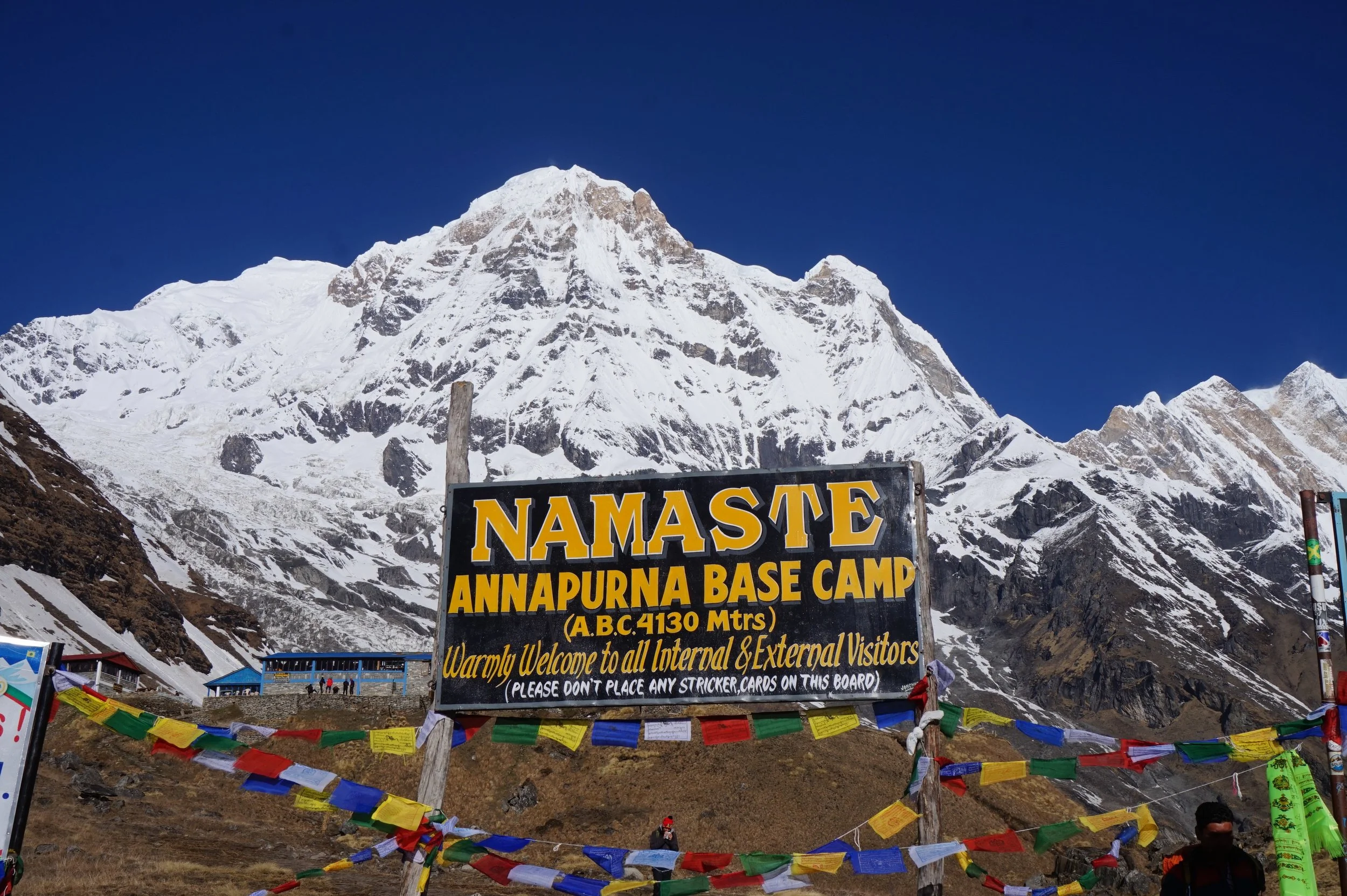
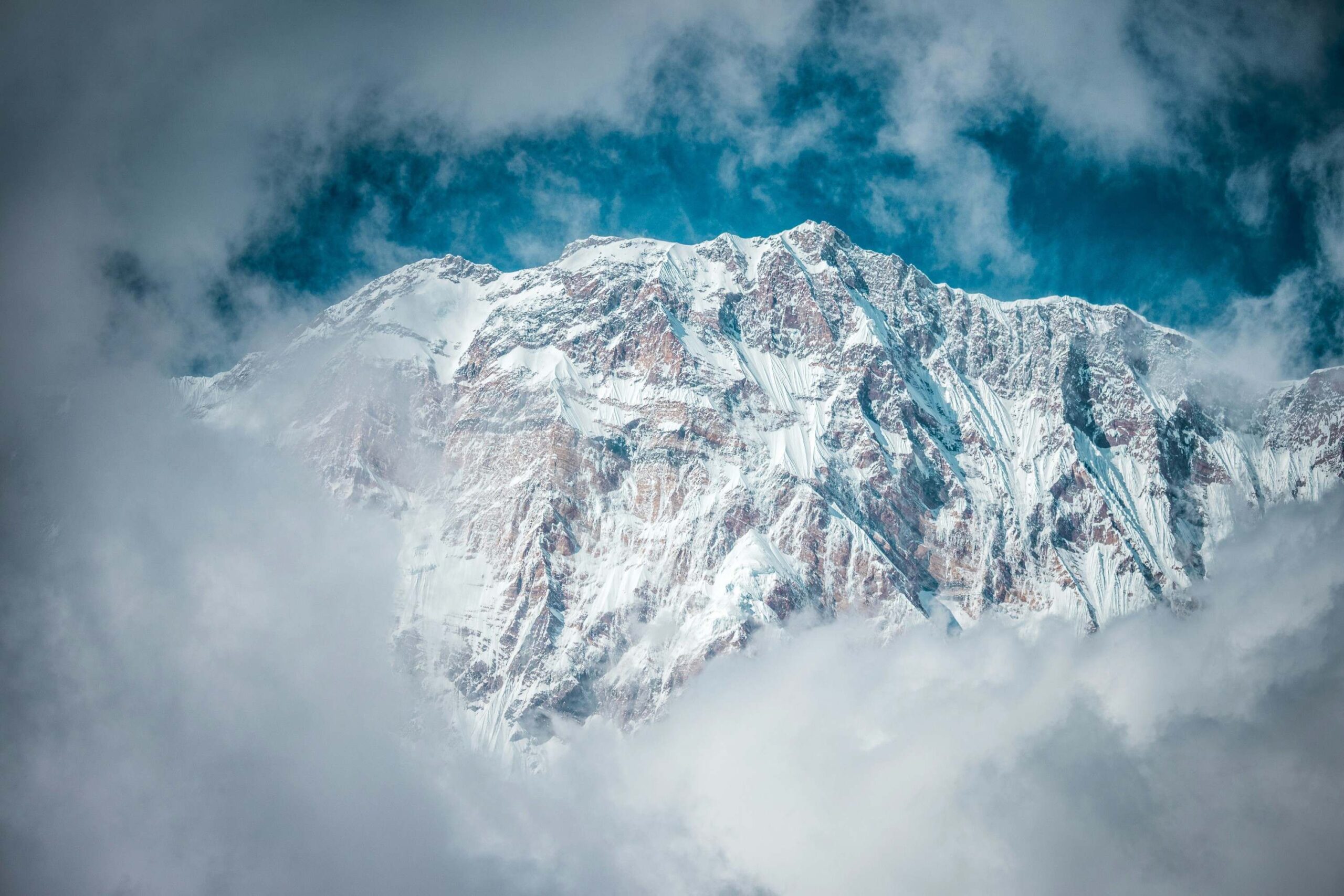
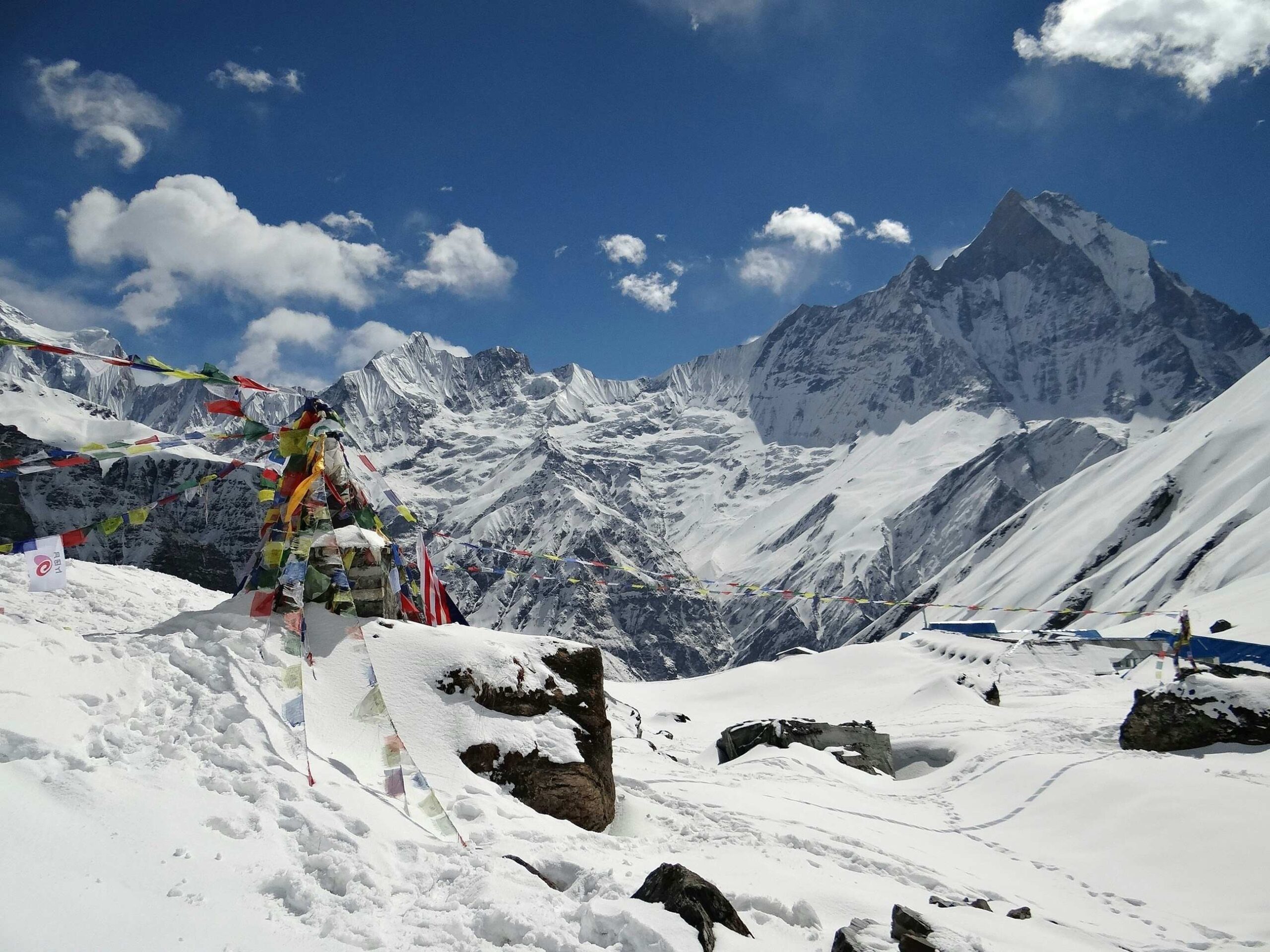
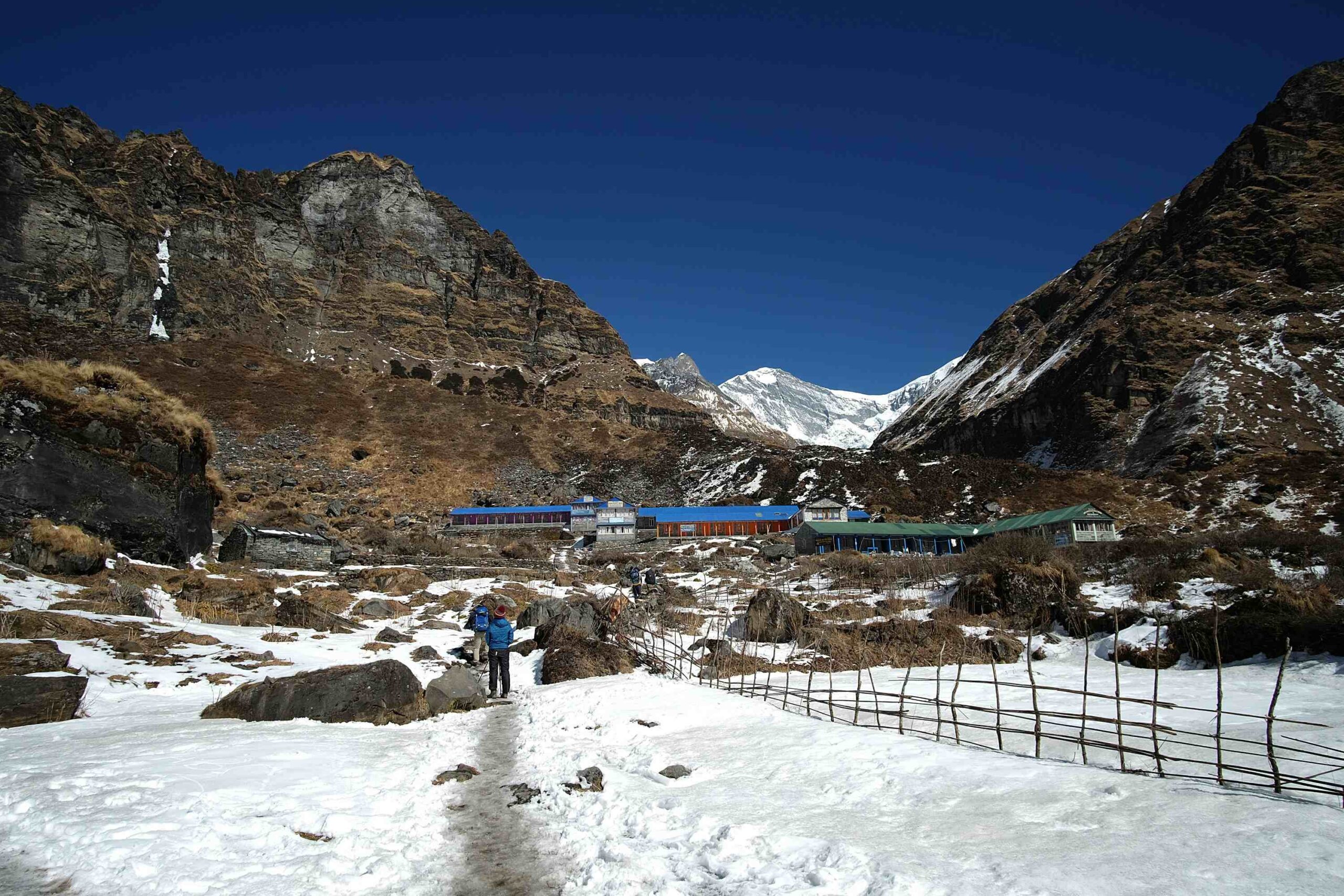
The trail finally reaches Annapurna Base Camp at 4,130 m, directly beneath the massive Annapurna range. Here you are surrounded by a natural amphitheatre of Himalayan peaks including Annapurna I at 8,091 m, Annapurna South, Hiunchuli and Machhapuchhre. Glacial terrain, steep rock faces and snow-covered summits dominate almost every direction.
Spending the night at base camp is an important part of this itinerary. Instead of reaching ABC and immediately turning around, you have time to experience the Sanctuary during the quieter evening and again the following morning, when changing light can completely transform the surrounding mountains.

After leaving base camp, the route retraces the Modi Khola corridor, descending from the exposed alpine landscape through Deurali and Himalaya and back into the forests around Bamboo. It is a long descent, but the rapid change in vegetation and temperature makes the return feel very different from the journey upward.
The final trekking section climbs back through Sinuwa and Chhomrong before descending toward Jhinu Danda. When time and local conditions allow, the nearby natural hot springs provide a relaxing way to finish the walking section before the drive back to Pokhara.
What makes this trek especially rewarding is how much the landscape changes within a relatively short journey. In a matter of days, you travel from terraced farmland and traditional mountain villages through subtropical forest and deep river valleys to glaciers and a high-altitude basin beneath Annapurna I, the world’s tenth-highest mountain. It is a focused Annapurna Base Camp experience for trekkers who want the Sanctuary itself to remain the centre of the journey.
Highlights of the Annapurna Base Camp Trek
- Reach Annapurna Base Camp at 4,130 m in the heart of the spectacular Annapurna Sanctuary.
- Stand beneath Annapurna I at 8,091 m, the world’s tenth-highest mountain.
- Walk through Machhapuchhre Base Camp at around 3,700 m before entering the upper Sanctuary.
- Enjoy close Himalayan views of Annapurna I, Annapurna South, Hiunchuli, Machhapuchhre and surrounding peaks.
- Experience the dramatic transition from terraced foothills and Gurung settlements to dense forest, rocky alpine terrain and glacial landscapes.
- Walk through beautiful bamboo, rhododendron and mixed Himalayan forests along the Modi Khola valley.
- Stay overnight at Annapurna Base Camp and experience the mountains during both the evening and early morning.
- Pass through Chhomrong, an important mountain village and gateway to the Annapurna Sanctuary.
- Finish the trekking section near Jhinu Danda, with the option to visit the natural hot springs when time and conditions allow.
- Complete a focused 10-day Kathmandu-to-Kathmandu ABC itinerary without adding the separate Ghorepani and Poon Hill circuit.
Detailed Itinerary - Annapurna Base Camp (ABC) Trek (10 Days)
Your journey to the Annapurna Sanctuary begins in Kathmandu, but today is intentionally kept away from long drives and trekking trails.
After landing at Tribhuvan International Airport, a representative from Top Trail Nepal will meet you and transfer you to your hotel. Once you have checked in, the remaining hours are yours to recover from the flight, take an easy walk around the city or pick up anything still missing from your trekking equipment.
Before the mountains, we go through the practical side of the journey together. The briefing covers the road or flight to Pokhara, the direct trail into the Annapurna Sanctuary, accommodation, altitude, weather and the equipment you will need once the route rises beyond Deurali.
Today we travel west from Kathmandu to Pokhara, the main gateway to the Annapurna region.
If travelling by road, the journey follows the highway through river valleys, cultivated hillsides, roadside towns and changing middle-hill scenery. The drive normally occupies most of the day, and actual travel time can vary with traffic and road conditions.
A domestic flight provides a much faster alternative and, in clear weather, can offer Himalayan views during the short journey to Pokhara, but comes up with extra charge due to airfare price.
After arriving, you transfer to your hotel near the lakeside area. The evening is free to rest and prepare your trekking bag before heading into the Annapurna foothills the following morning.
Distance: Around 200 km by road
Drive Hours: Around 7 to 9 hrs
Flight Time: Around 25 to 30 minutes if flying
After breakfast, we leave Pokhara and drive into the Annapurna foothills.
The journey passes through villages, terraced farmland and the lower Modi Khola region before reaching the roadhead around Samrung and Jhinu Danda. The exact vehicle stopping point can vary according to current mountain-road conditions.
Once on foot, we cross the long suspension bridge in the Jhinu area and begin climbing through cultivated hillsides and scattered settlements.
The trail gradually rises toward Chhomrong, one of the best-known Gurung villages on the Annapurna Base Camp route. Its position above the valley gives impressive views toward Annapurna South, Hiunchuli and Machhapuchhre when the weather is clear.
Chhomrong also marks an important transition. From here onward, the different lower approaches to ABC converge onto the main trail leading into the Annapurna Sanctuary.
Distance: Around 55 to 65 km by road
Drive Hours: Around 3 to 4 hrs
Today’s trail begins with one of the characteristic features of the ABC Trek: stone staircases.
From Chhomrong, we descend steeply toward the Chhomrong Khola, cross the river and then climb again toward Sinuwa. Although Bamboo is only slightly higher than Chhomrong, the repeated descent and ascent mean the day involves considerably more effort than the net altitude difference suggests.
Beyond Sinuwa, the surroundings change noticeably. The trail enters thick bamboo, rhododendron and mixed forest as it follows the narrow valley toward the Modi Khola gorge.
The path becomes cooler and more enclosed as we continue deeper into the Sanctuary route before reaching the small forest settlement of Bamboo.
Today we move from dense forest into increasingly high mountain terrain.
Leaving Bamboo, the trail continues steadily upward through the Modi Khola valley toward Dovan. Waterfalls, damp forest and steep valley walls surround much of the lower section.
We continue toward Himalaya, where the vegetation begins to thin as altitude increases. Beyond this point, the trail passes more exposed rock and the valley gradually opens toward the high Sanctuary.
The route also passes the area around Hinku Cave, a large natural rock overhang beside the trail, before climbing toward Deurali.
By the time we reach Deurali at 3,230 m, we are above 3,000 m and the air feels noticeably colder and thinner. The afternoon is kept relaxed because tomorrow brings the major climb to Annapurna Base Camp.
This is the defining day of the trek.
We leave Deurali and follow the upper Modi Khola valley as forest disappears almost completely. The landscape becomes rocky and increasingly alpine, with enormous mountain walls rising on both sides of the trail.
The first major destination is Machhapuchhre Base Camp at around 3,700 m. Despite its name, Machhapuchhre is regarded as a sacred mountain and is not normally climbed, but its base-camp area provides remarkable views into the Sanctuary.
From MBC, we continue more slowly as altitude begins to have a greater effect. The path climbs through the broad glacial basin toward Annapurna Base Camp at 4,130 m.
Reaching ABC places you inside the natural amphitheatre of the Annapurna Sanctuary, surrounded by some of the most impressive peaks in the region. Annapurna I, Annapurna South, Hiunchuli, Machhapuchhre and surrounding summits rise dramatically around the basin.
We spend the night at base camp, giving you time to experience both the late-afternoon mountains and the changing light the following morning.
An early morning at base camp is one of the highlights of the entire journey.
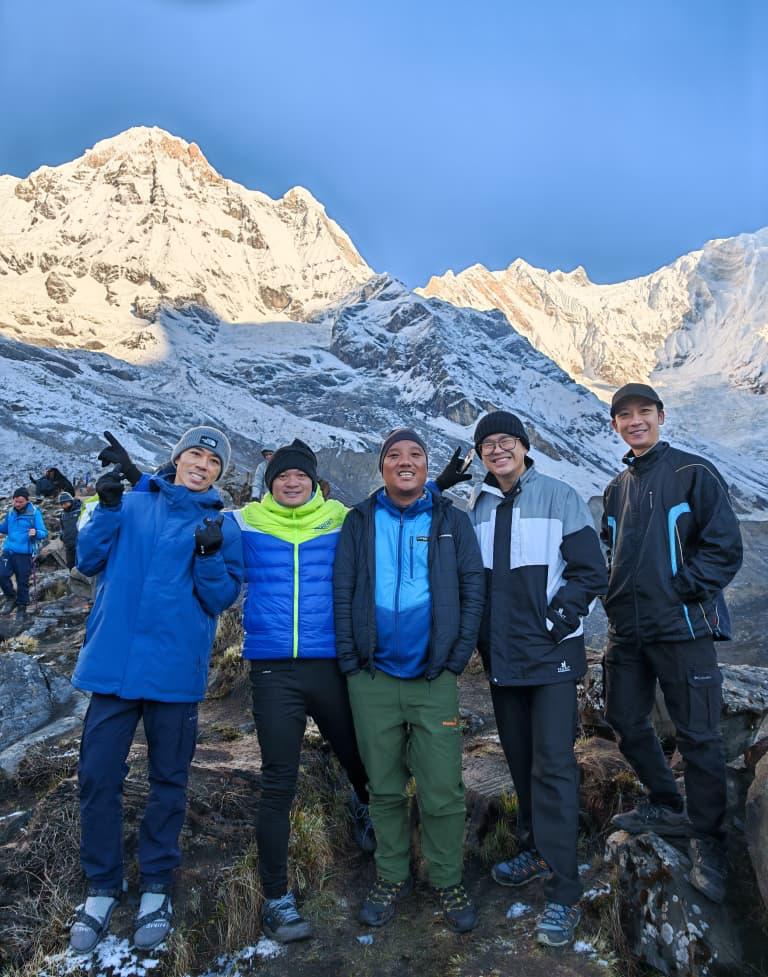
If the weather is clear, the first light gradually reaches the surrounding summits while the Sanctuary remains quiet beneath them. After breakfast and some final time around ABC, we begin the long descent.
We retrace the trail past Machhapuchhre Base Camp, Deurali, Himalaya and Dovan. Dropping more than 1,800 m in a single day changes the landscape dramatically.
The exposed alpine basin disappears behind us, vegetation becomes thicker and eventually we return to the bamboo and rhododendron forest of the lower valley.
Although almost entirely downhill overall, this is still a substantial trekking day and the long descent can be tiring on the knees.
We leave Bamboo and begin the final walking stage of the trek.
The trail initially retraces the forest route toward Sinuwa before climbing back toward Chhomrong. From Chhomrong, a long stone staircase descends toward Jhinu Danda, returning us to the warmer lower hills.
Jhinu is well known for the natural hot springs near the Modi Khola. When time, river conditions and the day’s schedule allow, trekkers may visit the hot-spring area before continuing toward the roadhead.
After completing the final trail section, we meet our vehicle and drive back through the Annapurna foothills toward Pokhara.
The change feels dramatic: in the morning you are still walking beneath forested mountain slopes, while by evening you are back beside Phewa Lake with the entire Sanctuary section behind you.
Distance: Around 55 to 65 km by road
Drive Hours: Around 3 to 4 hrs
After breakfast, we begin the return journey to Kathmandu.
If travelling overland, the road retraces the main route through Nepal’s middle hills and river valleys. It is a full travel day, so arrival time can vary according to traffic and road conditions.
A domestic flight can again be used as a faster alternative, reducing the journey to less than an hour in the air.
Once back in Kathmandu, you transfer to your hotel. The rest of the day is free to rest, enjoy a final meal or explore the city after completing the Annapurna Base Camp Trek.
Distance: Around 200 km by road
Drive Hours: Around 7 to 9 hrs
Flight Time: Around 25 to 30 minutes if flying
Today marks the end of your Annapurna Base Camp journey.
In only ten days, the trip has moved from Kathmandu and Pokhara into the narrow Modi Khola valley, through Gurung villages and bamboo forest, past Machhapuchhre Base Camp and finally into the heart of the Annapurna Sanctuary at 4,130 m.
Depending on your flight schedule, you may have some time for breakfast or a final walk before departure.
A representative from Top Trail Nepal will transfer you to Tribhuvan International Airport for your onward flight.
What's Included
Arrival & Departure Transfers
|
Hotel Accommodation in Kathmandu & Pokhara
|
Ground Transportation
|
Meals During the Trek
|
Teahouse Accommodation
|
Professional Trekking Crew
|
Trekking Permits
|
Safety & Medical Support
|
Staff Insurance & Welfare
|
Company Service Charges & Taxes
|
What's Not Included
International Travel & Visa
|
Domestic Flight Tickets
|
Meals in Kathmandu & Pokhara
|
Travel Insurance
|
Personal Trekking Gear
|
Personal Expenses
|
Tips for Trekking Staff
|
Emergency Evacuation Costs
|
Private Transportation Upgrades
|
Any Other Costs
|
Departure Dates
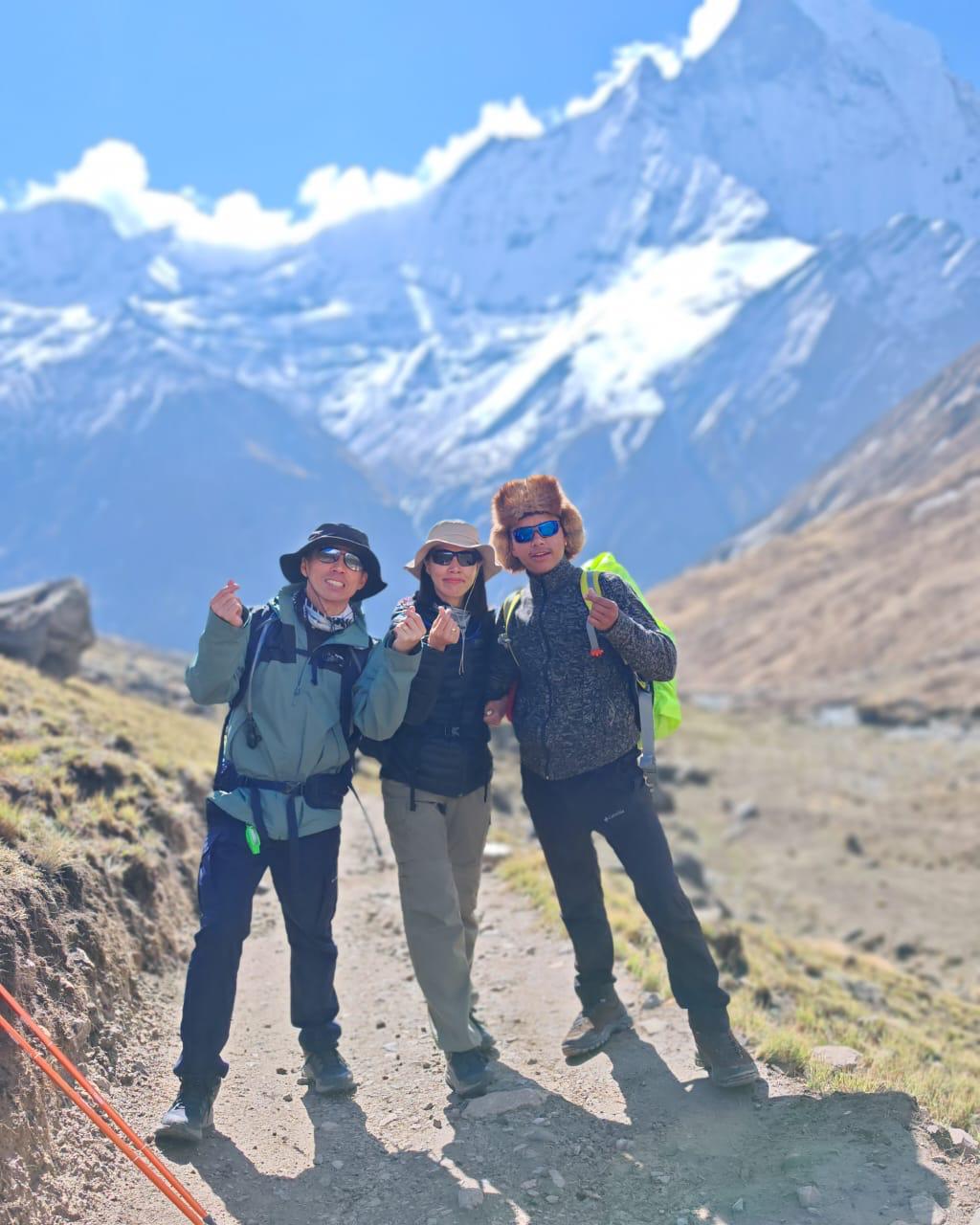
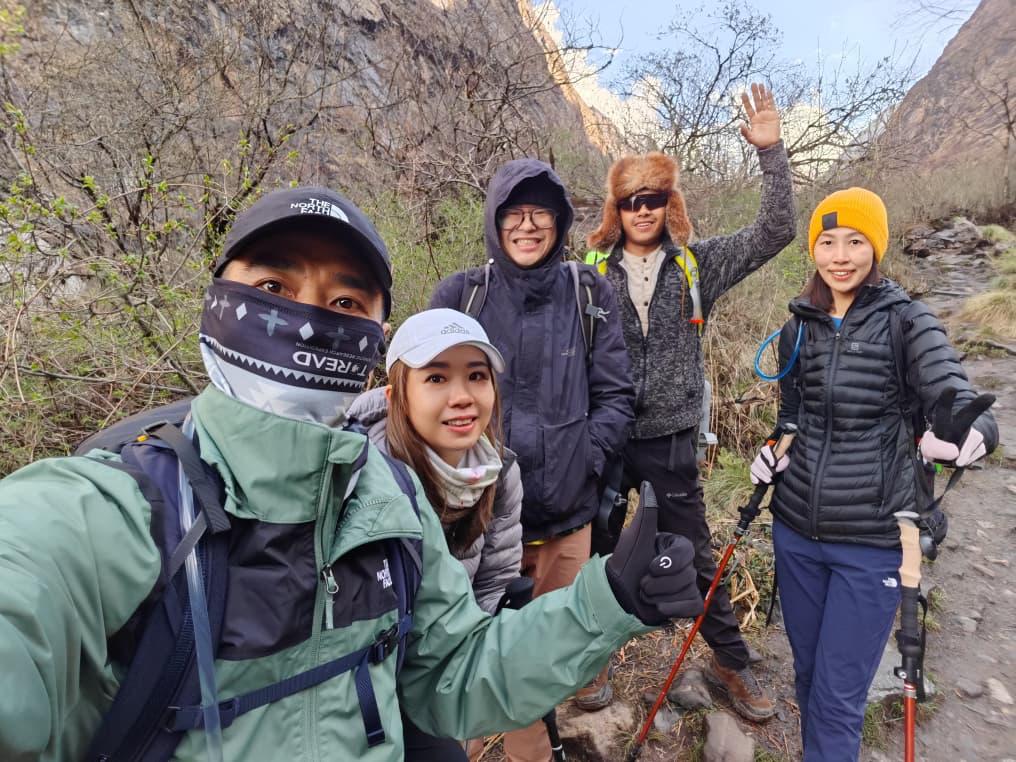
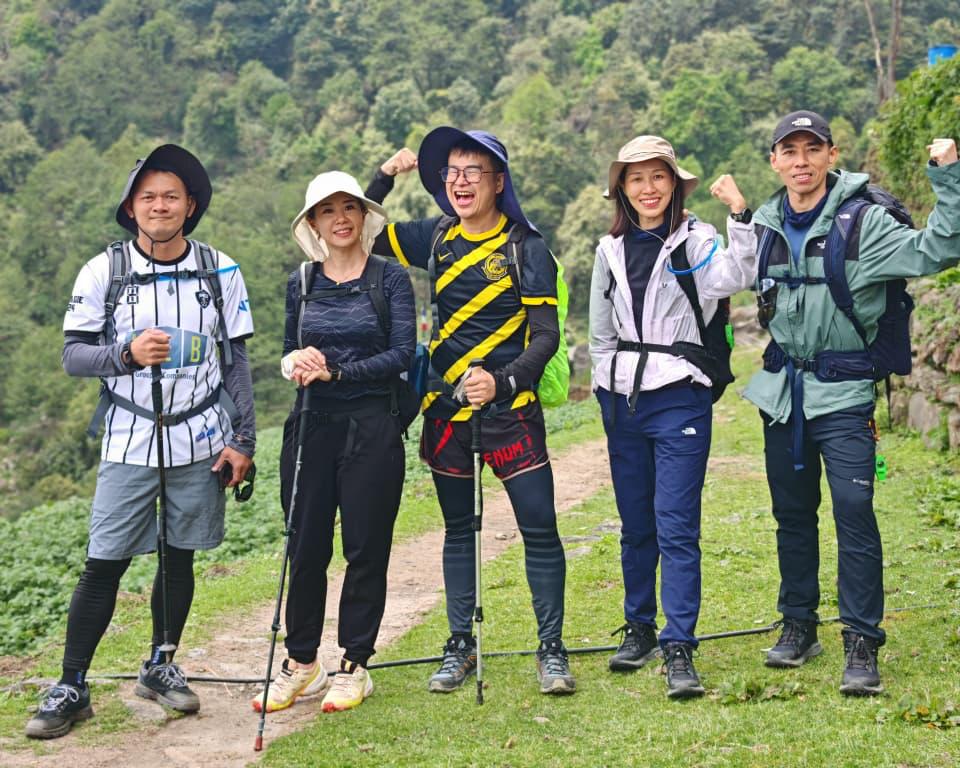
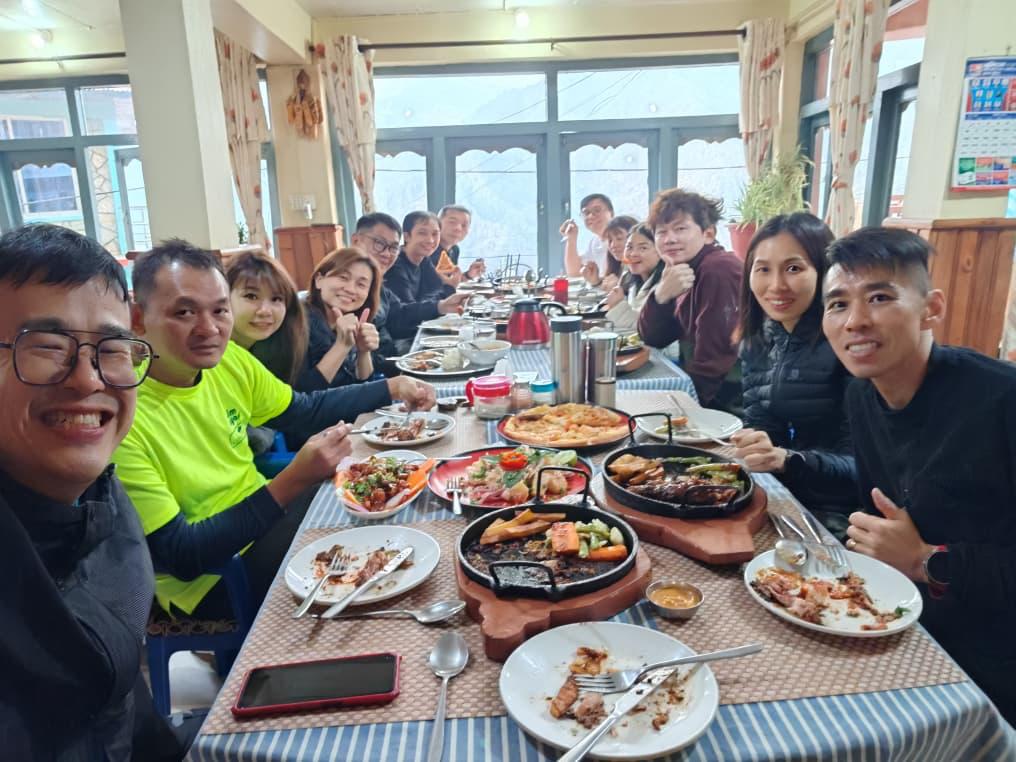
Route Map & Gallery










Frequently Asked Questions - Annapurna Base Camp (ABC) Trek
The ABC Trek typically takes 7–10 days, depending on the route, pace, acclimatization days, and starting point.
The best time for the ABC Trek is March–May (Spring) and September–November (Autumn), when the weather is clear and stable with excellent mountain visibility.
It is considered a moderate difficulty trek. While no technical skills are required, the trail includes long ascents, stone steps, and high altitude, so good fitness is helpful.
Yes, trekkers need two permits:
-
TIMS Card
-
Annapurna Conservation Area Permit (ACAP)
The highest point is Annapurna Base Camp at 4,130 meters (13,549 ft).
While the altitude is moderate, some trekkers may feel symptoms above 3,000 m. Proper pacing, hydration, and acclimatization help reduce risks.
Yes! Many beginners complete the ABC Trek. You should have average fitness and prepare with some hiking practice.
Essential items include warm layers, trekking boots, down jacket, trekking poles, sleeping bag, rain gear, water purification, and basic first aid.
Yes, ABC Trek can be done independently, but hiring a local guide or porter enhances safety, navigation, and comfort.
Yes, it is open year-round, but trekking in winter (Dec–Feb) and monsoon (Jun–Aug) can be more challenging due to weather and trail conditions.
Useful Info
The Annapurna Base Camp Trek moves through a remarkable range of landscapes in a relatively short period of time. You begin among the lower hills and Gurung settlements of the Annapurna region, enter the forested Modi Khola valley and eventually reach the cold alpine basin of the Annapurna Sanctuary at 4,130 m. The information below will help you prepare for the altitude, trail conditions, accommodation, meals, permits and practical side of the journey.
Annapurna Base Camp Info
| Information | Details |
|---|---|
| Duration | 10 Days |
| Region | Annapurna Sanctuary |
| Trekking Start | Samrung / Jhinu Danda area after travel from Pokhara |
| Highest Point | Annapurna Base Camp – 4,130 m |
| Machhapuchhre Base Camp | Around 3,700 m |
| Difficulty | Moderate |
| Accommodation | Hotels in Kathmandu/Pokhara and teahouses during the trek |
| Meals | Breakfast, lunch and dinner during trekking days |
| Protected Area | Annapurna Conservation Area |
| Best Seasons | Spring and Autumn |
Best Time for the Annapurna Base Camp Trek
The most popular times for the Annapurna Base Camp Trek are spring from March to May and autumn from September to November. These months generally bring more favourable walking conditions and better opportunities for clear mountain views.
Spring is particularly attractive in the lower valley because rhododendrons bloom across the forested slopes. Autumn usually brings clearer air after the monsoon, with excellent visibility toward Annapurna South, Machhapuchhre and the surrounding peaks.
| Season | What to Expect | Suitability |
|---|---|---|
| March – May | Milder temperatures, flowering rhododendrons and generally good mountain visibility. | Excellent |
| June – August | Frequent rain, humid forest trails, leeches, cloud and possible landslide or road disruption. | Less suitable |
| September – November | Generally clearer skies, good trail conditions and excellent Himalayan views. | Excellent |
| December – February | Cold conditions with possible snow and ice around Deurali, MBC and ABC. | More demanding |
Difficulty of the Trek
The Annapurna Base Camp Trek is best described as moderate. No technical climbing is involved, but the route contains steep stone staircases, repeated ascents and descents, uneven mountain trails and several substantial walking days.
The section around Chhomrong and Sinuwa involves considerable stair climbing, while the trail above Deurali becomes more exposed and increasingly affected by altitude. Reaching Annapurna Base Camp at 4,130 m requires a steady pace and enough endurance to continue walking comfortably for several consecutive days.
Good general fitness is important. Regular walking, stair climbing, hill training and longer day hikes before travelling to Nepal will make the trek considerably more comfortable.
Altitude and Acclimatization
The route gains elevation progressively from the lower Annapurna foothills. Chhomrong sits at 2,170 m, followed by Bamboo and Deurali before the trail continues through Machhapuchhre Base Camp and into the high basin of the Annapurna Sanctuary.
Our overnight at Deurali at 3,230 m helps break up the climb before the final approach to base camp. Even with this gradual progression, the trek reaches above 4,000 m, so altitude should still be taken seriously.
| Location | Altitude |
|---|---|
| Pokhara | 820 m |
| Chhomrong | 2,170 m |
| Bamboo | 2,310 m |
| Himalaya | Around 2,900 m |
| Deurali | 3,230 m |
| Machhapuchhre Base Camp | 3,700 m |
| Annapurna Base Camp | 4,130 m |
Altitude sickness can affect trekkers regardless of age or fitness. Walk at a comfortable pace, drink enough water and tell your guide if you develop persistent headache, nausea, dizziness, unusual weakness, poor coordination or breathing difficulty. If symptoms become serious or continue to worsen, further ascent should be avoided.
Accommodation During the Trek
Accommodation during the trekking section is provided in local teahouses and mountain lodges. Rooms are generally simple and usually arranged on a twin-sharing basis.
Facilities tend to be better in lower settlements such as Chhomrong, while lodges become more basic as the trail approaches Deurali, Machhapuchhre Base Camp and Annapurna Base Camp. Shared bathrooms are common, particularly at higher elevations.
Hot showers, Wi-Fi and charging may be available at some lodges for an additional fee, but they should not be expected everywhere. At ABC, the priority is a warm place to sleep rather than hotel-style facilities.
Food During the Trek
Breakfast, lunch and dinner are provided during the trekking days. Meals are prepared at local teahouses, and the selection changes slightly as you move higher into the Sanctuary.
Typical choices include dal bhat, noodles, soups, fried rice, pasta, potatoes, eggs, porridge, pancakes, bread and seasonal vegetables. Dal bhat remains one of the most practical trekking meals because it provides rice, lentils and vegetables in a filling combination.
Menus are usually more varied in the lower villages and become simpler toward MBC and ABC because everything has to be transported into the upper valley. Carrying a few personal snacks such as nuts, energy bars, dried fruit or chocolate can be useful on longer walking days.
Permits and Trekking Documentation
The trekking route lies inside the Annapurna Conservation Area, so an Annapurna Conservation Area Permit is required.
| Permit / Document | Details |
|---|---|
| Annapurna Conservation Area Permit (ACAP) | NPR 3,000 for foreign visitors and NPR 1,000 for SAARC visitors. |
| TIMS / Trekking Documentation | Arranged according to the trekking regulations applicable at the time of travel. |
Top Trail Nepal arranges the required permits and trekking documentation before departure. Government fees and trekking regulations can change, so the requirements for your travel dates are reconfirmed before the trek.
Guide and Trekking Support
Your trek is accompanied by an experienced trekking guide who helps with navigation, daily pacing, accommodation arrangements, altitude awareness and communication with local teahouses.
The guide’s judgement becomes particularly important above Deurali, where altitude and weather can affect trail conditions. If conditions are unsuitable for continuing toward MBC or ABC, the daily plan may be adjusted rather than forcing the original schedule.
Transportation to the Annapurna Region
The trip includes travel between Kathmandu and Pokhara, followed by a road transfer from Pokhara toward the Samrung and Jhinu Danda area where the trekking section begins.
Road access in the lower Annapurna foothills changes over time, so the exact point where the vehicle stops can vary with road condition, weather and local traffic.
Kathmandu–Pokhara travel can be arranged by road or domestic flight depending on the package booked. Road journeys are more affected by traffic and construction, so travel times should always be treated as approximate.
Weather and Trail Conditions
Conditions change significantly between the lower valley and Annapurna Base Camp. Chhomrong and Bamboo can feel relatively warm and humid, while Deurali, MBC and ABC are colder and much more exposed.
Rain can make the stone stairways and forest sections slippery, while snow and ice may affect the higher trail during colder periods. Cloud can also develop quickly inside the Sanctuary and reduce visibility.
The section above Deurali deserves particular attention after heavy snowfall or unstable weather. Your guide will assess the conditions before continuing into the upper Sanctuary and may adjust departure time or the day’s plan when necessary.
Drinking Water
Drinking water is available along the route, but untreated natural water should not be consumed directly. Carry a reusable bottle and use boiled, filtered or properly treated water. Purification tablets, drops or a reliable filter are useful additions to your trekking equipment.
Electricity, Wi-Fi and Mobile Network
Electricity, mobile reception and internet access are available in parts of the route, but the quality becomes less reliable as you move higher.
Charging and Wi-Fi may involve an additional payment at teahouses. Carrying a power bank is recommended, particularly for the upper Sanctuary where electricity should not be relied upon every evening.
Travel Insurance and Emergency Evacuation
Travel insurance is strongly recommended for the Annapurna Base Camp Trek. Your policy should cover high-altitude trekking above 4,100 m, medical treatment and emergency helicopter evacuation.
Medical treatment, rescue and helicopter evacuation costs are not normally included in the trekking package. Check the altitude limit and trekking exclusions of your policy before travelling.
What to Pack
Temperatures change considerably between Pokhara, the forested lower valley and Annapurna Base Camp, so a layered clothing system works best.
| Category | Recommended Items |
|---|---|
| Clothing | Trekking shirts, fleece, trekking trousers, thermal base layers and warm down jacket. |
| Rain Protection | Waterproof jacket and trousers, plus protection for your backpack. |
| Footwear | Well-broken-in trekking boots, trekking socks and lightweight footwear for evenings. |
| Cold-Weather Gear | Warm hat, gloves, thermal layers and suitable insulation for MBC and ABC. |
| Sleeping Gear | Warm sleeping bag suitable for cold nights in the upper Sanctuary. |
| Trekking Equipment | Trekking poles, headlamp, sunglasses, sunscreen, reusable water bottle and power bank. |
| Personal Items | Personal medication, toiletries, first-aid essentials, snacks and quick-drying towel. |
Responsible Trekking
The route lies within the Annapurna Conservation Area, where mountain communities, forests and high-altitude ecosystems share the same landscape. Keeping the trail clean and respecting local customs helps protect both the environment and the communities who live here.
Use refillable water bottles where practical, carry rubbish until it can be disposed of properly and avoid disturbing wildlife. Respect villages, religious sites and local customs, and follow your guide’s instructions regarding waste, water and trail behaviour.
Mountain weather, snowfall, trail conditions and road access can affect the daily schedule. The section between Deurali, Machhapuchhre Base Camp and Annapurna Base Camp should only be continued when conditions are suitable. Top Trail Nepal may adjust the route, departure time or overnight plan when necessary for safety.
Book Annapurna Base Camp (ABC) Trek with Confidence
Join Top Trail Nepal, your trusted local trekking agency in Kathmandu, for the journey of a lifetime. Our experienced guides, strong safety record, and personal service make your Everest dream come true.

- $999 1 people
- $950 2 - 3 people
- $885 4 - 9 people
- $850 10 - 16 people