
 Call Us or Whatsapp 9779808220612
 Email Us [email protected]
- English [EN]
- Espanol [ESP]
- France [FR]
- Deutsch [DE]
- China [CN]
- Japan [JP]
- Arabic [AR]
- Hindi [HI]

Ghorepani Poon Hill Trek
 Duration: 9 Days
 Difficulty: Easy
 Accomodation: Hotel/ Lodge/ Teahouse
 Meal: B-L-D
 Max. Altitude: 3,210 m
 Best Seasons: Spring (March-April-May) & Autumn (Sep-Oct-Nov)
Ghorepani Poon Hill Trek
The Ghorepani Poon Hill Trek is one of the best short trekking experiences in the Annapurna region, combining forest trails, traditional villages and a classic Himalayan sunrise viewpoint within a compact journey. The route is ideal for travellers who want to experience the mountains without committing to a long high-altitude trek.
The journey begins with travel from Kathmandu to Pokhara, followed by a drive toward the lower Annapurna foothills. From the Nayapul and Birethanti area, the trail passes through cultivated hillsides, small settlements and riverside paths before beginning the steep climb toward Ulleri at 2,050 m.

The climb above Ulleri leads into some of the most enjoyable forest walking on the route. Oak, rhododendron and mixed mountain vegetation cover much of the trail as you continue toward Ghorepani at 2,860 m. In spring, the rhododendron forests can be especially colourful, while clearings along the trail occasionally open toward Annapurna South and surrounding peaks.
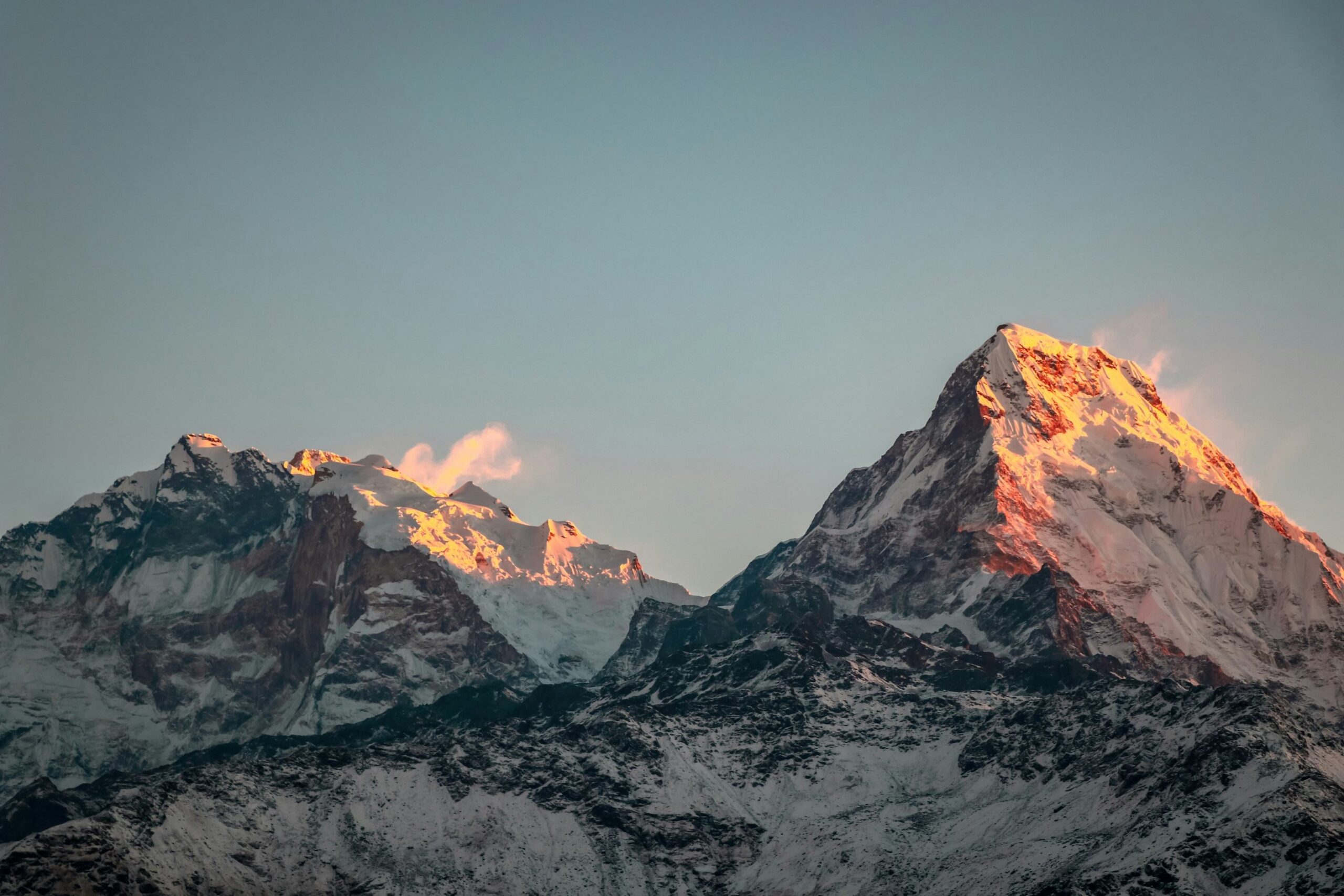
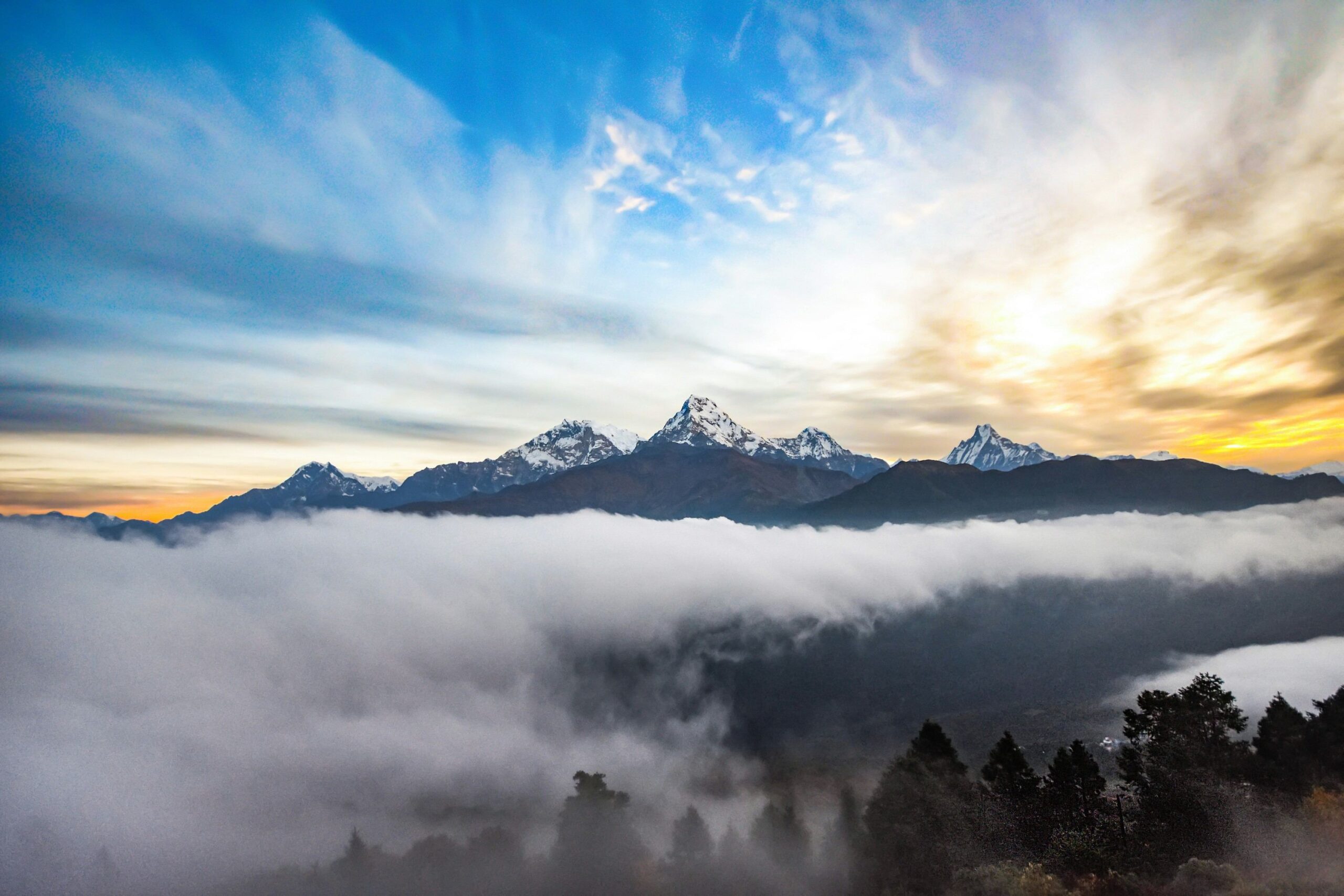
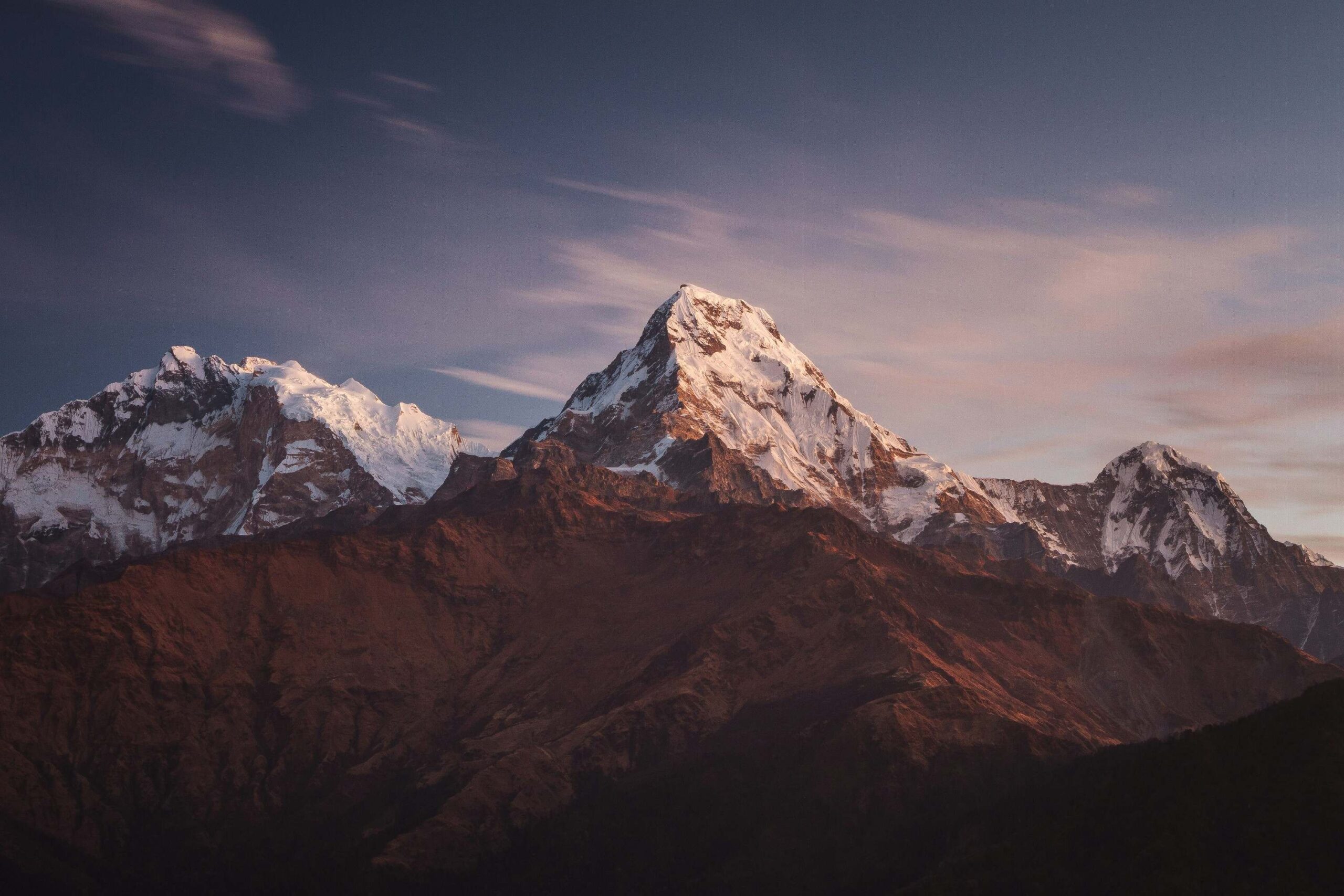
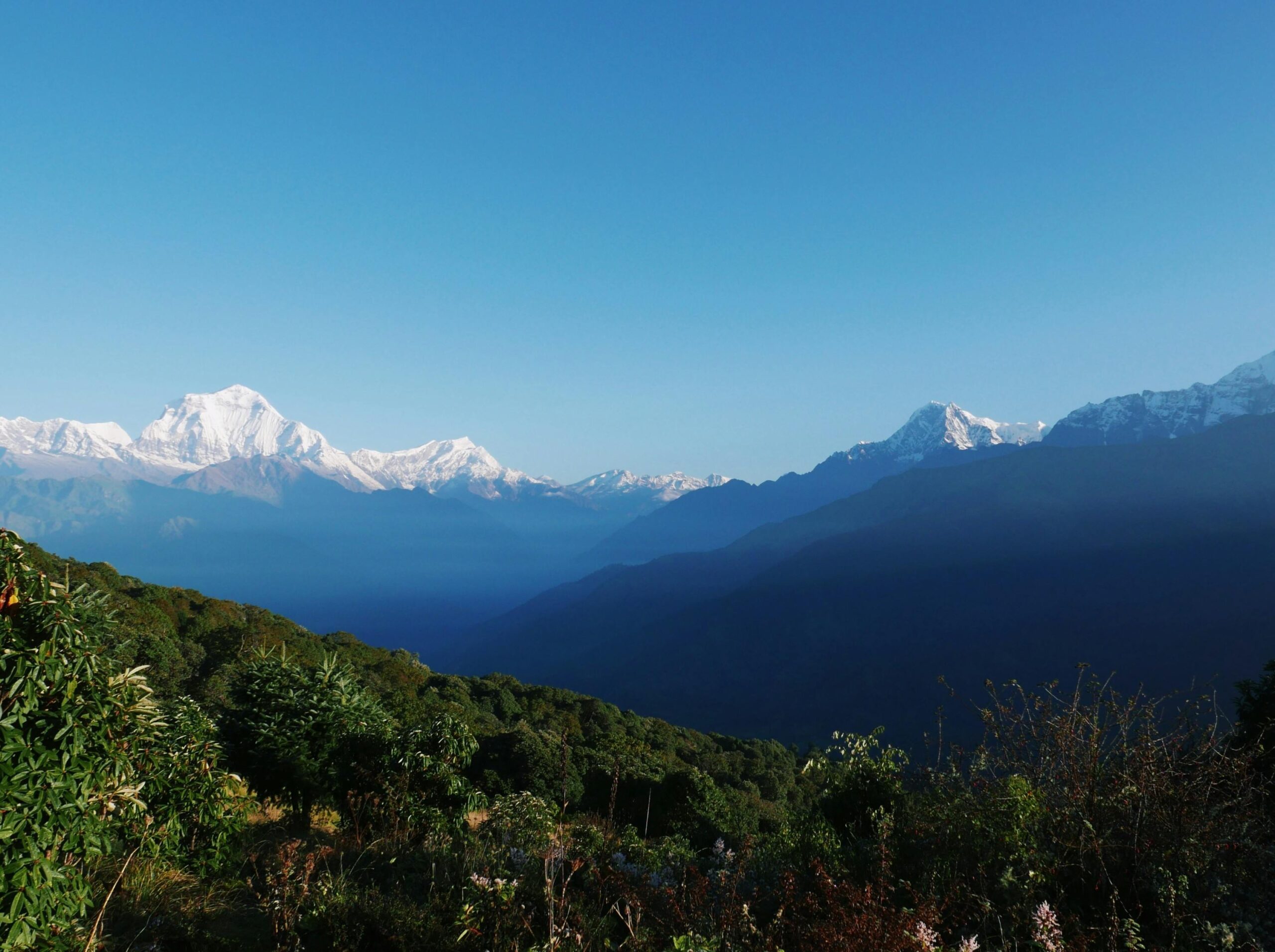
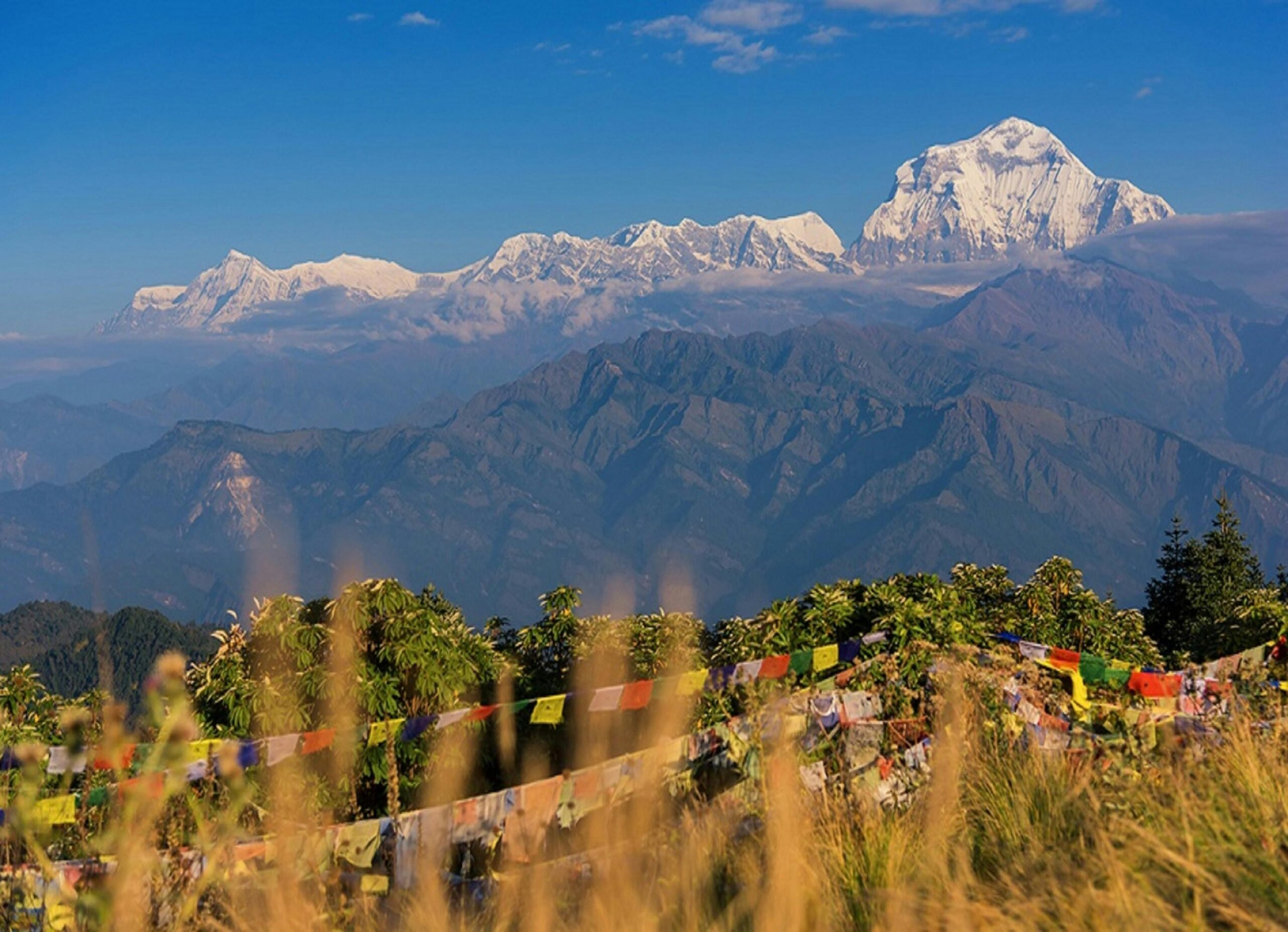
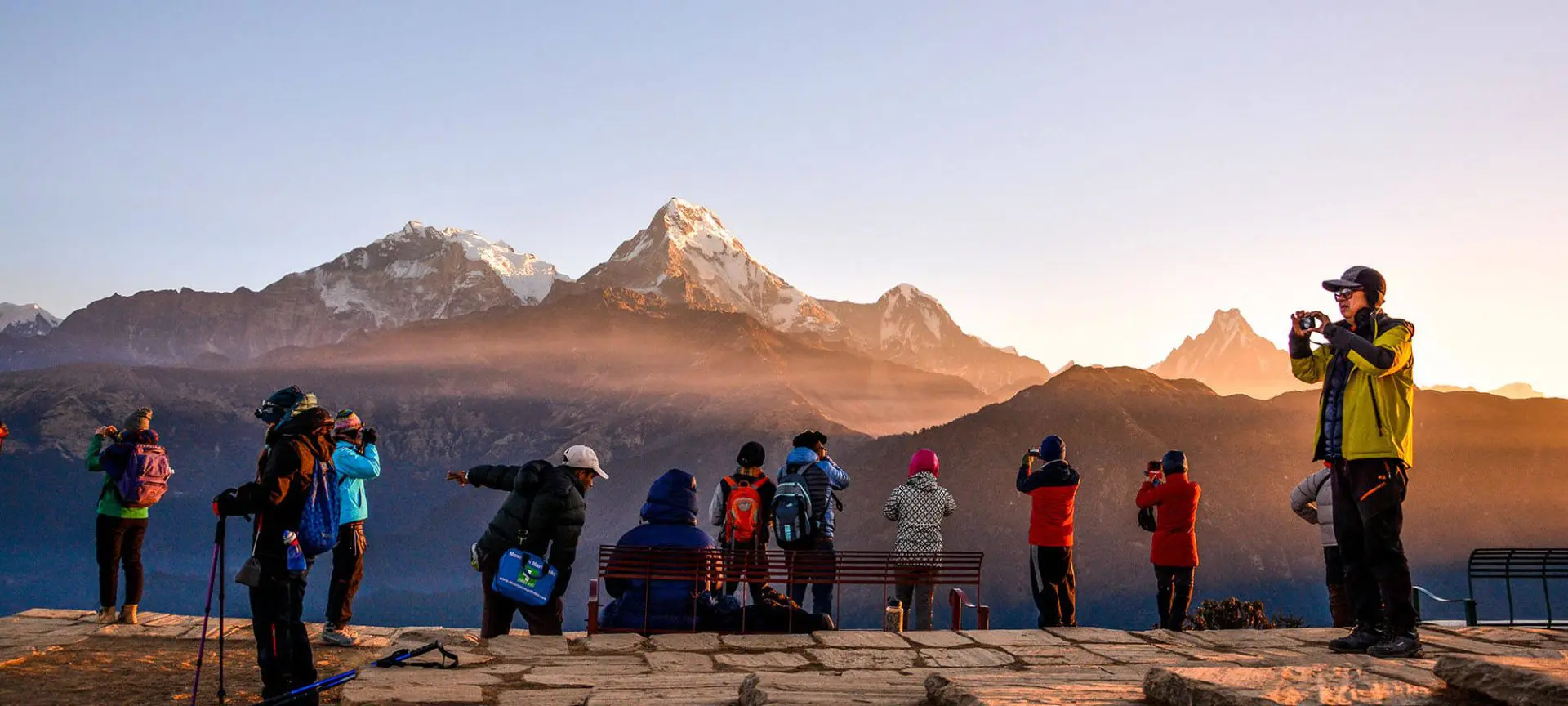
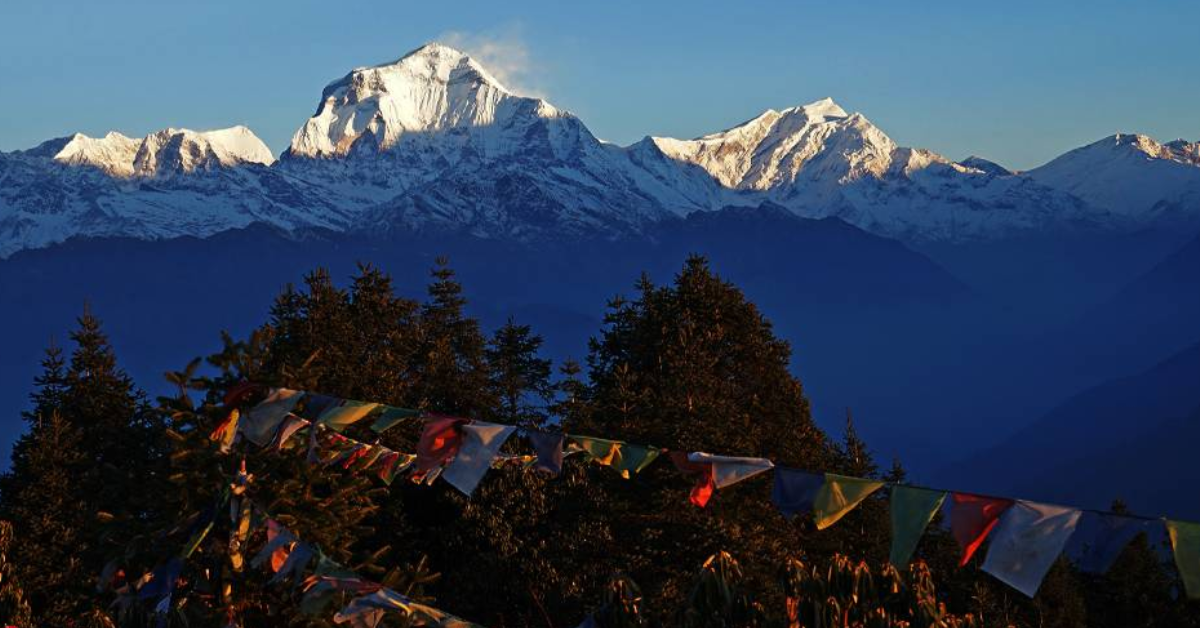
The main highlight of the trek comes early the following morning with the climb to Poon Hill at 3,210 m. From the viewpoint, clear weather can reveal a wide Himalayan panorama across the Annapurna and Dhaulagiri ranges. Watching the first sunlight reach peaks such as Annapurna South, Hiunchuli, Machhapuchhre and Dhaulagiri is the moment most trekkers remember from this route.

After returning to Ghorepani for breakfast, the journey continues toward Tadapani. This section follows forested ridges and includes a mixture of climbs and descents, making the day more varied than a simple downhill walk. Rhododendron and oak forest remain a major part of the scenery, with mountain views appearing through breaks in the trees.
From Tadapani, the trail descends toward Ghandruk, one of the best-known Gurung villages in the Annapurna region. Traditional stone houses, narrow village lanes, terraced fields and the mountain backdrop give Ghandruk a very different character from the forest settlements higher on the trail.

The cultural side of the trek is just as important as the scenery. The route passes through areas traditionally associated with Magar and Gurung communities, giving trekkers a chance to experience local mountain settlements, teahouse hospitality and everyday village life in the Annapurna foothills.
Another reason this trek is so popular is the variety packed into a relatively short route. Within a few days, the landscape changes from terraced farmland and warmer lower valleys to cool forest, high ridges and panoramic viewpoints above 3,000 m.
The Ghorepani Poon Hill Trek does not require technical climbing or extreme altitude, but it is still a real mountain trek. The famous Ulleri stone staircase, repeated climbs and descents, and several hours of walking each day make it best suited to travellers with reasonable fitness who want a rewarding introduction to trekking in Nepal.
Highlights of the Ghorepani Poon Hill Trek
- Watch the sunrise from Poon Hill at 3,210 m, the highest point of the trek.
- Enjoy panoramic views across the Annapurna and Dhaulagiri ranges, including Annapurna South, Hiunchuli and Machhapuchhre on clear days.
- Climb the famous stone staircases between Tikhedhunga and Ulleri, one of the most memorable sections of the route.
- Walk through beautiful rhododendron, oak and mixed mountain forests, particularly colourful during spring.
- Spend a night in Ghorepani at 2,860 m, the main mountain settlement below Poon Hill.
- Follow the forested ridge from Ghorepani toward Tadapani, with repeated climbs, descents and occasional Himalayan views.
- Visit Ghandruk, a traditional Gurung village known for stone houses, terraced hillsides and mountain scenery.
- Experience the culture and hospitality of Magar and Gurung communities along the trekking route.
- Travel through the Annapurna Conservation Area, where village landscapes, forest and Himalayan ecosystems meet.
- Complete a well-paced 9-day Kathmandu-to-Kathmandu itinerary that delivers a genuine Himalayan trekking experience without the commitment of a long expedition.
Detailed Itinerary - Ghorepani Poon Hill Trek (9 Days)
Nepal’s mountains may be the reason for the journey, but the first day belongs to Kathmandu.
After landing at Tribhuvan International Airport, a representative from Top Trail Nepal will meet you and transfer you to your hotel. There is no long sightseeing schedule or travel day planned after your flight, giving you time to settle in comfortably before heading west toward the Annapurna region.
If you feel like going out, the streets around Thamel are an easy place to stretch your legs, exchange money or pick up any small trekking items you may have forgotten. Otherwise, the afternoon can simply be used to rest.
Before the trek begins, we will go through the route together. The briefing covers the journey to Pokhara, the climb through Ulleri and Ghorepani, the early-morning hike to Poon Hill, accommodation, weather and the equipment you will need on the trail.
After breakfast, we leave Kathmandu and travel west toward Pokhara, the gateway to the Annapurna region.
The road passes through Nepal’s middle hills, following river valleys and travelling past farming communities, roadside towns and terraced slopes. This is a travel day rather than a trekking day, but it gives you a gradual transition from Kathmandu into the greener landscape of central Nepal.
Traffic, road construction and weather can affect travel time, so the journey is best treated as a full day on the road. A domestic flight between Kathmandu and Pokhara can also be arranged as an optional upgrade.
After reaching Pokhara, you check into your hotel near the Lakeside area. The evening is free to walk beside Phewa Lake, have dinner or prepare your trekking bag for the following morning.
Distance: Around 200 km by road
Drive Hours: Around 7 to 9 hrs
Flight Time: Around 25 to 30 minutes if flying
Today the actual walking journey begins.
After breakfast, we drive from Pokhara toward Nayapul, travelling through the lower Annapurna foothills and cultivated countryside. Once we leave the vehicle, the pace of the journey changes completely.
The trail leads toward Birethanti, a busy trekking settlement near the confluence of the Modi Khola and Bhurungdi Khola. From here, we continue through terraced farmland and small villages such as Hile and Tikhedhunga.
The first part of the walk is relatively gentle, but that changes after Tikhedhunga. The route climbs toward Ulleri on a long stone staircase that has become one of the best-known features of the Poon Hill trail.
It is a demanding finish to the first trekking day, but the steady climb brings us to Ulleri, a traditional Magar settlement built high above the lower valley.
Distance: Around 40 to 45 km by road
Drive Hours: Around 1.5 to 2 hrs
The trail continues upward today, but the character of the route becomes much more forested.
Leaving Ulleri, we climb gradually through the hills toward Banthanti. Stone steps and mountain paths continue, but dense vegetation increasingly surrounds the trail.
Much of the day is spent walking through beautiful oak and rhododendron forest. During spring, this section can be particularly colourful as rhododendrons bloom across the hillsides.
The air becomes cooler as we gain elevation, and openings in the forest may reveal Annapurna South, Hiunchuli and surrounding mountains when the weather is clear.
Eventually, we reach Ghorepani at 2,860 m, one of the main settlements on this trekking circuit. After checking into the teahouse, we have an early evening because tomorrow starts before sunrise.
Today begins long before breakfast.
We leave Ghorepani early and climb toward Poon Hill at 3,210 m, the highest point of the trek. Headlamps are usually needed for the first part of the climb as we follow the uphill trail in the darkness.
If the weather cooperates, the reward arrives as daylight spreads across the Himalayan skyline. Poon Hill is known for its broad panorama across the Annapurna and Dhaulagiri ranges, with mountains such as Dhaulagiri, Annapurna South, Hiunchuli and Machhapuchhre visible from the viewpoint.
After sunrise, we descend to Ghorepani for breakfast and collect our bags before continuing toward Tadapani.
The rest of the day is very different from the exposed viewpoint. The trail climbs onto forested ridges and then repeatedly rises and falls through rhododendron and oak woodland. Streams, stone steps and small resting places appear along the way.
By afternoon, we reach Tadapani at 2,630 m, surrounded by forest with beautiful mountain views when the sky remains clear.
After yesterday’s early start and longer trekking day, today’s walk is noticeably shorter.
We leave Tadapani and descend through rhododendron and oak forest toward the lower hills. The trail includes stone steps and uneven sections, but most of the day’s elevation change is downward.
As we lose altitude, dense forest gradually gives way to terraced fields, farmland and village surroundings.
Our destination is Ghandruk at around 1,940 m, one of the best-known Gurung villages in the Annapurna region. Traditional stone houses and narrow lanes give the settlement a very different atmosphere from the forest lodges of the previous nights.
With a clear sky, Annapurna South, Hiunchuli and Machhapuchhre rise above the village. The shorter walking day also leaves time to explore Ghandruk and experience more of the local Gurung culture rather than simply passing through.
The final trekking morning begins among the stone houses and cultivated hillsides of Ghandruk.
Rather than walking unnecessarily along lower road sections all the way to Nayapul, we descend toward Kimche or the most practical vehicle-access point available at the time of the trek.
The walk passes through village paths, terraced farmland and the warmer lower foothills, giving us one final look at rural life in the Annapurna region.
Once we reach the roadhead, our vehicle will be waiting for the return journey to Pokhara. The exact pick-up location can vary as local road access changes over time.
After arriving in Pokhara, you check into your hotel and have the rest of the day free. After several mornings on the trail, a relaxed evening around Lakeside is a comfortable way to finish the trekking section.
Distance: Road transfer to Pokhara, around 42 to 55 km
Drive Hours: Around 2.5 to 3.5 hrs
After breakfast, we begin the return journey to Kathmandu.
The road retraces the main route through river valleys, cultivated hillsides and the middle hills of Nepal. Travel time varies according to traffic, roadwork and weather, so we keep the day separate from your international departure rather than creating a rushed final schedule.
If you prefer to reduce the road journey, a domestic flight from Pokhara to Kathmandu can be arranged at an additional cost.
After arriving in Kathmandu, you transfer to your hotel. The evening is free for a final dinner, souvenir shopping or simply resting after completing the Ghorepani Poon Hill circuit.
Distance: Around 200 km by road
Drive Hours: Around 7 to 9 hrs
Flight Time: Around 25 to 30 minutes if flying
Your final morning in Nepal comes after a journey that has been short in days but surprisingly varied in landscape.
Over the previous week, you have travelled from Kathmandu to the Annapurna foothills, climbed the Ulleri stone staircases, walked through rhododendron forests, watched the Himalayas from Poon Hill at 3,210 m, and finished through the Gurung village of Ghandruk.
Depending on your flight schedule, you may have time for breakfast or a final walk before leaving the hotel.
A representative from Top Trail Nepal will transfer you to Tribhuvan International Airport for your onward flight.
What's Included
Arrival & Departure Transfers
|
Hotel Accommodation in Kathmandu & Pokhara
|
Ground Transportation
|
Meals During the Trek
|
Teahouse Accommodation
|
Professional Trekking Crew
|
Trekking Permits & Entry Requirements
|
Safety & Trekking Support
|
Staff Insurance & Welfare
|
Company Service Charges & Taxes
|
What's Not Included
International Travel & Nepal Visa
|
Kathmandu–Pokhara Domestic Flights
|
Meals in Kathmandu & Pokhara
|
Travel Insurance
|
Personal Trekking Gear
|
Extra Drinks & Snacks
|
Personal Expenses
|
Tips for Trekking Staff
|
Emergency Rescue & Medical Costs
|
Private Transportation Upgrades
|
Delays & Additional Accommodation
|
Any Other Costs
|
Departure Dates
Route Map & Gallery


Frequently Asked Questions - Ghorepani Poon Hill Trek
Our Ghorepani Poon Hill Trek is a 9-day Kathmandu-to-Kathmandu itinerary, including arrival, travel to and from Pokhara, the trekking section, and final departure.
The highest point is Poon Hill at 3,210 m. Ghorepani, where you stay before the sunrise hike, is at around 2,860 m.
The trek is generally considered easy to moderate. There is no technical climbing, but the route includes steep stone staircases, uphill sections, forest trails and repeated climbs and descents.
Yes. The Ghorepani Poon Hill Trek is a good choice for first-time trekkers with reasonable fitness. Some sections, especially the climb toward Ulleri and the early morning hike to Poon Hill, can still be physically demanding for few hikers.
The best seasons are usually spring from March to May and autumn from September to November. Spring is especially good for rhododendron flowers, while autumn often brings clearer mountain views.
On a clear day, Poon Hill offers views across the Annapurna and Dhaulagiri ranges, including Annapurna South, Hiunchuli, Machhapuchhre and Dhaulagiri.
Accommodation is provided in local teahouses and mountain lodges, usually in simple twin-sharing rooms. Facilities vary from village to village, with shared bathrooms common in many places.
Teahouses usually serve meals such as dal bhat, noodles, soups, fried rice, pasta, potatoes, eggs, pancakes, porridge and Tibetan-style bread. Breakfast, lunch and dinner are included during the trekking days.
Yes. Porter service is generally arranged at one porter for every two trekkers. You carry a small daypack with water, snacks, valuables and anything you may need during the day.
No. The standard package includes tourist bus transportation between Kathmandu and Pokhara. Domestic flights can be arranged at an additional cost.
The route requires an Annapurna Conservation Area Permit (ACAP) along with any other trekking documentation applicable at the time of travel. Top Trail Nepal arranges the required permits before the trek.
Useful Info
The Ghorepani Poon Hill Trek is a relatively short journey, but the trail still combines steep stone staircases, forest walking, changing weather and several consecutive trekking days. The information below covers the practical details you should know before travelling, including difficulty, accommodation, meals, permits, transportation and what to pack.
Ghorepani Poon Hill Trek Highlights
| Information | Details |
|---|---|
| Duration | 9 Days |
| Region | Annapurna Region |
| Main Route | Ulleri, Ghorepani, Poon Hill, Tadapani and Ghandruk |
| Highest Point | Poon Hill – 3,210 m |
| Difficulty | Easy to Moderate |
| Typical Walking | Around 3–7 hours per trekking day |
| Accommodation | Hotels and local mountain teahouses |
| Meals | Breakfast, lunch and dinner during trekking days |
| Protected Area | Annapurna Conservation Area |
| Best Seasons | Spring and Autumn |
Best Time for the Ghorepani Poon Hill Trek
The most popular seasons for the Ghorepani Poon Hill Trek are spring and autumn. These periods generally provide comfortable walking conditions and better opportunities for clear views across the Annapurna and Dhaulagiri ranges.
Spring is especially attractive because rhododendrons bloom across the forests above Ulleri and around Ghorepani. Autumn usually brings clearer air after the monsoon and is one of the best times for sunrise views from Poon Hill.
| Season | Conditions | Suitability |
|---|---|---|
| Spring (March–May) |
Milder weather, flowering rhododendrons and good mountain views on clear days. | Excellent |
| Summer / Monsoon (June–September) |
Frequent rain, muddy or slippery trails, cloud and leeches in forested sections. | Less suitable |
| Autumn (September–November) |
Generally clearer skies, pleasant trekking conditions and excellent Himalayan visibility. | Excellent |
| Winter (December–February) |
Cold mornings with possible frost, snow or ice around Ghorepani and Poon Hill. | Possible with preparation |
Trek Difficulty and Fitness
The Ghorepani Poon Hill Trek is considered an easy to moderate trek. There is no technical climbing, glacier travel or extreme altitude, making it a suitable introduction to trekking in Nepal for travellers with reasonable fitness.
That does not mean every section is quite easy. The climb from Tikhedhunga toward Ulleri involves a long series of stone staircases, while the route between Ghorepani and Tadapani contains repeated climbs and descents through forest.
Most walking days last around 3 to 7 hours. Regular walking, stair climbing, light hill training and basic cardiovascular exercise before travelling will make the trek much more enjoyable.
Altitude and Main Locations
The trek stays at a considerably lower elevation than routes such as Annapurna Base Camp or the Annapurna Circuit. The highest point is Poon Hill at 3,210 m, reached during the early morning viewpoint hike from Ghorepani.
The gradual approach through Ulleri and Ghorepani gives the body time to adjust naturally. Even so, maintaining a steady pace, drinking enough water and resting properly are sensible throughout the trek.
| Location | Altitude |
|---|---|
| Kathmandu | 1,350 m |
| Pokhara | 820 m |
| Ulleri | 2,050 m |
| Ghorepani | 2,860 m |
| Poon Hill | 3,210 m |
| Tadapani | 2,630 m |
| Ghandruk | 1,940 m |
Accommodation During the Trek
During the trekking section, accommodation is provided in local teahouses and mountain lodges. Rooms are generally simple and usually arranged on a twin-sharing basis.
Ghorepani, Tadapani, Ulleri and Ghandruk are established trekking stops, but facilities still vary between lodges. Shared bathrooms are common, and hot showers may be available for an additional charge.
Kathmandu and Pokhara provide more comfortable hotel accommodation, while the mountain section is intentionally simpler. Trekkers should expect clean, practical lodging rather than resort-style facilities on the trail.
Meals During the Trek
Breakfast, lunch and dinner are included during the trekking days. Meals are prepared in local teahouses, with menus offering a mixture of Nepali food and common trekking meals.
Typical choices include dal bhat, noodles, soups, fried rice, pasta, potatoes, eggs, porridge, pancakes, Tibetan-style bread and seasonal vegetables. Dal bhat is especially popular on trekking days because it provides a filling combination of rice, lentils and vegetables.
Tea or coffee with breakfast is included according to the package. Additional drinks, bottled beverages, snacks and food ordered outside the included meals are paid for separately.
Guide, Porter and Trekking Support
The trek is accompanied by an experienced trekking guide who assists with navigation, daily pacing, accommodation arrangements and communication with local teahouses.
Porter service is generally arranged at one porter for every two trekkers. Your main trekking baggage is carried by the porter, while you carry a small daypack containing water, snacks, valuables, medication, camera equipment and clothing needed during the day.
Permits and Trekking Documentation
The Ghorepani Poon Hill route lies within the Annapurna Conservation Area, so the required conservation-area permit must be arranged before entering the trekking region.
| Permit / Document | Details |
|---|---|
| Annapurna Conservation Area Permit | Required for entry into the Annapurna Conservation Area. |
| TIMS / Trekking Documentation | Arranged according to the trekking regulations applicable at the time of travel. |
Top Trail Nepal arranges the required permits and trekking documentation before departure. Permit rules and government fees can change, so the requirements applicable to your travel dates will be reconfirmed before the trek.
Transportation
The standard package includes tourist bus transportation between Kathmandu and Pokhara. Domestic flights between the two cities can be arranged as an optional upgrade at an additional cost.
From Pokhara, road transportation takes you toward the Nayapul and Birethanti area for the beginning of the trekking section.
After the overnight stay in Ghandruk, the final walking section leads toward Kimche or the most practical road-access point available at the time. From there, you return to Pokhara by vehicle. Local road access can change, so the exact pick-up point may vary slightly.
Weather and Trail Conditions
Conditions vary considerably between the lower foothills and the higher forest around Ghorepani. Lower sections can feel warm during the day, while mornings and evenings become noticeably colder as the trail approaches 3,000 m.
Rain can make the stone staircases and forest trails slippery. During winter, frost, snow or ice may occasionally affect the higher sections around Ghorepani and Poon Hill.
The Poon Hill hike begins before sunrise, so warm layers, a headlamp and good footwear are particularly useful on that morning.
Safety During the Trek
The Ghorepani Poon Hill route follows established trekking trails, but stone staircases, wet forest paths and long descents still require care.
Walk at a comfortable pace, particularly on the Ulleri staircase and during the descent toward Ghandruk. Trekking poles can reduce strain on the knees and provide extra balance on wet or uneven sections.
Drinking Water
Drinking water is available from teahouses and settlements along the route. Untreated water from natural sources should not be consumed directly.
Carry a reusable bottle and use boiled, filtered or properly treated water. Water purification tablets, drops or a reliable filter can also be useful during the trek.
Electricity, Wi-Fi and Mobile Network
Electricity and mobile coverage are available in many of the villages along the route, although signal quality can vary depending on location and weather.
Wi-Fi and battery charging may be available at teahouses for an additional fee. Carrying a power bank is recommended for your phone, camera and other small electronic devices.
Travel Insurance and Emergency Assistance
Travel insurance is strongly recommended even though this trek does not reach extreme altitude. Your policy should cover trekking activities, illness or injury, medical treatment and emergency evacuation if required.
Emergency rescue, hospital treatment and evacuation expenses are not included in the package. Check the terms of your insurance policy before travelling to Nepal.
What to Pack
The route passes from the warmer Pokhara Valley into cooler forested hills above 2,000 m, so clothing that can be added or removed in layers works best.
| Category | Recommended Items |
|---|---|
| Clothing | Trekking shirts, trousers, fleece, thermal layer and a warm jacket. |
| Rain Protection | Waterproof jacket, rain trousers and backpack rain cover. |
| Footwear | Comfortable, well-broken-in trekking boots and suitable trekking socks. |
| Cold Weather | Warm hat, gloves and extra insulation for the Poon Hill sunrise hike. |
| Trekking Equipment | Headlamp, trekking poles, sunglasses, sunscreen and reusable water bottle. |
| Personal Items | Medication, toiletries, power bank, snacks, small towel and personal documents. |
Responsible Trekking
The trail passes through the Annapurna Conservation Area and through villages where tourism is closely connected with everyday community life.
Respect local customs, ask before photographing people, avoid disturbing wildlife and carry rubbish until it can be disposed of properly. Refillable water bottles and reusable items help reduce unnecessary plastic waste along the route.
Important: Walking times, road access and daily schedules can change according to weather, trail conditions, traffic and the pace of the group. The exact vehicle pick-up point after Ghandruk may also vary depending on current road access. Your guide may make practical adjustments when necessary while keeping the main trekking route and experience unchanged.
Book Ghorepani Poon Hill Trek with Confidence
Join Top Trail Nepal, your trusted local trekking agency in Kathmandu, for the journey of a lifetime. Our experienced guides, strong safety record, and personal service make your Everest dream come true.