
 Call Us or Whatsapp 9779808220612
 Email Us [email protected]
- English [EN]
- Espanol [ESP]
- France [FR]
- Deutsch [DE]
- China [CN]
- Japan [JP]
- Arabic [AR]
- Hindi [HI]
Mera Peak Photography Spots: Wildlife, Highest Peaks, and the Best Sunrise Views You Can Capture
Published: June 2026 | Author: Nishan Dahal | Category: Information
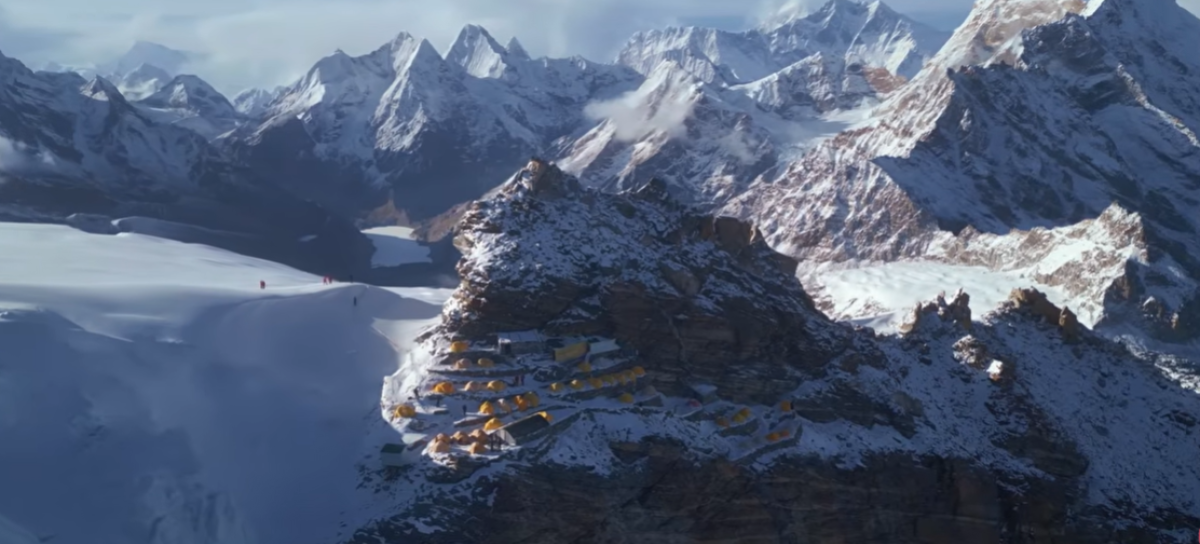
There are mountains you climb to reach the summit, and there are mountains you climb to see what’s on the other side and on its journey. Mera Peak definitely falls in the second category. It’s the world’s highest trekking peak both for its technical and visual qualities, rising to 6,476 metres in the remote Solukhumbu region of Nepal. On top, the air grows ever thinner, and the nearby giants are disturbingly close, like you could touch through the cold air and press your palm against the ice-armed sides of Everest.
Whether you have a mirrorless camera with a load of lenses or you’re just using a cell phone camera with a sharp eye, Mera Peak is extraordinary because it is not a technical climb in the mountaineering sense. Rising is challenging, but not rock climbing or ice wall skills. The blue-dark pre-dawn at high camp, the summit’s 360-degree theatre of light, the glacial silence of Mera La, and the rhododendron fire of the Hinku Valley in spring are worth clicking.
Mera peak holds multiple phote
This is a guide to all of the key photography stops from the first steps out of Lukla to the descent of the summit, but it also explores the little-known world of wildlife that shares this remote stretch of Makalu Barun National Park.
Mera Peak Through the Lens: Wildlife, Mountain Summits, and Golden Sunrises
Located in the eastern part of the Khumbu region and south of Everest and north of Makalu, Mera Peak is nestled in the folds of the Makalu Barun National Park. It is one of the most biodiversity-rich protected areas in the world, ranging from the tropical river gorges at 435 metres to the icy summit areas above 8,000 metres. The summit itself has three distinct summits: Mera North (6,476 m), Mera Central (6,461 m), and Mera South (6,065 m), with the highest and most climbed being Mera North.


The typical route starts in Lukla (2,860 m) and winds through the Hinku Valley, a little-known route in the footsteps of a few people in the Base Camp. This is one of Mera’s biggest blessings to a photographer: trails with no queue, villages not spoiled by a lot of mass tourists, and landscapes that still have the taste of true discovery.
One of our team members who recently completed the Mera Peak expedition says,
Views from the height of Mera Peak are other-worldly, with five highest peaks of the world put in one frame of the panorama of jagged mountains.
Why is Mera Peak Photogenic?
The majority of trekking peaks in Nepal are located in hectic passages where there are striking views of the mountains, but are limited by other ridges. The location of Mera is very unique; it is high enough to overlook the surrounding area in almost all directions, and it is also far enough away from the highest peaks that Everest, Lhotse, Makalu, Cho Oyu, and Kangchenjunga are all visible within a single unobstructed panorama.
The view from the top is probably the finest multi-eight-thousander combination anywhere that’s open to the non-technical climber. As well as this is the diversity of the landscape that is approached. To be sure, in one trip, a photographer traverses through the subtropical rhododendron woods, the high alpine meadows, the glacial moraines, frozen lakes, and open snowfields, each of which has its own colour palette, wildlife, and light quality.
The Best Photography Spots
While the whole journey of Mera Peak is filled with scenic views that are worth capturing via the perfect lens, here are a few of the perfect sports thet you cannot miss. Below are the nine most rewarding photography locations along the Mera Peak route, arranged in order of approach. These are the few that our team has selected to be the best ones. Each one rewards a particular kind of shooting, a grand landscape, intimate wildlife, architectural detail, or the pure abstraction of ice and light at extreme altitude.

Hinku Valley
The trail down to Lukla goes into a valley that few tourists venture into. In an undisturbed forest setting, one can see ancient prayer wheels, stone chortens with prayer flags draped in wind shards, and rhododendron tunnels. The rhododendrons burst into bloom in all their white to crimson hues in the springtime (April-May).

Zatrwa La Pass
The first high crossing on the trek is usually in mist or partial cloud. Once the sun shines, the crowning of Lukla and the Dudh Koshi valley below are breathtaking, a river of cloud below against a backdrop of ice peaks. Prayer flags are always hung over the frame for each shot.

Kothe & Thagnag Villages
The little Sherpa villages in the middle of the Hinku Valley are really out of the way. On the hillside above the stone teahouses, yaks graze. Early morning sun shines on the eastern slopes. Sherpa people, yak herders, and monks are portrayed in portraits that are some of the most true to the culture on any route in the Himalayas.

Sabai Tsho (Glacial Lake)
A high-altitude glacial lake with teal waters, which reflect peaks in the surrounding landscape on calm days near the Mera climbing route. Icebergs calved from the glacier float on the surface. Early morning with slight frost on the beach.

Khare Village Viewpoint
One of the lesser-known viewpoints in the Khumbu is the acclimatisation hill above Khare. It is from here that one can admire the entire beauty of the Mera massif: its gentle glacier slopes, which will lead to the summit. This angle shows Makalu’s pyramid on the eastern horizon. With a telephoto lens it stands out in all its glory among the afternoon clouds.

Mera La (The High Pass)
One of the most dramatic geographical crossings on the trek is the col between Hinku Valley and the Mera glacier. The valley slopes on one side green and grey. On the other hand, the glacier is carried up in bands of blue glacier ice and compressed snow. The scene of the transition is a one-shot and is unforgettable.

Mera High Camp
Even if you don’t want to climb, High Camp is the place to go for the pictures. The camp is located on a wide shoulder with a clear view to the south over the Hinku Valley and to the north over the summit glacier. From here, Lhotse and Everest appear deep amber at sunset. The Milky Way above the glacier is a stunning sight at night, and an incredible sight pre-dawn when the skies are darkest (one of the darkest in the world).

Mera Summit (Mera North)
Now all that is part of the equation at the very top of the mountain. Everest (8,848 m), Lhotse (8,516 m), Makalu (8,485 m), Cho Oyu (8,188 m) and Kangchenjunga (8,586 m) – all 5 visible at once on a clear day – almost unique on earth at this altitude. The golden glow of the sunrise on ice-clad mountain faces is one of the unique moments of a Himalayan photograph.
When to plan Mera Peak for Photography?
Mera Peak provides a whole new photo experience in each season. Spring is a time of colourful forest scenes and brilliant rhododendrons; in autumn, the mountains are crystal clear and the skies are filled with bright stars; in winter, the region is transformed into a dramatic snowy landscape; and in the monsoons, the valleys are filled with lush green colours, though with limited visibility. So, there is no best season for the photography of Mera Peak.
When exactly it’s ideal is really dependent on what you are attempting to capture. Flowers, sharp mountain views, snow and ice scenes, wildlife, greenery or any other aspect of the natural world has its own special appeal for the photographer in each season.
Animals in Mera Peak: The Wildlife Species to Capture
Mera Peak is entirely located in the Makalu Barun National Park, which is a UNESCO recognised National Park of 1500 km square with one of the highest concentrations of biodiversity in the Himalayas. Mammal species are 88, and bird species are more than 400 in the park. This is a whole new way to go, for wildlife photographers, as it’s done at lower altitudes and with patience, not height. The ecology of the park on the approach to Mera is quite varied, from the tropical forest at 435 metres to the glaciated peaks above 8,000 metres; each ecology zone brings its own variety of creatures.
Snow Leopard, the Panthera uncia, is one of the predators and the most secretive big cat in the world, which might be caught in your camera lens if you’re lucky enough during your journey in Mea Peak. Wildlife tracking is available in Makalu Barun National Park, and the snow leopard does exist in the park. They are seen mainly during winter when they come down to lower altitudes (3,500-4,500 m) to feed on their prey, a Himalayan blue sheep (bharal).
The red panda is one of the most popular subjects in Nepal for wildlife photographers, and lives at elevations of 2,200 to 4,800 metres in rhododendron and bamboo forests. The lower Hinku Valley (between Lukla and Chutanga) is well within this spectrum, especially the heavily forested parts in between. Makalu Barun National Park has been identified as a red panda’s habitat in Nepal. The active hours of the day are dawn and dusk; be sure to look for them as you walk around the branches of rhododendron and bamboo thickets. These can be seen best in the spring and autumn.
Himalayan Tahr are the large, shaggy wild goats with swept-back horns are commonly seen on rocky slopes above the treeline. Small tahr herds are sometimes seen in the early morning grazing along the steep hillsides on the flanks of the valley between Kothe and Khare. Ideal lens is a telephoto with a focal length of 200mm or greater. Males are especially handsome in winter, when their manes are heaviest. Do not be afraid of them; they are not timid like the snow leopard; a gentle touch of a camera can get closer views.
Blue sheep (bharal): The primary prey of the snow leopard is blue sheep and they live in the open alpine areas above 3500 metres. They are often encountered in small groups on the upper slopes of Thagnag and around Mera La where the rock field above the tree-line is ideal for their foraging. They are blue-grey in colour and are very well camouflaged on rock so take a good look with binoculars on open rock slopes before assuming their absence. Snow leopards are not far behind blue sheep.
The marmot is one of the most cuddle-worthy animals on any trek to the Himalayas and is plump and golden brown. They are found on the high grasslands above 4,000 metres (around Khare in particular), are standing on boulders, whistling with a whistle that is sharp, and appear to be unfazed by trekkers. Ideal for using with a background of mountains for environmental portraits. They are active in the sunlight, particularly in the morning and afternoon, but drop down into the soil during the heat of the day and hibernate from October to November.


The light at 6,476 metres is an unusual light that cannot really be captured in a photograph. It is not hot, nor cold, but both in equal measure, the intensity of high altitude sunlight, and the amazing clarity of the air from almost no haze. The sky is a shade more blue than a paint colour, and the shadows over the snow add delicate hues of violet. When it is a sunny day, the five Great Himalayan peaks in the horizon appear so close that you can almost step into them.
If you’re willing to go the extra mile, Mera Peak is an extraordinary experience. The ascent to the top is a challenge and a matter of determination, but with preparation, it’s within reach for trekkers. The Hinku Valley gradually unfolds along the way to the photographer’s paradise, and the experience is far removed from the crowded trails of Everest or Annapurna. It’s wilder and quieter and much less populated, offering countless chances to take in the unblemished vistas, the dramatic mountain views, and the raw natural beauty.
With a professional camera gear or just your smartphone, from taking the stunning view from the top of the mountain to catching a glimpse of a red panda in among the rhododendrons, Mera Peak is a photographer’s delight. These photos collected here will not only be photographs, but memories that will come back to you again and again for years to come.