
 Call Us or Whatsapp 9779808220612
 Email Us [email protected]
- English [EN]
- Espanol [ESP]
- France [FR]
- Deutsch [DE]
- China [CN]
- Japan [JP]
- Arabic [AR]
- Hindi [HI]
Narphu Valley Trek in Autumn: Unlock the Wild Mysteries of Nepal’s Oldest Twin Villages
Published: May 2026 | Author: Nishan Dahal | Category: Information
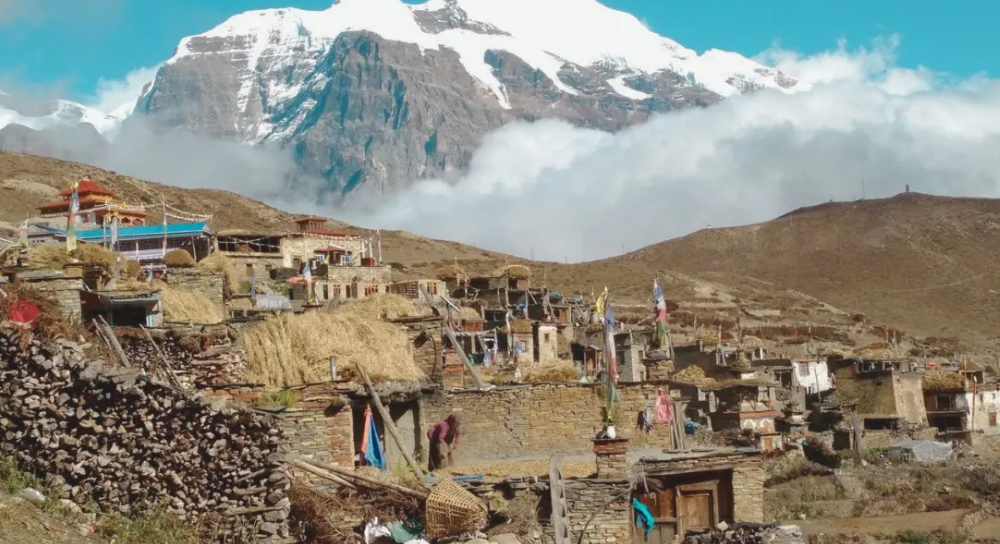
In Nepal, some treks are almost familiar to everyone, such as Everest Base Camp, the Annapurna Circuit, and Langtang Valley. Then there are the ones that are known only among serious trekkers. The ones that call for special permits, a licensed guide, and a true desire to venture into a world that has remained largely unchanged over the past several centuries. The Narphu Valley trek is one of these sorts. The twin valleys of Nar and Phu lie in the northern part of the Annapurna Conservation Area. It is also the old trade routes of Nepal and Tibet.
Until 2002, they were completely off-limits to foreign visitors. Despite the strict permit restrictions, there are still not many people coming to this region to trek. Those who do are treated to a sort of solitude, unspoiled landscape, and culture that is rare in the trekking world of the Himalayas as it is today.
Nar Phu Valley Trek: The Twin Villages That Preserve an Ancient Culture
The Narphu Valley Trek leads you into the two side valleys of the famous Annapurna Circuit, Phu and Nar Valley. The Annapurna Circuit has also become more commercial over the years, but as the route crosses the Narphu detour, the scenery changes from a green forest to a high-altitude desert. The villages are more similar to medieval Tibet than modern Nepal. There are two valleys, each with its own flavor. Phu Valley is more wild and dramatic with a deep gorge.
On the other hand, we have Nar Valley, which is more open and surrounded by terraced fields, old stone walls, and a skyline of snow peaks. The traditional trail connects the two valleys and typically runs across the Kang La Pass at 5320 metres. This is the highest pass on the trail, and one of the most stunning mountain crossings in all of Tibet.
Best Time To Visit Nar Phu Valley
The best time to trek in the Nar Phu Valley is during the spring and autumn (September to November) seasons. The weather during these months is mostly settled, and the skies are clear, offering the best mountain view.
Among these seasons, the month of October is when the skies are deep blue with no clouds, the temperatures are comfortable, and the air is crystal clear after the monsoon. So most people prefer this trek in October. Spring is also fine when the rhododendron flowers in March and April on the lower parts of the walk. The weather on the hikes varies from season to season, ranging from -10°C at night to temperatures as high as 30°C during the day’s heat.
Considering all the seasons, the Narphu Valley Trek in autumn is considered the best time for experiencing the journey.
Day-to-Day Itinerary For Nar Phul Valley Trek
Early in the morning (6 or 7 am), you depart from Kathmandu for the long stretch northwest to the Annapurna region. The road takes the Pokhara direction along the Prithvi Highway, and then at Besisahar, it bends to the north, where the Marsyangdi River valley starts. The road from Besisahar becomes rough going, and you must change to a local jeep for the last few kilometres to Koto.
The total driving time is approximately 7-9 hours, depending on the conditions and stops on the road. The small checkpoint village of Koto is at 2,610 metres, where the Annapurna Circuit trail as well as the Narphu restricted area divide. Your Restricted Area Permit will be checked for the first time at this location, so be sure to have your documents in order before arrival.
This is the day when you finally start to trek and become a part of the least-visited and most restricted landscape in Nepal. The trail comes out of Koto and straight into an impressive gorge cut by the Phu Khola river. Moving ahead, you pass through abundant pine and juniper woods with a fragrance that is unmatched in the morning air. The path is clearly marked but crosses several rivers on suspension bridges, though not steep, and is a constant uphill climb.
As you ascend, the greenery gradually becomes sparse, and the scenery becomes more rugged. The hamlet of Meta, with a few stone houses, is located at 3,560 metres on one of the narrowest parts of the valley. It is the first proper overnight stop inside the restricted area, and has basic teahouse facilities.
It is one of the most rewarding days in terms of sightseeing, and the daylight starts to reveal the true character of Narphu Valley. As the trail follows the Phu Khola into the open and rocky terrain, the canyon opens out to a broader valley. The vegetation thins out, the air is thinner, and the colors of the landscape shift to ochre, grey, and dusty brown.
It is common to see blue sheep grazing in groups of 10 or 20, on the rocky slopes above the trail. Also seen frequently along this stretch are red foxes. The trail heads at the small settlement of Kyang and then heads into Phu. The trek to Phu Gaon is perhaps one of the most memorable moments in the entire Nepal trek that trekkers frequently say they’ve encountered.
It is not mandatory to spend this day at Phu, but as the trek itself states, NarPhu Valley trek, so not spending a day in this beautiful scenic village is not on the optiom. Moreover, as you have already surpassed more than 1400 metres from Koto in two days, and you need to give your body a little bit of time to acclimatise before you take it further up to Nar and up the Kang La Pass. Fortunately, Phu is an extraordinary place to take a day to enjoy.
The main cultural attraction is the Tashi Lhakhang Gompa, which is one of the oldest and holiest monasteries of the Manang district. It houses a small group of nuns who care for the ancient prayer halls, thangka paintings, and religious texts. Visitors are often invited in, and if you happen to be there during a morning or evening puja, it is a deeply moving experience. The gompa is one of the 108 great Buddhist monasteries in the world, an honor to be seated with.
Additionally, the side trip to the Himlung Himal base camp at 4920 metres, which is exceptional for people who are feeling strong and well acclimatized. If not, spend the day exploring Phu village itself. Stroll down the narrow alleys between stone houses, observe the yak herders coming back from the high pastures, enjoy a cup of butter tea, and just enjoy.
The 5th day consists of two different phases and one of the most unique overnight experiences on the trek. The path leaves Phu, then heads west into the main valley again, and then heads south up into the Nar Valley. The earth remains dry and dramatic, with rock formations, narrow canyons, and on-and-off glimpses of distant snow peaks outlining the valley walls.
The first stop is the small monastery at the bottom of the ascent to Nar village. This monastery is the only place to spend the night in this part of the trail, and an overnight stay here is one of the truly exceptional experiences of the Narphu Valley Trek. The nuns of Nar Phedi will sometimes make dinner for trekkers. If invited to join the evening prayer ceremony, you will not want to miss it. Enjoy the drumming, the incense, the faintest of chants in a candle-lit prayer hall at the end of a long day on the trail.
The track from Nar Phedi goes uphill to meet Nar village at a height of some 4,130 metres. Nar is architecturally similar to Phu but more open and panoramic, with 270-degree views of the surrounding peaks, with the main difference that it is not on a rocky promontory but on a broad hillside. Sunrise/sunset from Nar is out of the world.
Just like Phu, Nar is also worth exploring for its scenic beauty, and most importantly, the perfect sunrise and sunset you will enjoy here. The village also offers a centuries-old Tibetan Buddhist experience that will bring you the peace you are looking for on the trek. Most people just spend a night at Nar and skip a proper exploration, but resting well and preparing yourself for the next day, which takes you over Kang La Pass, is absolutely worth it. Nar village is unique in its own right, and exploring its rich culture is a wise decision you will not regret.
This is the largest and most difficult day of the whole hike and one of the best days. Leave early, as early as 5 or 6 am, the ascent to the pass will be long, and you don’t want to arrive at the pass to find a developing afternoon storm. The path starts in Nar and heads to high altitude pastures and rocky areas. The scenery unfolds quickly as you climb higher, and the scenery is raw and beautiful. The trail is snow-covered from about 4800m up to the pass, depending on the season, and finally, the approach to the pass is a solid effort on hard rock that requires strength and mental endurance.
At 5,320 metres, Kang La Pass is the summit of the trek, and the culmination of all that has brought these people to this remote part of the world. In autumn and spring, the view from the top is always spectacular, anyway, on a clear day. You can get the view of Annapurna II, Gangapurna, Himlung Himal, Kang Guru, Pisang Peak, and the farthest outcrops of Manaslu and Tilicho from the peak. The majority of trekkers take 20 to 30 minutes to touch it from the top and absorb it, and this is the correct amount of time.

The route down to Ngawal is steep and requires caution, especially when there is snow/ice present on the higher parts. The path plunges almost 1,700 metres down from the pass to reach Ngawal, and by the time you reach it, your legs will have had their fill of it. At 3,657 metres, Ngawal is located on the main Annapurna Circuit, and represents a significant turn back to the more populated world of trekking after days spent in the stillness of Narphu.
From Ngawal, the route heads back down the main Annapurna Circuit to Humde, which passes the small airport at Hongu and is the start of the Marsyangdi valley. This part of the Circuit is much busier than you have seen during the last five days. If you’re going to end up at Koto (2,610 m), where you started the restricted area part of the route on Day 2, this hike has a full-circle feel, but if you want to get down to Besisahar by jeep and on to Kathmandu the next day, do so for the maximum comfort
On the final day, it is a long drive back into Kathmandu along the same road. Get up early and avoid bumper-to-bumper traffic so you can reflect, eat as much as you please, and rest.
Quick Iteinary
| Day | Route | Hightset Altitude | Walking Distance |
|---|---|---|---|
| 1 | Kathmandu – Koto | 2610m | 7-9 hrs drive |
| 2 | Koto – Meta | 3560m | 5-6 hrs |
| 3 | Meta – PhuGoan | 4080m | 6-7 hrs |
| 4 | Accommodation at Phu | 4920m | 5-6 hrs |
| 5 | Phu – Nar Phedi – Nar Valley | 4130m | 6-7 hrs |
| 6 | Accommodation at Nar | 4310m | |
| 7 | Nar – Ngawal (Via Kang-La Pass) | 5320m | 8-10 hrs |
| 8 | Nagwal – Humde – Koto or Beshisahar | 3657m | 5-6 hrs |
| 9 | Beshisahar- Kathmandu | 1400m | 7-8 hrs drive |
Trial Map
Guide, Permits and Paperwork: Everything You Need to Know Before Starting the Nar Phu Valley Trek
You need multiple permits for the Nar Phu Valley Trek.
- Restricted Area Permit (RAP)
- Annapurna Conservation Area Permit (ACAP)
- TIMS Card (Trekkers’ Information Management System)
Is a Guide Mandatory?
Yes. The Nar Phu Valley region is classified as a restricted area by the Government of Nepal. Foreign trekkers are required to hire a licensed trekking guide and trek through a registered trekking agency. Independent trekking without a guide is generally not permitted in the restricted section of the trail.
Documents You Need
Prepare both digital and printed copies of the following:
- Valid passport
- Nepal visa
- Passport-sized photographs
- Travel insurance details
- Emergency contact information
Minimum Group Requirement
Traditionally, at least two trekkers are required for the restricted area permit. Many agencies arrange “ghost permits” or pair solo travelers with other trekkers to meet the regulation requirements. If you are traveling solo, most trekking agencies in Nepal can help organize this legally.
FAQs
Yes, but it is very rare. The Nar Phu Valley region is actually considered one of Nepal’s better habitats for wild snow leopards because it lies inside the Annapurna Conservation Area.
The standard Narphu Valley Trek takes 8 days, though most agencies offer extended versions of 10 to 14 days, which include Manang as well.
Yes, one can explore the Nar Phu valley during the Annapurna Circuit trek.
It is not for complete beginners, as the trek reaches 5,320 metres at Kang La Pass.
No, a licensed guide is mandatory for the Narphu Valley Treks.
During peak season from September to November, the RAP costs USD 100 per week. From December to August, it costs USD 75 per week, with additional per-day charges beyond the first week.
The network is very low throughout the valley. Some teahouses may offer basic Wi-Fi at lower elevations.