
 Call Us or Whatsapp 9779808220612
 Email Us [email protected]
- English [EN]
- Espanol [ESP]
- France [FR]
- Deutsch [DE]
- China [CN]
- Japan [JP]
- Arabic [AR]
- Hindi [HI]
The Sleeping Beauty of Everest: Francys Arsentiev, a Face of Courage and Mountain Legend
Published: July 2026 | Author: Nishan Dahal | Category: Information
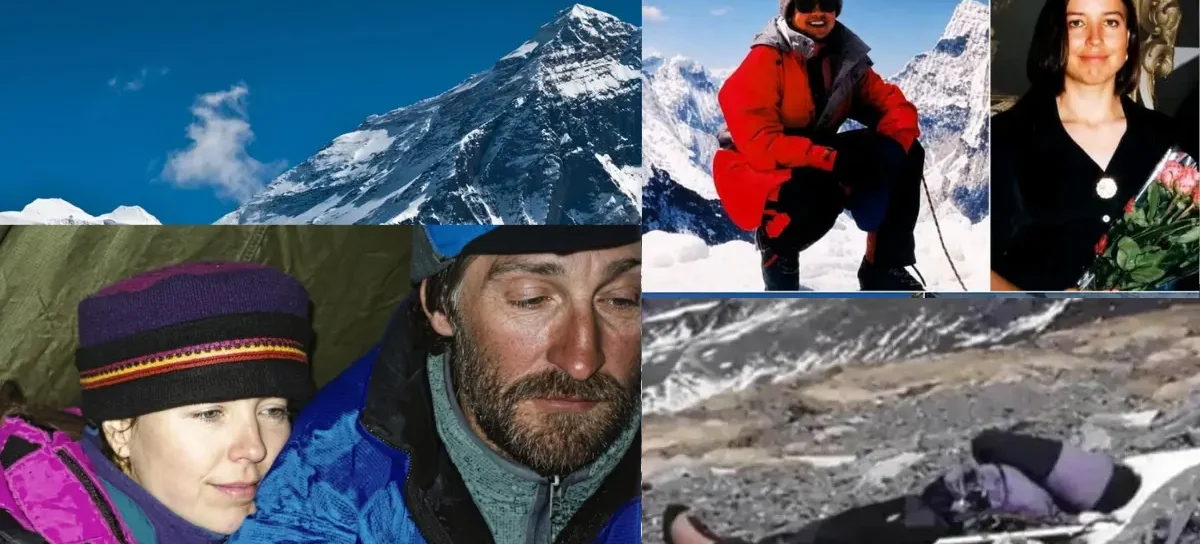
For more than a hundred years, Everest has pulled climbers, dreamers, and adventurers from every corner of the world. Some people go there to test themselves. Some go to see beauty that cannot be found anywhere else. And some, sadly, never come back down.
One of the most touching and sad stories from Everest is the story people now call “The Sleeping Beauty of Everest.” It is not a fairy tale. It is not a legend made up around a campfire. It is the real story of a brave woman named Francys Arsentiev, and it is a story that still moves climbers, trekkers, and readers today.
Francys Arsentiev was born in Hawaii in January 1958. As a kid, she had a passion for the outdoors. She enjoyed hiking, camping, and spending time in nature. This love evolved into a serious passion for climbing mountains as she grew older. She ascended mountains all over the United States and eventually in Russia, gradually developing her expertise and self-assurance at greater and greater heights.
In 1992, she married a Russian mountaineer named Sergei Arsentiev, who was also a mountaineer. In May 1998, Francys and Sergei began their summit attempt from the north side of Everest. The climb did not go smoothly from the start. They had to turn back once when their headlamps failed in the dark. They tried again, and this time, after days of extremely difficult climbing, they reached the summit on May 22, 1998.

After this, Francys became the first American woman to reach the top of Mount Everest without supplemental oxygen. It was a historic moment and a personal triumph after years of training and dreaming. But the mountain was not finished testing them. Because they had spent so long climbing without oxygen, both climbers were extremely tired by the time they reached the top. On the way down, in the darkness, Francys and Sergei became separated. Francys was now alone, in a part of the mountain known as the “death zone,” the area above 8,000 meters where the air is so thin that the human body slowly begins to shut down, even while resting.
Other climbers who came by the next morning found Francys alive but in a poor state of health. She was extremely fatigued and had frostbitten feet and fingers, as well as hypothermia due to the low oxygen. Rescue was impossible due to weather, elevation, and location. The climbers who discovered her attempted to help, but the weather, altitude, and location of the site made a rescue difficult. They carried their own burden of sadness, yet they must go on their journey of descent and not be able to save her.
On the other hand, Sergei had returned to the top of the mountain alone, looking for his wife. He never returned. A year later, his body was discovered further down the mountain’s face, probably while he was attempting to reach her. Francys passed away on 24th May 1998 at over 8,600m above sea level.
How did Francys Arsentiev Became Known as “Sleeping Beauty of Everest”?
For nearly 9 years, Francys’s body could be seen near the climbing route near a part of the mountain known as Rainbow Valley. Climbers were coming up the mountain and would pass by her. Her body was not decayed but preserved due to the extreme cold. The climbers who commented on her said she appeared calm and peaceful, almost sleeping instead of lying in one of the most dangerous areas on earth. That’s because of how she got the nickname “Sleeping Beauty of Everest,” not from an old fairy tale, but from the way the scene was so still and quiet.
In 2007, a group of climbers returned to the mountain with one of the individuals who had been with her the night she perished, Ian Woodall, who was a member of the team, to restore dignity to the people who perish on this mountain. They carefully removed her body from the road so that no future climbers would have to pass by. In a way, she was finally put to rest.
The tale of Francys Arsentiev is not a scary story. It is told because it reminds us of something important, which is that nature is beautiful, but at the same time, it is powerful and should be respected at all times. Her accomplishment, as the first woman on American soil to climb Everest with no oxygen, was true and fantastic. The story is not just about how she died; it’s about what she did. It reveals the wonder of aiming for a great goal and the agonies that can sometimes result from such adventures. Her story is now recalled in books, documentaries, and by trekkers who go through the Everest region. It’s a silent warning to all climbers: Prepare well, respect the mountain, and do not underestimate the harshness of the world’s highest places.
Beyond the Sleeping Beauty: The Hidden Beauties of Everest
The mountain is dangerous like Francys Arsentiev’s story, but it’s equally beautiful and tranquil in its moments that are not captured in snapshots. Even if you don’t go up to the top of the world, there’s a lot to be seen and done in the Everest area.
The Sunrise and Sunset Colors
The sunrise and sunset over the summit of Everest is one of the most magical aspects of the hike. The mountain gradually turns shades of pink, gold and deep orange-red as the sun’s rays fall on the snow from the viewpoint of Kala Patthar and Gokyo Ri. The moment, known as “alpenglow,” is one of the most beautiful moments in many trekkers’ lives, they say.
The Sherpa Culture and Villages
The Sherpas are the people who have inhabited the Everest region for centuries. Colorful prayer flags, carved wooden windows, and a warm welcome are all to be found in their villages, such as Namche Bazaar and Khumjung.


The Sherpas have a strong cultural association with Buddhism, and there are small monasteries in many of the villages where monks chant and spin prayer wheels. You’d feel like you’re in another peaceful world when you visit these communities.
Ancient Monasteries
One of the most peaceful areas in the region is the Tengboche Monastery, high in the mountains overlooking Everest. For more than a century, monks have practiced the Buddhist traditions here. The horns, drums, and silent prayers in the midst of snow-covered mountains give a sense you can’t put into words, peaceful, ancient, and humbling.
Glaciers and Ice Formations
The Khumbu Glacier is one of the biggest and highest glaciers in the world, flowing down from the top of Everest. The large walls of blue-white ice, deep crevasses, and bizarre ice towers known as seracs can be witnessed along the trekking routes. They are constantly changing and evolving, and each visit is unique.


Rare Wildlife and Rhododendron Forests
But, the wildlife population of the Everest region is not something that many people imagine, such as the Himalayan tahr (also known as wild goat), colorful pheasants, and even the elusive snow leopard, depending on how lucky you are. The landscape too is iconic, slowly walked by yaks wearing a bell around their neck and helping trekkers to carry the supplies.
The hillsides are flooded with Nepal’s national flower, the rhododendron, in spring, lower down in the Everest region. As you walk through the forests of red, pink, and white flowers with snow-capped peaks in the background, it’s a peaceful contrast with the icy heights above.
The Silence of the Mountains
Everest’s silence is perhaps its greatest beauty. In the countryside, no one’s around, so the only sounds are wind, feet on snow, and, at times, the distant noise of an avalanche far away. Numerous trekkers claim this quiet enables them to feel calm and clear-minded in a manner they’ve never experienced before.
A Mountain of Both Beauty and Danger
Everest holds two sides at once. It is the place where Francys Arsentiev, the “Sleeping Beauty,” lost her life while chasing a dream a story of courage, love, and tragedy. But it is also a place of sunrise colors, ancient monasteries, gentle Sherpa villages, rare animals, and peaceful silence. Understanding both sides helps us appreciate Everest more fully. It is not just a mountain to conquer. It is a place that deserves respect, patience, and quiet wonder, a place where human dreams and nature’s power meet at the top of the world.