
 Call Us or Whatsapp 9779808220612
 Email Us [email protected]
- English [EN]
- Espanol [ESP]
- France [FR]
- Deutsch [DE]
- China [CN]
- Japan [JP]
- Arabic [AR]
- Hindi [HI]
Upper Mustang Trek Photos: A Simple Guide to Capturing Nepal’s Hidden Kingdom
Published: July 2026 | Author: Nishan Dahal | Category: Information
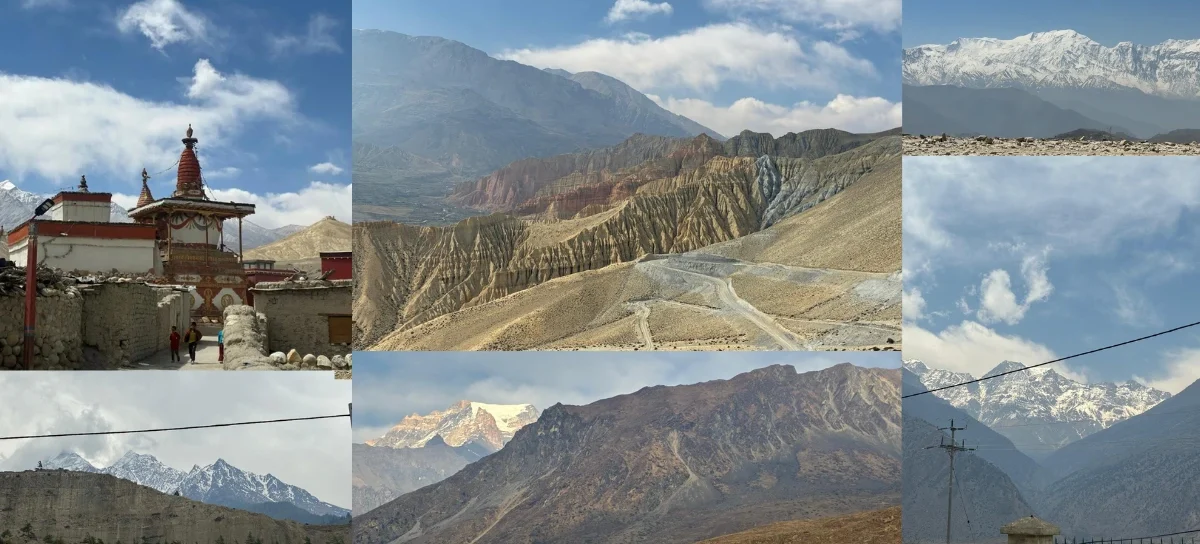
If you have ever scrolled through Upper Mustang trek photos online, you might have already known that it stops you in your tracks to admire the beauty of its charm. The sun shines on a light-colored landscape dotted with red rock formations. A city with white walls, surrounded by a deep blue sky. Old monasteries in hues that glow at dusk. It is not the Nepal that people imagine to be green and jungle-like. Upper Mustang is a more Tibet-like, or even Martian environment, which is part of its charm, making it one of the most picturesque trekking destinations in all the Himalayas. This guide gives you the information you need to take great photos for the Upper Mustang trek and the best time to go, simple photography tips, what gear to take, and how to take pictures respectfully in an area where Tibetan Buddhism is still alive and kicking.
Why is Upper Mustang a Photographer’s Dream?
Upper Mustang is in the middle of the Annapurna and the Dhaulagiri mountains, the world’s highest mountains. The monsoon clouds are obstructed by these giants, and very little rain falls in Upper Mustang. The outcome is an alpine desert scene, with different contrasts of red, orange, and grey rock towers, layered cliffs, and dry canyons that are nothing like what you’ll find in the rest of Nepal.

Moreover, its beauty and history were isolated for years, which also makes this place worth admiring. The Tibetan-style villages, mud-brick houses, and centuries-old monasteries of Upper Mustang have remained largely unspoiled since that time because the region was closed to outsiders until 1992. It’s like walking back in time here and taking photos. Each bend in the path presents a different photo, a solitary chorten in the sky, a monk walking by a painted mani wall, or the walled city of Lo Manthang suddenly emerging on the horizon.
Best Time to Take the Upper Mustang Trek
Spring (April-May): Mild weather, flowering buckwheat in some villages, and generally sunny weather. Very good light for landscape shots.
Summer/Monsoon (June–August): Upper Mustang is one of the few places in Nepal where trekkers can enjoy summer/Monsoon despite the rest of the country being rained on. Fewer crowds as well, with a little haze thrown in.
Autumn (September–November): Widely considered the best season. Skies are crisp and clear after the monsoon, giving you sharp mountain backdrops and vivid colors.

Tiji Festival (mid-May): If you’re travelling during Tiji Festival (Lo Manthang), you’ll get some of the most colourful shots in Nepal with masked dancers, traditional costumes and centuries-old rituals being performed right in the town square.
Some passes may close in winter, and it tends to be very cold and windy, so the majority of photographers choose to visit during spring, autumn, or the dry summer season.
Top Spots in Upper Mustang: Journey to get the Perfect Photos
While Jomsom Bazaar marks the beginning of your journey into the Mustang region, you’ll be treated to breathtaking mountain views and countless photographic spots along the way, all of which can be enjoyed from your Scorpio or any other vehicle. Soon after, you will arrive at Marpha Village, a picturesque destination often referred to as a “filmy village” because of its charming stone-paved streets and traditional whitewashed houses.
Marpha a pretty apple orchard village, an hour’s walk (short drive) south of Jomsom. Famous for its whitewashed stone houses, narrow alleys, and local apple products/brandy. It’s not in the Upper Mustangs in the restricted zone, but in the Lower Mustang.
The village of Kagbeni is the starting point of the restricted zone of Upper Mustang. The narrow alleyways, the old chortens, and the Kali Gandaki River in the background are a good warm-up for your camera before you get into the real desert scenes.


Muktinath Temple is the main pilgrimage site of Hinduism and Buddhism in the vicinity of Jomsom, situated approximately 4-5 hours’ walk (or a short drive) to the east, at around 3,710m. Famous for its 108 sacred water spouts.
Dhumba Lake, a small, calm turquoise lake in the hills just above Jomsom, is about a 2- to 3-hour round-trip walk. It’s a popular, easy detour for photos and acclimatization before heading higher.
For most trekkers and photographers, this is the highlight. Lo Manthang was the capital of the once independent Kingdom of Lo and its original mud walls still surround it. Inside, you will discover centuries-old monasteries, a royal palace, and narrow streets where life goes on as it always has. The early morning or late afternoon light on the city walls does the trick for that classic golden and timeless look.
Chosser Caves and Monasteries The Chosser (or Chchoser) caves are a part of the famous “sky caves” in Mustang, thousands of caves that were made by hand into cliffs, some of which are more than 2,000 years old, and are located near Lo Manthang. This is one of the most impressive and least-visited photo spots of the entire trail, in addition to the nearby monasteries.

Along the Trail – The Small Moments Not all of the most iconic images of the Upper Mustang trek are the ones you’re familiar with. It’s the little things: a yak on a dry riverbed, prayer flags waving in the wind, children waving from a rooftop, or a solitary hiker in the shadow of a canyon wall. Don’t be just at the destinations, be ready between them with a camera.
Simple Photography Tips for Upper Mustang
You don’t need to be a professional photographer to bring home amazing photos from this trek. A few simple habits go a long way: Shoot during golden hour. The desert light in Upper Mustang is harsh and flat in the middle of the day.
Early morning and late afternoon light bring out the red and orange tones in the cliffs and give every photo more depth. Watch out for dust and wind. Afternoons in Mustang can get very windy, which kicks up dust that can hurt your gear and your visibility. Try to do your main landscape shooting in the morning when the air is calmer.
Use people for scale. The canyons and rock formations here are massive. Including a trekker, a guide, or a local in the frame helps show just how big the landscape really is. Bracket your exposures. Because you’ll often be shooting bright sky against dark cliffs, your camera’s automatic settings can struggle.
If your camera or phone allows it, take a few shots at different exposures so you can pick the best one later, or use HDR mode. Don’t forget the details. Wide landscape shots are great, but close-ups of prayer wheels, painted monastery walls, textured cliffs, or hand-carved wooden doors add variety to your photo collection.


Charge your batteries and carry backups. Cold, high-altitude air drains batteries fast, and there’s limited (or no) electricity in some remote villages. Keep spare batteries warm inside your jacket.
What to Pack for Photography on the Trek
You don’t need a huge kit to get great photos, but a few items make a real difference: A camera you’re comfortable with. Whether it’s a DSLR, mirrorless camera, or just your phone, the best camera is the one you’ll actually use every day on a tiring trek. A wide-angle lens for those huge canyon and desert landscapes. A lightweight tripod for low-light shots inside monasteries or evening shots of Lo Manthang. Extra memory cards. You will take more photos than you expect. A dust-proof camera bag or dry sack, since the trail can get dusty and windy. A portable power bank for charging phones and camera batteries in teahouses. Lens cleaning cloth, because dust on your lens is a constant battle in this desert environment.
Permits and Practical Info (2026 Update)
Upper Mustang is a restricted area, meaning that you are not allowed to just walk in with a camera. There are rules to be followed to ensure the protection of the fragile culture and environment of the area. The permit system was modified to a more flexible pay-per-day permit system in 2026. The tour is now five days and costs approximately $250, rather than a flat $500 that it used to charge. Longer trips will be a bit more expensive at approximately $50 per person per day, depending on how many days you spend in the restricted area.
The biggest change in 2026 was the elimination of the previous rule that required a group of at least two trekkers to obtain a permit, which now allows for single trekkers to apply individually. The region is still accessible only with a licensed guide, and permits must be obtained in Kathmandu or Pokhara, from a registered trekking agency, before leaving. Conditions and charges may change from year to year, so check the most up-to-date information with your trekking company near your travel dates.
Capturing local culture with respect (Photographing people in their culture)
One thing that makes Upper Mustang trek photos special is the people and the culture portrayed in the images, but it’s essential to take Upper Mustang trek photos with respect and not for the sake of the photo! Observe and ask permission always before taking pictures of people, particularly of monks, elders, and children. A friendly gesture toward the camera and just a smile will suffice even if you don’t speak each other’s language. Respect the rules and regulations in the monasteries. Certain areas or certain shrines might not be able to be photographed, and the rules differ from monastery to monastery. Please ask your guide first. Take the time to enjoy festival moments. When performing, respect ritual areas, don’t obstruct participants and elders for photography during activities such as Tiji. Support the community. It’s not uncommon for locals to request a small fee for pictures in some spots in the country; in Upper Mustang, most of the economy is fueled by responsible tourism.


Upper Mustang is not only a trekking destination but also amongst the few places in the Himalayas that have not yet been completely battered by tourism. From the dramatic red cliffs and the old walls of Lo Manthang to the quiet rural existence of a remote village, this hike is for those willing to pack a camera a little higher and a little further. When you’re packing your bags, allow for more time at certain places (Lo Manthang & Chosser); it is the best Upper Mustang trek photos that happen when the time is right, the lights are good, and patience is applied.