
 Call Us or Whatsapp 9779808220612
 Email Us [email protected]
- English [EN]
- Espanol [ESP]
- France [FR]
- Deutsch [DE]
- China [CN]
- Japan [JP]
- Arabic [AR]
- Hindi [HI]
10 Things to Do in Surkhet in 2027: Home to the Largest City in Karnali Province
Published: August 2026 | Author: Nishan Dahal | Category: Information
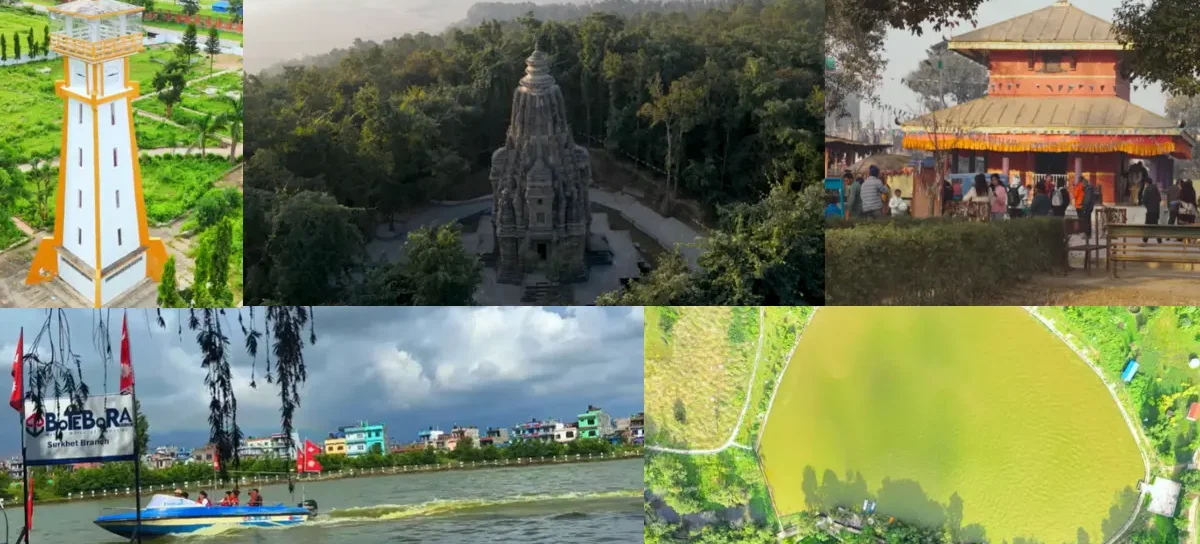
If you say the word “Nepal” to most people, they think of Everest, Pokhara, or the busy streets of Kathmandu. Very few people think of Surkhet. And that is exactly why Surkhet is worth talking about. Surkhet is a town in the mid-western hills of Nepal. It is the capital of Karnali Province and the main town of Karnali is called Birendranager. Not too high and not too low, it is at a comfortable elevation of 600-2000 meters and does not have to cope with the extremes of most of the year. It’s surrounded by green hills, a river flows through it; there’re old temples in the forest, and the life isn’t as fast-paced as the capital.
Most travelers only pass through Surkhet on their way to somewhere else. It is the usual stopover for people heading to Rara Lake, Shey Phoksundo, or the remote hills of Jumla and Dailekh. But if you actually stop and spend a few days here instead of rushing through, you will find that Surkhet has its own quiet charm. As more people plan their 2027 travel around Nepal’s lesser-known corners, Surkhet is becoming a destination worth visiting for its own sake, not just a stopover.
Here are 10 things to do in Surkhet, written simply, so you can plan your trip without any confusion.
A Slow Walk Around Surkhet Valley
Once you are in Surkhet, don’t hurry to any particular place, take a morning to stroll around the valley itself. The Surkhet Valley is wide and green with hills of forest, almost around all sides. The majority of the land consists of small farms, rice fields and quiet roads. You will forget the chaos of traffic jams, honking horns, and crowded streets that you experience in Kathmandu, as Surkhet offers the perfect escape and the peace you need.
The most suitable time for walking is early in the morning. The air is cool, the light is soft and one can see the hills, before the afternoon air haze sets in. Take a camera along, but just walk for a while without a camera. If you have the opportunity, speak to a farmer. The inhabitants in Surkhet are mostly friendly and enjoyment to speak to a foreigner, even in the face of a slight language barrier.

This is an easy stroll that will give you a taste of the rest of this list’s more “famous” locations before heading there. It’s free, it requires no planning, and it’s the best answer to explaining why so many visitors come to Surkhet and fall in love.
Visit Kakre Bihar
Kakre Bihar is probably the most well-known historical site in Surkhet. It sits on a small hill in the middle of the valley and dates back to around the 12th century. It is believed to have once been a Buddhist monastery, though today you will find carvings and statues linked to both Buddhist and Hindu traditions, including figures of Saraswati and Ganesh.
As you navigate the site, you will find old stone carvings on display and traces of temple buildings. Many of the bronze statues and carved stones have managed to survive for hundreds of years – with all the changes that have taken place in the region over that period. The site is not too crowded and not too commercial. It’s relaxed, enigmatic, and authentic.


Beyond the history, Kakre Bihar also gives you one of the best views of Birendranagar town below. If you go in the late afternoon, you can watch the light change over the valley as the sun goes down. Many locals visit this place for religious reasons, so you might see small offerings or people praying quietly near the old stones. It is worth being respectful of that when you visit.
Pay Your Respects at Deuti Bajai Temple
Deuti Bajai Temple is one of the most important religious places in the area. It is dedicated to a local goddess who is believed to protect this region and is of particular importance to the Raji community who have been worshipping in this area for generations.
The temple is in the eastern part of Surkhet valley. If not for religion, it’s worth to come here to see the vitality of local culture. The temple is adorned with vibrant colors, music, and devotion during festivals. Visitors from surrounding villages and some further afield visit to seek blessings or to pay respects.

If you are in Surkhet at a festival time, make sure to make your trip around Deuti Bajai. You’ll see rituals, hear traditional music, and come to understand what is important to the people who live here. The temple has a serene aura even during the festival period, which is not to be missed.
Relax by Bulbule Lake
Bulbule Lake, also called Bulbule Taal, is a small natural spring lake with an unusual feature: bubbles rise naturally from the water, which is where the lake gets its name. It sits inside Bulbule Park, a green and quiet space that has become a popular spot for families and friends to gather.
You can walk around the lake, sit near the water, or simply relax in the park under the trees. Some visitors bring food for a small picnic. There are usually boating options available too, which can be a fun way to spend an hour with your family or travel companions.


This is not a huge tourist attraction with big crowds and long lines. It is a small, peaceful place, and that is exactly its appeal. After a day of walking around temples and hills, Bulbule Lake is a nice spot to slow down.
White-Water Rafting on the Bheri River
If you want a bit of adventure during your trip, the Bheri River is the place to find it. It runs through Surkhet district and is considered one of the better rivers in Nepal for white-water rafting. Several local operators run guided trips here, ranging from short day trips to longer multi-day expeditions for people who want a bigger adventure.
The rafting on Bheri offers you an easy and thrilling ride; it has some calm sections and some thrilling rapids, so it suits beginners as well as experienced rafting players. You’ll cross through woods, boulders, and areas that not many people visit Nepal, as this river is not as crowded as the other famed rafting rivers close to Kathmandu or Pokhara.
Once in the area, make sure to book with a proper operator who provides safety gear and an experienced guide. Rafting conditions can change depending on the season, so it is worth checking ahead of time whether the water levels are good for the kind of trip you want.
Villages Around Surkhet
One of the most rewarding things you can do in Surkhet is simply step outside the main town and visit the surrounding villages. Life here moves at a very different pace. You will see traditional farming methods still being used, homes built in older styles, and daily routines that have not changed much over the years.
If you get the chance, try to share a meal in a local home. Home-cooked Nepali food, made with vegetables and grains grown right there in the village, tastes completely different from what you get in a restaurant. Many families are happy to host a curious traveler, especially if you go through a local guide who can help with introductions and translation.
There are not just the villages that you cross from a checklist. It’s about taking your time and observing how everyone lives in this part of Nepal. It will probably give you more knowledge of the area than any monument could, and much more than you would ever get from a single day.
Hike Up to a Viewpoint in the Hills
Surkhet is surrounded by hills, and many of them have trails leading up to viewpoints that look out over the valley, the river, and the forest below. You do not need to be an expert trekker to enjoy this. Many of the trails are manageable for an average fitness level, especially if you take your time and stop for breaks.
Once you are up there, there is not much to do except sit, breathe, and take in the view, and that is really the point. Small local tea stalls near the top mean you can sip on hot tea while looking out over the valley, which is about as peaceful as travel gets. Bring a jacket even in warmer months, since it tends to be breezier and slightly cooler at that height than down in the town.
Catch the Sunrise at Gothikanda
If there is one viewpoint in Surkhet that locals talk about again and again, it is Gothikanda. It sits in Birendranagar Municipality, up at an elevation of around 1,423 meters, which puts it well above the valley floor. From up there, you get a full, sweeping view of the entire Surkhet valley spread out below you, with the hills rolling away in every direction.
Gothikanda has become one of the most visited spots for domestic tourists in the district, and it is easy to see why. The road up is blacktopped, so getting there is straightforward compared to some of the rougher trails in the region. Many visitors go early in the morning specifically to watch the sunrise, when soft light spreads slowly across the valley and the air is still cool and quiet. Others prefer the late afternoon, when the whole valley glows gold before sunset.
Gothikanda is a fairly short trip from central Birendranagar, making it an easy half-day outing rather than a full expedition. It is a good one to pair with the valley walk mentioned earlier, since seeing the valley from ground level and then from above gives you a much fuller picture of just how big and green Surkhet really is.
Eat Street Food Near the Clock Tower (Ghanta Ghar)
Food is essential to any travel guide and Surkhet is home to its own little local cuisine to try. There is a street near the Ghanta Ghar (clock tower) of the town where one can find a variety of snacks in addition to chaat. This is where locals go for a quick and tasty bite and it’s a good place for visitors to try some off-the-street foods without having to book a restaurant and putting a lot of money into it.

Chaat in Nepal usually means a mix of savory, tangy, and spicy flavors, often built on a base of puffed rice, potatoes, and various spices, finished with fresh lime or tamarind. Every vendor tends to have their own version, so it is worth trying a couple of different stalls if you are hungry enough. Eating street food is also simply a good way to be around local life. You will see families, students, and workers all stopping by for a snack, and it gives you a small window into the daily rhythm of Birendranagar town.
Use Surkhet as Your Gateway to Karnali’s Bigger Adventures
Even if you only have a few days, it is worth remembering that Surkhet is not just a destination on its own. It is the main gateway to some of the most remote and beautiful places in Nepal, including Rara Lake in Mugu, Shey Phoksundo Lake in Dolpa, and the Limi Valley. Many travelers heading into these areas fly into Surkhet first, then continue by road or on foot.
Similarly, if you are not planning a longer trek this time, it is worth talking to local guides and tour operators in Surkhet about what is possible. You might find that a short add-on trip to a nearby lake or hill village is easier to arrange than you expected. And if you are planning a bigger Karnali adventure for a future trip, spending time in Surkhet now is a good way to learn the lay of the land and make useful local contacts.
Visiting Surkhet in 2027
Getting there: The easiest way to reach Surkhet is by air. You can take a flight from Kathmandu to Surkhet Airport, also known as Birendranagar Airport, in about one hour. A few airlines operate this route with multiple flights a week, sometimes daily, so it is fairly convenient to book. Traveling by road is also possible, but it takes much longer and the roads in the later stretches are not always in great condition, so most visitors choose to fly.
Best time to visit: Surkhet has a fairly mild climate for most of the year, but it can get hot in the summer months and cold in winter. Many travelers find spring and autumn to be the most comfortable seasons, with clear skies and pleasant temperatures for walking, hiking, and sightseeing.
Where to stay: Birendranagar, the main town in Surkhet, has a range of accommodation options, from simple guesthouses to more comfortable hotels and resorts. Since Surkhet is a common stopover point for people heading to Rara and other remote areas, the town is used to hosting travelers, so finding a place to stay is usually not difficult.
Getting around: Local transport within Surkhet includes auto-rickshaws and other small vehicles, which are an easy and affordable way to move between the town center and nearby attractions. For trips into the surrounding hills or villages, it is a good idea to arrange a local guide, both for safety and to get more out of the experience.