
 Call Us or Whatsapp 9779808220612
 Email Us [email protected]
- English [EN]
- Espanol [ESP]
- France [FR]
- Deutsch [DE]
- China [CN]
- Japan [JP]
- Arabic [AR]
- Hindi [HI]
Best Travel Insurance in Nepal for Trekkers and Travelers
Published: July 2026 | Author: Nishan Dahal | Category: Information
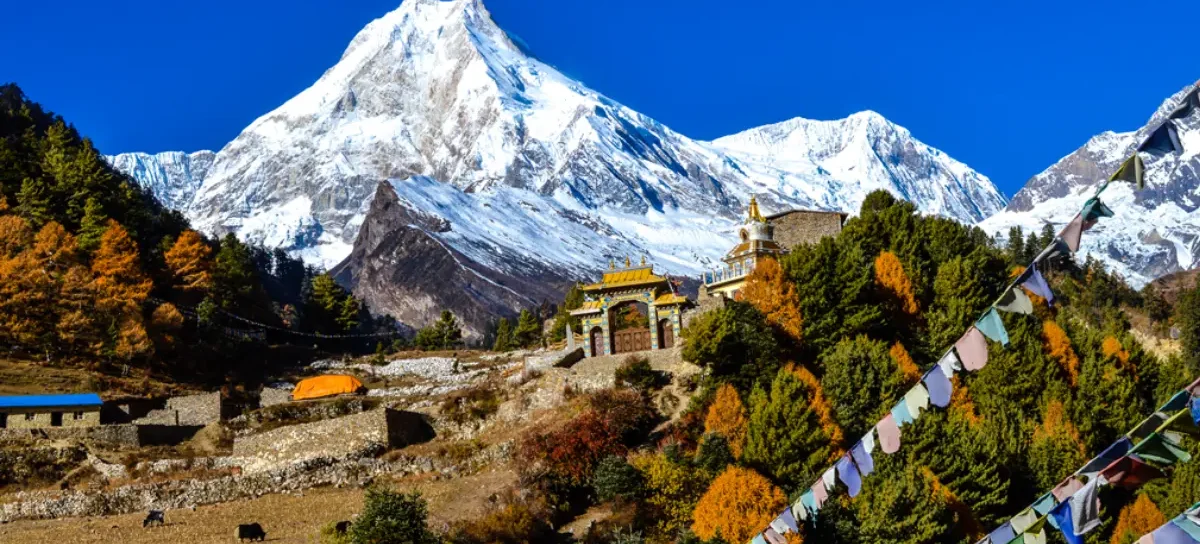
The type of insurance you need in Nepal will vary from person to person. A family sightseeing in Kathmandu and Pokhara is not as risky as a person going up to Everest Base Camp. This guide is based on that concept, it outlines the important things to consider at each stage of a trip to Nepal, and then takes a look at the right insurance for different types of travellers, both locals and international travellers.
Why Nepal Needs a Different Kind of Insurance
Theft, scams and lost luggage are not the issues with insurance in Nepal. It’s altitude. Most travel policies are sold globally for cities, beaches and flights. Not long after 2,000-3,000 meters, they will unobtrusively cease to cover you. Nepal’s trekking trails venture much further than that:
- Poon Hill 3,210 m
- Annapurna Base Camp 4,130 m
- Everest Base Camp 5,364 m
- Kala Patthar 5,545 m
- Thorong La Pass 5,416 m
- Island Peak (trekking peak) 6,189 m
If the highest point of the trek is above the highest point of the coverage in the policy, then, in practice, you are uninsured once you pass that altitude, even with the policy and the “adventure sports covered” statement in your policy. This is the one reason that leads to more rejections in Nepal.
The second fact is that one needs to be prepared to be picked up by a helicopter should it be necessary; a helicopter rescue is not cheap, and is often the only way out of the mountains. The cost of a rescue around Namche Bazaar is usually $3,000- $5,000. Above 5,000 meters, near Lobuche or Everest Base Camp, it climbs to $6,000–$10,000. Above 6,000 meters, on a trekking peak, it can reach $10,000–$15,000. Some helicopter operators will not take off without confirmation of payment unless the helicopter operator has a direct-billing agreement with your insurer.
Is Travel Insurance Legally Required in Nepal?
Yes, for trekkers. Since April 2025, the government of Nepal has required valid travel insurance as a condition to obtain a TIMS card and trekking permits jointly by the Nepal Tourism Board (NTB) and Trekking Agencies Association of Nepal (TAAN). It is applicable to the TIMS card itself, the permits to enter the national parks (Sagarmatha, Annapurna, Langtang, Makalu-Barun), the permits to enter the conservation areas (ACAP, MCAP) and the permits for restricted areas (e.g. the Upper Mustang, Dolpo, Nar Phu, Tsum Valley). In restricted areas, the required minimum evacuation coverage is typically higher, at about $15,000, as it is more difficult to organize rescue in such areas.
You will be required to provide proof of insurance prior to issuance of a permit if you are applying for a single-day permit or a permit arranged by an agency. It’s not only a risk to embark on a trek without one, it can also end a trek before it begins.
If someone is just travelling to Kathmandu, Pokhara, Chitwan and Lumbini, then there is no requirement (government rule) for travel insurance. However, it is not just as if it is an option; there is a real possibility of suffering an accident or illness while traveling by road in Nepal, and unsaved medical costs can be high.
Things that a Best Travel Insurance in Nepal Offers
When comparing companies, you’ll need to be familiar with what to look for within a policy document. The five most important factors of the policy are:
- Altitude limit
The policy should specify the maximum elevation it climbs, and this elevation should be higher than your trek’s peak elevation. For Everest Base Camp and Kala Patthar, you must find a coverage up to at least 5600m. With the exception of the 6,000 m coverage, most guides suggest purchasing coverage up to six thousand metres in case of bad weather, requiring route adjustments and additional acclimatization days at higher altitudes than expected.
- Helicopter evacuation, explicitly named
“Emergency medical evacuation” and “helicopter rescue” are not always the same clause. Some general policies only pay for ground ambulance evacuation, which is useless in the mountains. Look for the words “helicopter” or “air ambulance” written into the policy.
- Emergency medical and evacuation limits
The minimum amount is a reasonable $100,000 for medical evacuation, and $50,000 to $100,000 for emergency medical treatment. For high-altitude routes above 5,000 m, $150,000–$200,000 is a safer benchmark.
- Adventure sports/trekking listed as a covered activity
Many insurers consider “trekking” and “mountaineering” to be high risk activities and won’t cover them unless you take out an add-on policy. Confirm that trekking is stated and if intending to climb a trekking peak (Island Peak, Mera Peak) confirm that mountaineering or peak climbing is a different clause and will be a different price.
- A working 24/7 emergency line that operates in Nepal
A rescue authorization may need to be expedited and can be required within hours. Ensure the insurer’s emergency assistance team is not only able to help process claims after an emergency, but also directly contacts hospitals and helicopter operators in Kathmandu.
Not every insurance policy covers these requirements. So, if you’re planning a demanding trek, be sure to look for these essential coverages. You can also add optional coverage to customize your policy, as some companies offer plans that can be tailored to suit your needs.
Best International Travel Insurance Providers That Actually Cover Nepal
Here are a few of the honest comparisons of the insurance providers most commonly used by trekkers, based on how they handle altitude, evacuation, and price.
World Nomads
World Nomads is one of the most popular companies in Nepal. It specifically includes trekking and adventure sports and the altitude level is up to 6,000 m based on plan tier. It may be bought and extended even during the trip via online, including from inside Nepal, which is helpful if you go up to a high altitude trek part way through your trip. Great for independent travelers that is looking for flexibility.
Global Rescue
Global Rescue is not so much a health insurance company, rather it’s an evacuation and rescue membership. It is noted for its rapid “no-questions-asked” extraction, and is favored by expedition teams as well as serious mountaineers. It is usually not used on its own but as an add-on to a conventional medical policy as it has a strong service in evacuation logistics rather than every day medical claims.
IMG Global
A good option for trekking at high altitudes. It offers plans that are constructed to take into account altitude limitations that trekkers can depend, such as those to Everest Base Camp and Annapurna Circuit, and reasonable emergency medical limits.
SafetyWing
SaftyWing is targeted at travelers and digital nomads with longer stays, as opposed to short-term trekkers. It’s a good option if you are staying in Nepal or the region for months and are looking for coverage that you can renew on an as-needed basis, but please review its terms and conditions for high altitude trekking and adventure activities before embarking on a particular trekking season, as it may not necessarily have the same riders as dedicated adventure insurance companies.
Battleface
Popular with trekkers because it can be bought after departure, even from within Nepal, and offers altitude coverage up to 6,000 m with helicopter evacuation included. A two-week trek policy typically runs around $90–$140.
True Traveller
A frequently recommended option for UK and European trekkers, with plans built around adventure activities and clear altitude bands.
Allianz Travel
A large, established insurance company with high medical expense limits and a good claims-handling reputation, often recommended for those traveling to the U.S., Canada or Europe who wish to have a brand-name insurer as well as adventure coverage.
Travelex, Tin Leg, Seven Corners, InsureMyTrip, VisitorsCoverage
These are primarily used by American visitors, either as the insurance company (Travelex, Tin Leg, Seven Corners) or as a comparison site (InsureMyTrip, VisitorsCoverage or Squaremouth) where you can narrow down your search by coverage requirements for medical evacuation and coverage for adventure sports. According to Squaremouth’s own content, average prices for Nepal trip insurance are approximately $250-$300 per trip, including trip cancellation coverage and medical and evacuation coverage.
For Indian travelers, Nepal-specific policies from various Indian insurance companies such as Care Health Insurance (Explore Asia plan) are often utilized and some insurers have travel plans specifically designed for India to Nepal overland travel. Indian citizens do not need to have any travel insurance for entry into Nepal, however, it is highly recommended particularly for trekking into Nepal.
Local Nepali Insurance Companies
For those who need a policy while in Nepal, as well as for long-term visa holders, NGO employees, volunteers and foreigners, there are certain general insurance companies in Nepal that offer policies for trekking and traveling. It is governed by Nepal Insurance Authority (Nepal Beema Pradhikaran), which regulates all insurance companies in the country.
Shikhar Insurance Company Ltd. (SICL)
One of the oldest companies that have a separate ‘Trekkers Assistance Insurance’ plan as well as a general Travel Medical Insurance plan. Personal accident, medical and emergency costs, hospital ancillary, baggage loss and delay, passport loss, personal liability, travel delay and trip cancellation. If you wish to walk-in, ask questions, purchase a policy in person, and then fly to Lukla or embark on a trek, then it is a good choice as Shikhar has physical offices in Kathmandu.
Sagarmatha Insurance Company Ltd.
One of the most popular general insurance companies in Nepal that provide travel and trekking policies, often mentioned in conjunction with Shikhar as one of the local travel companies that tourists and Nepalis are more likely to use when traveling for adventure activities.
Neco Insurance Company Ltd.
Neco Insurance Company Ltd. provides travel insurance products for trekking agencies and tourists who purchase local travel insurance, which are typically obtained from the same agents in Thamel who arrange treks and permits.
Himalayan General Insurance Company Ltd
Himalayan General Insurance Company Ltd. Another general insurance company that offers travel insurance for trekkers and short-term guests.
Everest Insurance Company Ltd.
Everest Insurance Company Ltd. provides insurance for travel and trekking activities, often recommended by trekking companies in the Everest and Annapurna areas.
Nepal Insurance Company Ltd., Siddhartha Insurance, United Insurance Company (Nepal) Ltd., Premier Insurance Company (Nepal) Ltd., National Insurance Company Ltd. These general insurers round out the list of Nepal-based companies offering travel and personal accident policies, commonly bought by both Nepali travelers going abroad and foreign visitors who want a locally issued plan.
CTG-Plus (Himalayan Guardian Nepal), an insurance product for trekking sold in Thamel, Kathmandu. It is worth noting that it provides direct billing for helicopter evacuation – which means the rescue can be authorised and billed without having to pay for it in advance and claim it back later – a significant benefit over many international policies. Proximity to the racecourse, up to 5,500 m, can be covered by a 14 day plan for around $150. It can be purchased in person at Himalayan Guardian’s Thamel office, where you must have your passport and banknotes available, and insurance will usually take effect within the next 24 hours.
So, at the end we can say that Shikhar Insurance Company Ltd. (SICL), Sagarmatha Insurance Company Ltd., Neco Insurance Company Ltd. and Himalayan General Insurance Company Ltd are some of the best insurance companies in Nepal.
How to Buy a Nepali Insurance Policy?
- Online: Most insurers now offer e-policies through their own websites, with payment via eSewa, Khalti, or bank transfer, and instant digital policy delivery.
- Through a trekking agency: Many Kathmandu and Thamel-based trekking companies can arrange the policy and print your documents as part of your trek booking.
- At a branch office: Walk into any major insurer’s Kathmandu or Pokhara branch directly.
Always carry both a printed copy and a digital PDF of your policy, since checkpoints and hospitals may ask for a physical copy.
Local vs. International: Which Should You Choose?
Local Nepali insurers are useful if:
- You are booking last-minute and need a policy within 24 hours
- You are a long-term resident, NGO worker, or volunteer based in Nepal
- You want in-person support and a Kathmandu office you can visit if something goes wrong
- You specifically want a policy with local direct-billing arrangements for helicopter rescue
International insurers are usually the better choice if:
- You want a single policy covering your entire trip, including flights to and from Nepal, not just the time spent inside the country
- You need trip cancellation and baggage cover for pre-paid international flights
- You want a globally recognized claims process you can also use if your trip continues to other countries
- You are trekking above 5,500 m and want higher medical evacuation limits, which some local plans cap lower than international adventure-specific policies
One easy solution used by many seasoned trekkers: obtain an international policy for the entire trip and then a separate one covering Nepal with the altitude and helicopter coverage needed for the area before the trip begins, not just an international one that doesn’t cover the fine print of altitude or helicopter cover.
Things to Consider Before Buying an Insurance Policy
- Buying a generic “adventure sports” add-on without checking the altitude number. Many adventure add-ons cap out around 4,000 m, which is not enough for EBC, ABC, or Thorong La. Always ask for the specific meter limit in writing.
- Assuming “trekking” automatically means “mountaineering” is covered. If you plan to summit a trekking peak like Island Peak or Mera Peak, this usually needs a separate mountaineering clause, sometimes at a different premium.
- Confusing a medical evacuation with a “comfort evacuation.” Insurers only pay for genuine medical emergencies, conditions like HACE, HAPE, severe injury, or illness that requires urgent descent. A helicopter called because a trekker is simply tired or wants to avoid walking down is not usually covered, and insurers do investigate these claims.
- Not calling the emergency line before a rescue. Some policies require pre-authorization from their assistance team before a helicopter is dispatched, or they may refuse the claim afterward. Save the emergency number in your phone and give a copy to your guide before you start trekking.
Frequently Asked Questions
No such law is needed for general tourism (sightseeing around Kathmandu, Pokhara, Chitwan, Lumbini). It becomes a requirement the next time you’re ready to go trekking, as proof of insurance is now required for permits.
At least 5,600 m to safely cover EBC (5,364 m) and Kala Patthar (5,545 m). For safety reasons many trekkers purchase 6000m coverage.
Yes. Some international insurance companies, such as World Nomads (and Battleface), offer insurance policies that can be purchased on the road, and local Nepalese insurance firms, like CTG-Plus, can also get you an insurance policy within 24 hours of you arriving in Thamel.
No, it is always important to ensure that the words ‘helicopter evacuation’ or ‘air ambulance’ are actually in the policy and not some adventure add-on which covers only ground transport.
Realistically $90 and $250, depending on the altitude, age and trip cancellation and baggage cover.