
 Call Us or Whatsapp 9779808220612
 Email Us [email protected]
- English [EN]
- Espanol [ESP]
- France [FR]
- Deutsch [DE]
- China [CN]
- Japan [JP]
- Arabic [AR]
- Hindi [HI]
Top 5 Base Camp Treks in Nepal: From Beginner-Friendly to Think Twice Before You Start
Published: July 2026 | Author: Nishan Dahal | Category: Information
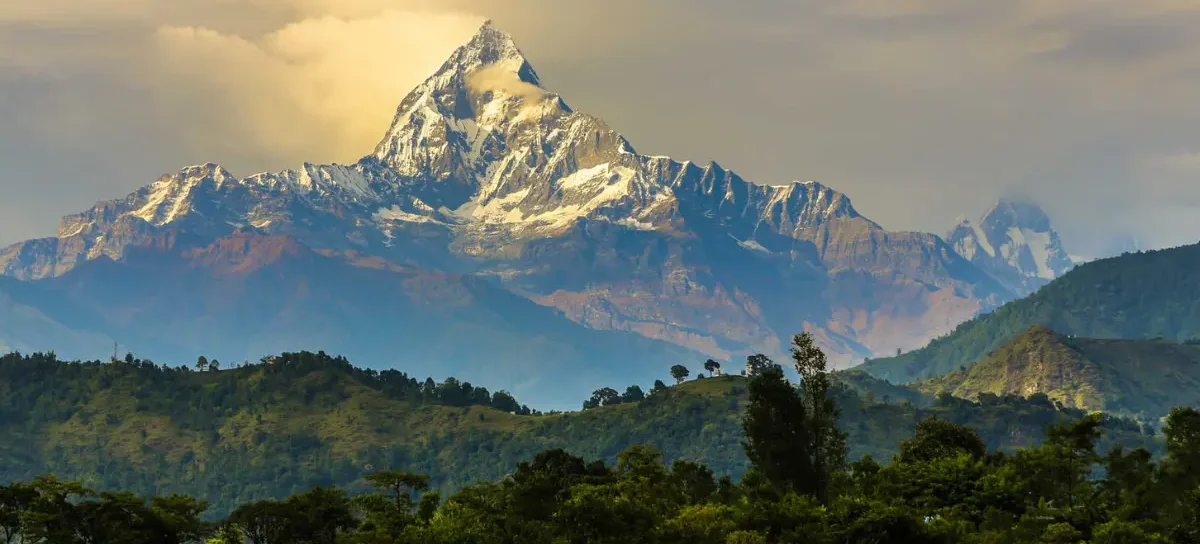
Nepal has more than a dozen trails that lead to the base of an 8,000m or near-8,000m giant, but few of them stand out for combining spectacular scenery with a well-marked trail, reliable teahouses, and a manageable permit process. Everest, Annapurna, Manaslu, Makalu, and Kanchenjunga Base Camp Trek are the five best that offer a thrilling journey. These bases have been selected not only because they are popular, but each one provides a unique mountain, culture, and solitude experience.
The treks listed here are not by difficulty, but by how they fit in a first-timer’s bucket list, going to the extreme and farthest end of the list first.
Annapurna Base Camp Trek: The Amphitheatre Walk
For people who have only 8-10 days and desire to gain as much as they can with a little sacrifice, the trek that comes back is Annapurna Base Camp (ABC). You don’t need to take any risks on a flight to get here, as you do on Everest; and you do need a special permit.

The trail passes through Gurung and Magar villages, passes through bamboo forest and rhododendron forest and finally into a natural amphitheatre of peaks, Annapurna 1, Hiunchuli and Machapuchare (Fishtail), which rise almost vertically around the base camp.
Day-to-Day Itinerary
| Day | Route | Trek Duration | Max Altitude |
|---|---|---|---|
| 1 | Drive from Pokhara to Nayapul and then trek to Tikhedhunga | 3-4 hrs | 1,540 m |
| 2 | Tikhedhunga – Ghorepani | 6-7 hrs | 2,860 m |
| 3 | Poon Hill sunrise hike, then Ghorepani – Tadapani | 6-hrs | 3,210 m (Poon Hill) |
| 4 | Tadapani – Chhomrong | 5-6 hrs | 2,170 m |
| 5 | Chhomrong – Himalaya/Dovan | 6 hrs | 2,860 m |
| 6 | Dovan- Annapurna Base Camp (via Machapuchare Base Camp) | 6-7 hrs | 4,130 m |
| 7 | ABC – Bamboo (descent) | 6-7 hrs | 2,340 m |
| 8 | Bamboo – Jhinu Danda (hot springs) | 5 hrs | 1,780 m |
| 9 | Jhinu Danda- Nayapul, drive to Pokhara | 4-5 hrs | 1,070 m |
While this is the ideal itinerary for trekkers starting from Pokhara, Top Trail Nepal also offers a 10-day itinerary beginning in Kathmandu. We can further customize the trek duration to match your schedule and preferred travel dates, ensuring a journey that suits your time and travel plans.
Everest Base Camp Trek – The Classic One
Everest Base Camp doesn’t need an introduction, but it does need a correction: most people picture a single grinding climb. Its not what everyone thinks; it’s a few hours up, a stretch flat or downhill, a swinging suspension bridge over a glacial river, then up again and then down again. The trail starts in Sherpa country, passing through Namche Bazaar, the capital of the Khumbu, where bakeries and gear shops sit at 3,440 m surrounded by nothing but mountains. Above that, forests give way to yak pastures, then to a bare, wind-scoured world of glacial moraine and prayer flags.
The real difficulty with this hike is the altitude, nothing more. You are spending nearly a week above 4000m, and the plan is all about allowing your body to acclimate. If you are not in the mood for a headache that will split your skull then you need to take two acclimatisation days before reaching 5,364 m. Who would have guessed this but the first timers will find it very interesting, the base camp of Everest itself is almost obscured from sight by the shoulder of Nuptse. But the true reward is the early morning hike to Kala Patthar (5,545 m) the following morning, the best vantage point for viewing the summit pyramid of Everest, and the highlight of most treks, bar the base camp itself.
Day-to-Day Itinerary
| Day | Route | Trek Duration | Max Altitude |
|---|---|---|---|
| 1 | Fly Kathmandu – Lukla, trek to Phakding | 3-4 hrs | 2,610 m |
| 2 | Phakding – Namche Bazaar | 6 hrs | 3,440 m |
| 3 | Acclimatization day: hike to Everest View Hotel & back | 3-4 hrs | 3,880 m |
| 4 | Namche – Tengboche | 5 hrs | 3,860 m |
| 5 | Tengboche – Dingboche | 5-6 hrs | 4,410 m |
| 6 | Acclimatization day: hike to Nangkartshang viewpoint | 3 hrs | 5,083 m |
| 7 | Dingboche – Lobuche | 5 hrs | 4,910 m |
| 8 | Lobuche – Gorak Shep – Everest Base Camp – back to Gorak Shep | 7-8 hrs | 5,364 m |
| 9 | Gorak Shep – Kala Patthar (sunrise) – descend to Pheriche | 7-8 hrs | 5,545 m |
| 10 | Pheriche – Namche Bazaar | 6-7 hrs | 3,440 m |
| 11 | Namche – Lukla | 6-7 hrs | 2,840 m |
| 12 | Fly Lukla – Kathmandu | 30 min flight |
The Everest Base Camp Trek is one of the most popular treks in the world, but it isn’t as challenging as many people believe. It’s not quite a walk on the wild side, however. The major difficulty is the altitude; practicing some trekking experience in other treks can prepare you for this one, such as the Annapurna Base Camp Trek (ABC) or the Mardi Himal Trek. At Top Trail Nepal, we offer treks tailored to your experience level and preferences, ensuring a safe and unforgettable Everest adventure.
Manaslu Base Camp Trek – The Quiet Sibling of Everest
Just one valley system from the Annapurna and Langtang ranges is the world’s 8th-highest mountain, Manaslu (8163m). It is where visitors have only a small fraction of the number. This is the trek where people who have climbed Everest or Annapurna end up next. The route leads down through warm, terraced lowland villages to a Tibetan-flavoured region of gompas, mani walls and prayer wheels as the region comes into closer contact with Tibet than the rest of Nepal. It is a restricted area and cannot be walked without a licensed guide and special permit in advance.

The one blessing in this trek is that it reduces the number of trekkers on the path, which prevents villages from becoming too touristy and ‘touristified’. There is a sense that the landscape itself is a time capsule – a green, terraced and quiet section down the hill then suddenly wild and glacial once you reach Sama Gaon, where the ice wall of Manaslu looms above the village. Finish it off with a Larke Pass crossing, and here’s one base camp that takes you right through the Himalayan range.
Day-to-Day Itinerary
| Day | Route | Trek Duration | Max Altitude |
|---|---|---|---|
| 1 | Drive Kathmandu – Soti Khola | 7-8 hrs drive | 700 m |
| 2 | Soti Khola – Machha Khola | 6-7 hrs | 930 m |
| 3 | Machha Khola – Jagat | 6-7 hrs | 1,340 m |
| 4 | Jagat – Deng | 6 hrs | 1,860 m |
| 5 | Deng – Namrung | 5-6 hrs | 2,630 m |
| 6 | Namrung – Lho | 4-5 hrs | 3,180 m |
| 7 | Lho – Sama Gaon | 4 hrs | 3,530 m |
| 8 | Acclimatization day in Sama Gaon (short hike to Pungyen Gompa) | 3-4 hrs | 3,900 m |
| 9 | Sama Gaon – Manaslu Base Camp (day hike) – back to Sama Gaon | 6-7 hrs | 4,800 m |
| 10 | Sama Gaon – Samdo | 3-4 hrs | 3,860 m |
| 11 | Acclimatization day in Samdo | 3 hrs | 4,200 m |
| 12 | Samdo – Dharamsala (Larke Phedi) | 4-5 hrs | 4,470 m |
| 13 | Dharamsala – Larke Pass (5,106 m) – Bimthang | 8-9 hrs | 5,106 m |
| 14 | Bimthang – Dharapani | 6 hrs | 1,960 m |
| 15 | Drive Dharapani – Kathmandu | 8-9 hrs drive | – |
While the Manaslu Base Camp Trek is an incredible experience, most trekkers choose the full Manaslu Circuit Trek to fully appreciate the beauty of the region. Completing the circuit allows you to explore Manaslu Base Camp and cross the breathtaking Larke Pass, making the journey one of the most scenic and rewarding trekking adventures in Nepal.
Makalu Base Camp Trek – The Wild One
Makalu (8,485 m), the fifth tallest peak in the world, protects one of the most remote valleys in Nepal, a Barun Valley, which is located within a National Park, devoid of jeep tracks, roads and only a few teahouses. You can start by taking a short flight to Tumlingtar, then walking through terraced hills and forest until you enter the wilderness (rhododendron/bamboo forest, then alpine meadow and waterfall, and then an open glacial valley). From here, you’ll be using lodges for the majority of the trek, but, as soon as you cross into the Barun Valley, the teahouses practically disappear; it’s now a camping-supported trek, with you traveling with a full crew: porters, a cook and a guide, and bringing your tents and food for the days ahead. The added effort and logistics are what makes so few people try to do it, and why it really feels like a base camp that hasn’t quite been discovered: no crowds, no line for photos, just glaciers, waterfalls and a wall of granite and ice rocketing straight out of the valley floor. This is Nepal trekking without any tourist facilities.

Day-to-Day Itinerary
| Day | Route | Trek Duration | Max Altitude |
|---|---|---|---|
| 1 | Fly Kathmandu – Tumlingtar, trek to Khadbari | 2-3 hrs | 1,320 m |
| 2 | Khadbari – Tashigaon | 6 hrs | 1,540 m |
| 3 | Tashigaon – Kongma Danda | 6-7 hrs | 3,560 m |
| 4 | Kongma Danda – Dobato | 5 hrs | 3,600 m |
| 5 | Dobato – Yangri Kharka | 5-6 hrs | 3,600 m |
| 6 | Yangri Kharka – Langmale Kharka | 4-5 hrs | 4,410 m |
| 7 | Acclimatization day in Langmale Kharka | 3 hrs | 4,600 m |
| 8 | Langmale Kharka – Makalu Base Camp | 4-5 hrs | 4,870 m |
| 9 | Rest and exploration day at Makalu Base Camp | 3-4 hrs | 5,200 m (viewpoint) |
| 10–18 | Retrace the route back to Tumlingtar (reverse of Days 1–8, plus buffer days) | varies | – |
Unlike any other base camp trek, Makalu Base is not for beginners. The trail between Tashigaon and Kongma Danda rises by almost 2000m in one day; there are no rescue roads and helicopter evacuation is weather-dependent. Do this only after one of the treks mentioned above has been done.
Kanchenjunga Base Camp Trek – The Quiet Adventurous One
The world’s third highest peak, Kanchenjunga (8,586 m) is located on the border between Nepal and India (Sikkim) in the far north-east of Nepal, which is geographically and culturally farthest from Kathmandu. It is also the only trek in this list that has two base camps, the South Base Camp at Oktang, and the North Base Camp at Pangpema, a long traverse across high passes.

Located in a controlled border area, it is not possible to simply walk up to this track without a permit; you must obtain a Restricted Area Permit in addition to the conservation permit and there must be a licensed guide, otherwise, it is not suitable for solo trekking at all. It is that barrier to entry that makes the trail stay so quiet. The villages of Limbu and Rai will be passed, and, lower down, orchids and rhododendron will be everywhere, before finally arriving at a high Himalayan glacial landscape dominated by the five summits of Kanchenjunga, the “Five Treasures of the Great Snow. This is for trekkers who have already scaled Everest and Annapurna and are looking for something that feels like a real trek.
Day-to-Day Itinerary
| Day | Route | Trek Duration | Max Altitude |
|---|---|---|---|
| 1–2 | Fly Kathmandu – Bhadrapur, drive to Taplejung | 1 hr flight + 6-7 hrs drive | 1,820 m |
| 3 | Taplejung – Mitlung | 4 hrs | 920 m |
| 4 | Mitlung – Chirwa | 6 hrs | 1,270 m |
| 5 | Chirwa – Sekathum | 5-6 hrs | 1,660 m |
| 6 | Sekathum – Amjilosa | 5-6 hrs | 2,510 m |
| 7 | Amjilosa- Gyabla | 4-5 hrs | 2,730 m |
| 8 | Gyabla – Ghunsa | 5 hrs | 3,595 m |
| 9 | Acclimatization day in Ghunsa | 3 hrs | 4,000 m |
| 10 | Ghunsa – Khambachen | 5-6 hrs | 4,145 m |
| 11 | Acclimatization day in Khambachen | 3 hrs | 4,450 m |
| 12 | Khambachen – Lhonak | 4-5 hrs | 4,792 m |
| 13 | Lhonak – Pangpema (North Base Camp) – back to Lhonak | 6-7 hrs | 5,143 m |
| 14 | Lhonak – Ghunsa (retrace) | 6-7 hrs | 3,595 m |
| 15 | Ghunsa – Sele La – Cheram (crossing towards South side) | 7-8 hrs | 4,480 m |
| 16 | Cheram – Ramche (Yalung / Oktang, South Base Camp) – back to Cheram | 5-6 hrs | 4,730 m |
| 17–20 | Descend via Torongden, Yamphudin, and out to Taplejung, then drive/fly back to Kathmandu | varies | – |
While the KBC Trek is considerably more challenging than most other base camp treks, it is also one of the most adventurous and demanding journeys, even for experienced trekkers. However, the trek rewards those who take on the challenge with hidden, lesser-known landscapes, breathtaking views, and mysterious trails that make every step worthwhile.
Comparing the Five Best
Each of the base camp treks mentioned above varies in terms of duration, difficulty, and personal preference. Some trekkers may complete the journey faster than the estimated timeframe, while others may require additional days depending on their pace and acclimatization needs.
| Trek | Max Altitude | Typical Days | Difficulty | Starting Point | Permit Type |
|---|---|---|---|---|---|
| Annapurna Base Camp | 4,130 m | 8-9 | Moderate | Nayapul | ACAP |
| Everest Base Camp | 5,545 m (Kala Patthar) | 12-14 | Moderate to Hard | Lukla | Sagarmatha NP plus Khumbu Rural Municipality |
| Manaslu Base Camp | 4,800 m | 14-16 | Hard | Soti Khola | Restricted Area plus MCAP |
| Makalu Base Camp | 4,870 m | 18-20 | Hard to Strenuous | Tumlingtar | Makalu Barun NP plus Local |
| Kanchenjunga Base Camp | 5,143 m | 19-20 | Strenuous | Taplejung | Restricted Area plus KCAP |
To make the most of your adventure, customize your itinerary according to your fitness level and travel goals. If you need expert guidance, remember Top Trail Nepal for a safe, well-planned, and unforgettable trekking experience.
A Simple Way to Choose One
- If it’s your first Himalayan trek and you have got the limited time: Annapurna Base Camp is the ideal option.
- Everest, the classic one, does not need introduction; if you want, you can just take a flight and land in Lukla, as there is not much to think. Once you reach the base, you will not regret a thing.
- If you want Everest-level scenery without the crowds: Manaslu Base Camp, especially if you extend it over the Larke Pass.
- If you are an experienced trekker chasing something wilder: Makalu Base Camp is the one. A less serviced trail with tents as accommodation.
- You have done Everest and Annapurna and want the “final boss”: Kanchenjunga Base Camp. Remote, long, and quietly the most rewarding of the five for anyone chasing solitude.
Every itinerary mentioned above is based on the average duration taken by most trekkers. However, the number of trekking days may vary depending on an individual’s pace, fitness level, acclimatization, and the season. Choosing the best season for each of these base camp treks will allow you to experience favorable weather, clearer skies, and the most spectacular mountain views.
While these five are undoubtedly among the best base camp treks in Nepal, one trek that deserves special mention is the Mardi Himal Trek. This scenic journey offers cinematic views of the Annapurna range and the iconic Machhapuchhre (Fishtail) Mountain that are hard to ignore. It is also one of the most beginner-friendly treks in Nepal, with beautiful rhododendron forests lining the trail, making it a rewarding adventure for both first-time and experienced trekkers.
Another underrated destination that could easily rival, or even top this list is the Api Himal Base Camp Trek. Located in the remote far-western region of Nepal, this trek offers peaceful mountain landscapes, untouched natural beauty, and an authentic glimpse into the unique culture and traditions of western Nepal. Although it remains less commercialized than many popular trekking routes, its pristine wilderness and tranquil atmosphere make it one of Nepal’s most rewarding hidden gems.
The Q&A
Not for Annapurna Base Camp or Everest Base Camp. But you might have to think twice for the remaining three.
For Annapurna and Everest, solo trekking is legally possible, though most people still hire a guide for safety and local knowledge. Manaslu, Makalu (upper Barun Valley), and Kanchenjunga are restricted areas; a licensed guide is legally required, and solo trekking isn’t an option.
Yes, and it should specifically cover high-altitude trekking and helicopter evacuation up to at least 6,000 m. Standard travel insurance policies often exclude trekking above 4,000–5,000 m, so check the fine print before you rely on it.
Annapurna and Everest are still walkable in winter with proper gear, though it’s cold and some teahouses close. Monsoon is workable on Everest and Manaslu (both sit in a rain shadow), but Annapurna gets very wet and leech-heavy, and Kanchenjunga and Makalu are best avoided entirely in both seasons due to landslide risk and poor visibility.