
 Call Us or Whatsapp 9779808220612
 Email Us [email protected]
- English [EN]
- Espanol [ESP]
- France [FR]
- Deutsch [DE]
- China [CN]
- Japan [JP]
- Arabic [AR]
- Hindi [HI]
Top 51 Places to Visit in Nepal (For Every Kind of Traveler)
Published: August 2026 | Author: Nishan Dahal | Category: Information
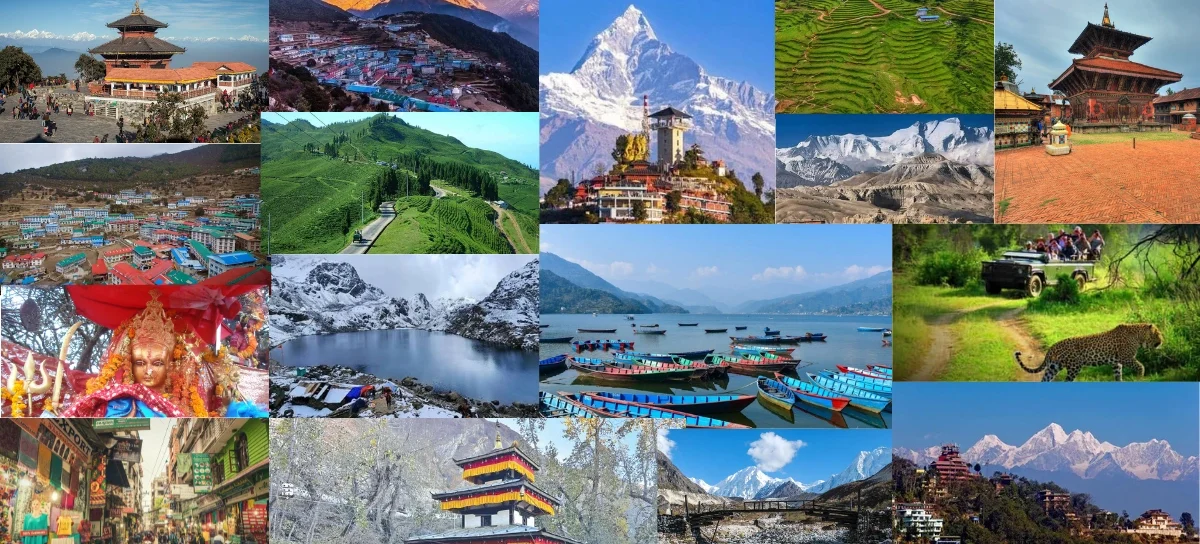
Nepal is a small country, but it holds huge beauty. In one trip, you can walk through old royal squares, sit by a calm blue lake, watch the sunrise over the highest mountains on earth, and spot a wild rhino in the jungle. That is rare. Not many countries let you do all of this so close together.
In this guide, I have collected 51 of the best places to visit in Nepal, including some of the most popular destinations that almost everyone has heard of. Here we will talk about the best places in Nepal, when to go, and what makes each place worth your time. We start with the most popular spots that almost every traveler visits, along with the best time to go. Then we give you a full list of 51 places, with a short, simple highlight for each one, so you can pick what fits your trip.
The Well-Known Mainstream Spots
Before we get into the full list, a quick word on the places almost everyone already knows about. Kathmandu Valley (Kathmandu, Patan, and Bhaktapur together) is the cultural heart of Nepal, full of old palace squares, carved temples, and busy streets like Thamel. Going a little farther from Kathmandu comes the peaceful lakeside city of Pokhara, which is home to the Annapurna views, boating and cafe culture and is also the origin for treks such as Annapurna Base Camp and Poon Hill.
Likewise, if you want to go on jungle safaris and at the same time have a good chance of seeing rhino, elephant and tiger, you should visit Chitwan National Park. Lumbini, the birthplace of Buddha, is laid out in a quiet and spiritual manner; monasteries erected by the countries from around the world. If you are a fan of mountains, the Everest base camp trek will be your big attraction, passing through the Sherpa villages and prayer-flag-lined trails, all the way up to the base of the world’s highest peak.
These are the ones that everybody is familiar with. Here is the full list of 51 locations, including these big names plus others you might not know yet, by region, and a short highlight for each.
Kathmandu Valley and Nearby
- Kathmandu Durbar Square: Old royal palace complex located in the heart of Kathmandu with carved temples, courtyards, and living history.
- Swayambhunath Stupa (Monkey Temple): A Buddhist stupa situated on a hilltop with a wide view of Kathmandu and friendly monkeys around. Visit early in the morning to see the people doing their prayer walk around the stupa.
- Boudhanath Stupa: This is one of the biggest Buddhist stupas in the world and is surrounded by monasteries, prayer wheels, and a serene walking path. There is a rooftop cafe in the area where you can come in the evening and enjoy the sight of the butter lamps being lit.
- Pashupatinath Temple: A sacred Hindu temple on the Bagmati River, important for pilgrims and full of quiet spiritual energy. The best part about the temple is the Sandhya Arati, an evening prayers that offer peace and comfort that cannot be found elsewhere.
- Patan Durbar Square: This is where you will find fine metal and wood craft, and the Golden Temple is nearby. The square is small and much less populated than Kathmandu and is easy to enjoy.


- Bhaktapur Durbar Square: The most well-preserved of the three old cities, featuring pottery squares, red-brick lanes and slow-paced charm. Enjoy juju dhau, a local yogurt concoction, during your visit.
- Thamel: Kathmandu’s busy tourist area, full of shops, restaurants, trekking gear stores, and nightlife. It is the easiest place to buy last-minute trekking gear or book a tour.
- Changu Narayan Temple: A peaceful and old temple located on a hill outside of Bhaktapur, one of the oldest temples in Nepal. Much fewer visitors visit here, making it a tranquil and authentic place.
- Nagarkot: A hill town near Kathmandu, where you can enjoy a great view of the Himalayan range during a sunrise. Stay one night so you can catch both sunset and sunrise from the same spot.
- Dhulikhel: Another hill town near Kathmandu for short treks and early morning mountain vistas. There are also some short walking trails that pass through some villages near it.
- Chandragiri Hills: You can reach the hills by cable car or by a hiking route. It offers a wide view of the whole valley and distant peaks. If you don’t want to go on a long drive, then it is an easy half-day trip.
- Kakani: A silent Hill site with pine forest and views of the Ganesh Himal range. Perfect for a quiet picnic in the countryside.


- Daman: It is a small hill town with one of the broadest mountain views in Nepal, which most tourists overlook, but it can be very worthwhile. On a very clear day, one can see a vast expanse of the Himalayan range in one glance.
- Manakamana Temple: A hilltop temple from which one can reach the top by cable car, which is reputed to give wishes to its devotees. One of the fun is to take the cable car ride over a river gorge.
Pokhara and the Annapurna Region
- Pokhara and Phewa Lake: The most relaxed city in Nepal, boating, lakeside cafes and mountain views all in one. Hire a small coloured boat in the late afternoon for the best light on the water.
- World Peace Pagoda: A white stupa in a hill overlooking Phewa lake by boat – a short walk uphill with the sunset view. Walk up through the forest; though brief and somewhat steep, wear good shoes.
- Sarangkot: The best sunrise viewpoint near Pokhara, also popular for paragliding over the valley. You can take a taxi to arrive before dawn so you get a spot with a clear view.
- Begnas Lake: A more serene and less busy lake, located close to Pokhara, for a tranquil ride in the boat or picnic. If Phewa Lake is too crowded, it’s a nice half-day trip.
- Davis Falls and Gupteshwor Cave: A spectacular waterfall that goes underground and a natural shrine in a cave. The two sites are near each other and can be easily visited within an hour.


- Annapurna Circuit Trek: A long trek that goes around the Annapurna range, passing through a high pass with varying landscapes. The green forests, dry highlands, and small mountain villages are all traversed on one trail.
- Annapurna Base Camp Trek: A trek into a bowl of snow peaks that is one of the most rewarding treks in the world. Typically takes 7-12 days return, depending on your route and pace.
- Poon Hill (Ghorepani): A shorter trek with one of the best sunrise views over the Annapurna and Dhaulagiri ranges. It can be done in four to five days, making it great for travelers with limited time.
- Muktinath Temple: A sacred place of worship for both the Hindu and Buddhist communities, elevated in the mountains in Upper Mustang. Many Annapurna Circuit trekkers make a stop here.
- Upper Mustang: Dry and desert-like environment, located more or less like Tibet, past cave dwellings, red cliffs and the walled town of Lo Manthang. Special permission must be given to enter this restricted area.


- Rupa Lake: A small and peaceful lake located close to Pokhara, perfect for a quiet afternoon out of the way of the crowds. It is bordered by local fishing communities, providing a simple and authentic addition to the visit.
The Everest and Eastern Himalayan Region
- Everest Base Camp Trek: Classic trek to the base of the world’s highest peak through the Sherpa villages and through beautiful scenery. People fly to Lukla and walk back for 12-14 days, each way.
- Namche Bazaar: A bustling mountain trading town on the route to Everest; shops, bakeries and a great acclimatisation stop. This is usually the last day of rest to acclimate to the altitude for trekkers.
- Gokyo Lakes: The string of turquoise lakes that you will find in the High Everest region with a viewpoint that is as good as Everest Base Camp. The small mountain Gokyo Ri above the lakes offers an overview of four of the world’s tallest mountains.
- Kanchenjunga Base Camp Region: The 3rd highest peak in the world is situated in a remote region of trekking, not so crowded and very wild. It is ideal for those who prefer a more off-the-beaten-path trek in the mountains.
- Ilam: A green hill area known for its tea gardens, mild walks and relaxed lifestyle in eastern Nepal. Early morning strolls through the tea gardens, while the hills are still blanketed in mist, are the most interesting part for the most part.
- Pathibhara Devi Temple: A holy temple located on a ridge in eastern Nepal, which has broad mountain vistas, and is a favorite among pilgrims. The prettiness of the rhododendron forest is experienced on a short walk to the temple.


- Dharan: This is a pretty hill town in the east with numerous temples and a gateway to the eastern hills. A pleasant place to stay before travelling further east into the trekking areas.
Langtang and Central Trekking Region
- Langtang Valley: A trekking region close to Kathmandu, with green valleys, yak pastures, and views of the Langtang range. It can be done in about seven to ten days, making it a good pick if you cannot fit in a longer trek.
- Gosaikunda Lake: A holy alpine lake high in the mountains, important for Hindu pilgrims and stunning to look at. Thousands of pilgrims visit during the Janai Purnima festival in August.
- Manaslu Circuit Trek: An “underground” route to the Annapurna Circuit, which goes around Manaslu, the eighth highest peak in the world. This walk requires a special permit and licensed guide.
- Gorkha Durbar: Beautiful palace on the hilltop in Gorkha, the capital of Nepal’s founding king, where history really is alive and the view of the valley is good. It’s going to take several hundred stone steps to climb; make sure your shoes are comfortable.
- Panch Pokhari: A cluster of five holy lakes at an altitude in the mountains, which is a good option for those who are interested in a trek away from the crowds. The journey is normally 5-6 days from the closest road.


Western and Far-Western Nepal
- Bandipur: It is a lovely town atop a hill between Kathmandu and Pokhara, home to the ancient Newari houses and quiet cobbled streets. A pleasant overnight stay for travelers between the two large cities.
- Tansen (Palpa): A hill town featuring a combination of history, old temples and panoramic views west of the hills. It’s not as touristy as other areas so it’s still very local.
- Rani Mahal, Palpa: A grand riverside palace often called the “Taj Mahal of Nepal,” built by a grieving ruler for his wife. It sits right on the bank of the Kali Gandaki River, which adds to the romantic setting.
- Rara Lake: It is the largest lake in Nepal located in a remote and unspoiled region of the west with forest and mountains all around. It takes a lot of work, generally a flight and several days walking, but the pay-off is a lake with relatively few people.
- Khaptad National Park: A peaceful plateau in the extreme West, dotted with meadows, forests and little lakes, ideal for relaxation and birders. It is said to be a spiritual retreat as well, with an ashram located within the park.
- Shey Phoksundo Lake: This is one of the most beautiful and remote lakes in Nepal, which is located in the largest national park. The water’s colour changes in different shades of blue depending on the light.
- Bardia National Park: A wild and less-touristy park, with tigers, elephants and river dolphins. As it’s not as popular, it might feel more special to see wildlife here.


- Shuklaphanta National Park: Grassland National Park in the far west with swamp deer and numerous bird species. One of the best places to observe big herds of deer in open grassland in Nepal.
- Ghodaghodi Lake: It is a group of interconnected wetlands and a protected bird sanctuary with hundreds of species of birds. It is here that birdwatchers come to view unusual migratory birds, including some from as far as Siberia.
Terai Plains and Pilgrimage Sites
- Lumbini: The birthplace of Lord Buddha and serene gardens, with monasteries constructed by various countries around the world. The rentals of the bikes are a nice and calm mode of transportation between the various monastery zones.
- Janakpur: A holy city of the Hindu religion where the Janaki Temple is located, which is a popular spot for colourful religious processions. One of the highlights of the visit is the evening prayer ceremony at the temple.
- Chitwan National Park: Nepal’s most popular wildlife park offering jeep safaris, canoe rides and a good opportunity to see rhinos. Early morning safaris tend to have the best wildlife activity.
- Halesi Mahadev: A sacred cave temple in eastern Nepal, sacrosanct to both Hindus and Buddhists, hidden in a cave of a hillside. The images of natural rock formations that are believed to be sacred, which you can enter into the cave, are unique and cannot be found in any other place in Nepal.


- Kapilvastu: The kingdom where Buddha was born and spent his childhood, where the remains of the ancient kingdom and archaeological sites can be found. It is a quiet and less visited stop which complements a visit to Lumbini.
This list of 51 is just a starting point. Nepal is full of hundreds of unique places that many people still don’t know about. Places like Dolpa, Darchula, and the culture of the far-western hills. There are also countless waterfalls along the roads and trails, plus many other great spots across the country that don’t make it onto most lists.
The Best Time to Visit Nepal?
While there is no perfect season to visit Nepal, as in every season Nepal shows its beauty in a different way. Each place in Nepal has its own beauty, which can be explored in any season. However, autumn (September–November) and spring (March–May) are mostly considered the ideal time by most travelers. Both offer clear skies, safe trails and pleasant temperatures. The winter months (December to February) are fine for cities and lower elevations but very cold in the mountains. If you have no fear of rain, and don’t have to trek in the summer (June-August), monsoon rains will fall on the main cities and cultural sights.
The majority of trips begin in Kathmandu, as this is the location of the main airport. From here it is quite easy to fly or drive to Pokhara, Chitwan or Lumbini. The mountain treks require more planning, additional days of acclimatization and of course an extra day or more to pack a guide, although not always necessary.
Getting Around Nepal
Nepal is small on a map, but the roads are hilly and slow, so distances take longer than they look. If it is a short tour, domestic flights can be used as an alternative to connecting through Kathmandu to the regional airports of Pokhara, Lukla and Bhairahawa (for Lumbini). Between the major cities (Kathmandu, Pokhara, Chitwan), tourist buses and private cars are the usual means of transport and the journey itself is quite often accompanied by good mountain views. In trekking areas, you typically travel from village to village, and stay in small accommodations known as teahouses.
On the other hand, Nepal is one of the places in the region that is an affordable place for travelers to go. Eating local cuisine such as dal bhat, using public transport and staying in budget guesthouses are all budget-friendly. With a guide, porter, permits and gear added on it can be more expensive, but still quite affordable for trekking compared to many mountain areas in the world. Many temples, national parks and UNESCO sites have entrance fees – keep a few dollars in case the card isn’t accepted outside of the main cities.